


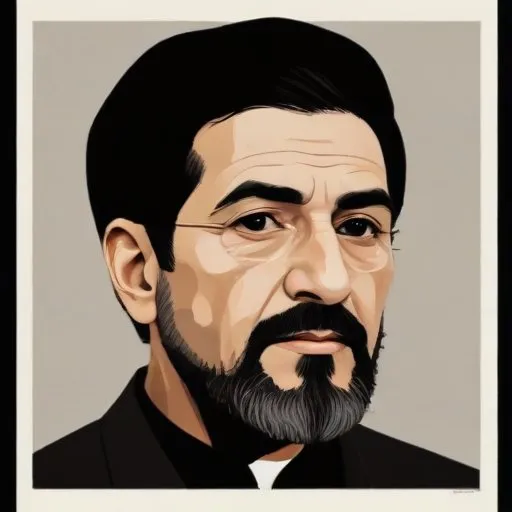
Iranian artist and director known for his avant-garde and experimental approach to filmmaking, pushing the boundaries of storytelling and visual art.
Hossein Nuri, the renowned Iranian painter, playwright, and film director, is a testament to the power of human resilience and creativity. Despite being severely tortured and left with physical disabilities, Nuri continued to produce remarkable works of art that have inspired generations.
Born on July 1, 1954, in Mashhad, Iran, Nuri showed an early interest in painting, which would later become a defining aspect of his life. After completing elementary school, he received a scholarship to study at Farah Industrial School in Tehran, where his creative talent flourished.
In 1972, Nuri wrote a play that criticized the Iranian government's human rights record, which was staged at his school. The play was abruptly interrupted by military forces, and Nuri was subsequently tortured, leaving him with severe physical disabilities that would affect him for the rest of his life. Despite this devastating setback, Nuri continued to paint, adapting to his new circumstances by holding the brush with his mouth.
After the Iranian Revolution, Nuri resumed his passion for playwriting and directing, staging productions in various cities. It was during this period that he met Nadia Maftouni, a student of applied physics who fell in love with him and proposed. The couple married and had two sons, Abolfazl and Mahmoud Nuri.
Nuri's artistic talents know no bounds. As a painter, he has developed a unique style that is both evocative and introspective. His plays and films often explore themes of social justice, human rights, and personal freedom. His work is a testament to his unwavering commitment to creative expression, despite the numerous challenges he has faced.
Nuri's art is not merely a form of self-expression but also a powerful tool for social commentary. Through his work, he has consistently challenged the status quo, promoting dialogue and introspection. His philosophy is rooted in the belief that art can be a potent force for change, inspiring others to question and challenge the norms that govern their lives.
Nuri's legacy extends far beyond the boundaries of Iran. His courage, resilience, and creative genius have inspired countless individuals around the world, demonstrating the transformative power of art in the face of adversity. His work has alsoraised awareness about the importance of human rights and social justice, encouraging others to take action.
Nuri has received numerous awards and accolades for his contributions to the arts, including recognition from international organizations and festivals. His work has been showcased in galleries and museums worldwide, cementing his reputation as a visionary artist.
Hossein Nuri's remarkable journey serves as a beacon of hope, inspiring others to pursue their passions, despite the obstacles that may arise. His art, his philosophy, and his unwavering commitment to creative expression have left an indelible mark on the world, ensuring that his legacy will continue to inspire generations to come.
87 Years Old
A pioneering filmmaker who revolutionized Iranian cinema with his poetic and visually stunning works, exploring themes of identity, culture, and social change.
86 Years Old
A pioneer of Iranian New Wave cinema, known for thought-provoking films that explore social and cultural issues in Iran.
Born in 1921
A pioneering female writer and educator who broke literary ground with her Persian novels and short stories, exploring themes of social justice and women's rights.
Born in 1903
A pioneering Iranian writer and translator who blended Persian folklore with European modernism, creating a unique literary style that explored themes of identity, alienation, and social critique.
80 Years Old
Iranian-American author and academic who wrote influential novels and short stories that explored themes of feminism, identity, and social change in Iran, earning her international recognition.
