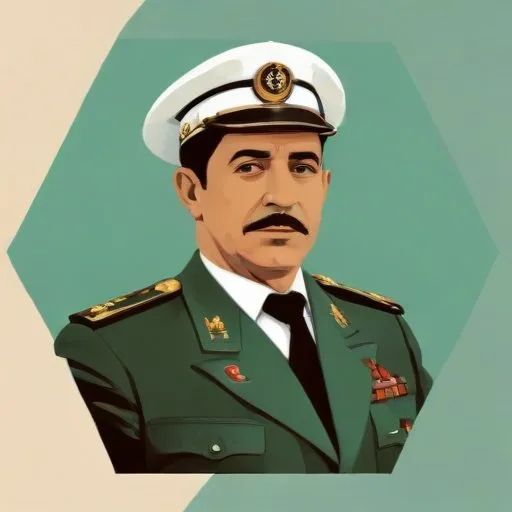
Houari Boumediene: The Algerian President and Architect of Modernization
The Revolutionary Leader
Houari Boumediene is renowned for his instrumental role in Algeria's struggle for independence from France and his subsequent tenure as the country's second president, during which he spearheaded a program of rapid modernization and industrialization. As a key figure in the Algerian War of Independence, Boumediene's leadership and strategic prowess played a crucial part in the eventual liberation of his country.
Early Life and Education
Born on August 23, 1932, in Guelma, Algeria, Boumediene hailed from a modest family of farmers. His early life was marked by a strong desire for education, which led him to pursue studies in Islamic theology and literature. It was during this period that Boumediene became acquainted with the works of prominent Islamic scholars and thinkers, which would later inform his political ideology.
The Algerian War of Independence
Boumediene's involvement in the Algerian War of Independence began in the early 1950s, when he joined the National Liberation Front (FLN), a militant organization dedicated to ending French colonial rule in Algeria. As a seasoned military commander, Boumediene played a pivotal role in several key battles, including the Battle of Algiers and the Battle of Philippeville. His military prowess and strategic thinking earned him the respect and admiration of his comrades, who would later come to regard him as a national hero.
Rise to Power and Presidency
Following Algeria's independence in 1962, Boumediene became the country's Minister of Defense, a position he held until 1965, when he orchestrated a bloodless coup, deposing then-President
Ahmed Ben Bella. Boumediene's tenure as president, which lasted from 1965 until his death in 1978, was marked by a concerted effort to modernize and industrialize the Algerian economy.
Economic Reforms and Modernization
Boumediene's economic reforms were centered around the principles of state-led development and socialist ideology. He nationalized key industries, such as oil and gas, and implemented a program of rapid industrialization, which aimed to transform Algeria into a self-sufficient economy. This period of rapid growth and development earned Boumediene the reputation as a visionary leader and architect of modern Algeria.
Foreign Policy and International Relations
Boumediene's foreign policy was characterized by a commitment to Arab solidarity and a staunch opposition to imperialism and colonialism. He played a key role in the formation of the Organization of African Unity (OAU) and was a vocal supporter of Palestine's struggle for independence. His leadership also saw Algeria assume a more prominent role on the international stage, participating in various multilateral forums and organizations.
Personal Life and Legacy
Boumediene's personal life was marked by a strong sense of discipline and asceticism, which was reflected in his simple and austere lifestyle. Despite his prominence on the national and international stages, Boumediene remained a humble and unassuming leader, who eschewed pomp and ceremony in favor of a more understated approach.
Quotes and Memorable Sayings
- "The Algerian people will not be silenced by the oppressive forces of colonialism and imperialism."
- "We will not be deterred by the obstacles that stand in the way of our independence and self-determination."
Historical Context and Legacy
Boumediene's legacy is deeply intertwined with Algeria's struggle for independence and its subsequent modernization. His commitment to social justice, economic development, and pan-Arab unity has inspired generations of Algerians and continues to shape the country's political landscape. As a champion of Arab solidarity and a strong advocate for Palestinian self-determination, Boumediene's international reputation as a visionary leader remains unwavering.
Impact on Modern Society
Boumediene's impact on modern society extends beyond Algeria's borders. His commitment to socialism and state-led development has influenced economic policies in various developing countries. Moreover, his leadership in the Non-Aligned Movement and the Organization of African Unity has contributed to the shaping of global governance and international relations.
Comparative Analysis with Contemporaries
Boumediene's leadership style and ideology are often compared to those of other prominent Arab leaders, such as
Gamal Abdel Nasser of Egypt and Muammar Gaddafi of Libya. While all three leaders shared a commitment to Arab solidarity and socialism, Boumediene's approach was characterized by a greater emphasis on state-led development and a more pragmatic approach to international relations.
Personal Milestones and Key Life Events
- 1932: Born in Guelma, Algeria
- 1950s: Joined the National Liberation Front (FLN)
- 1962: Algeria gains independence from France
- 1965: Orchestrated a bloodless coup, deposing President Ahmed Ben Bella
- 1978: Passed away in Algiers, Algeria
Trivia and Fun Facts
- Boumediene was known for his love of poetry and literature, and was an accomplished poet in his own right.
- He was a vocal critic of imperialism and colonialism, and was a strong supporter of the Palestinian cause.
Visual Timeline and Milestones

Influence on Pop Culture
Boumediene's legacy has inspired numerous works of literature, art, and music in Algeria and beyond. His commitment to social justice and economic development has inspired a generation of artists and intellectuals, who continue to draw upon his ideals and values in their work.