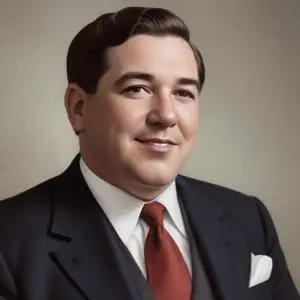
Huey Long: The Kingfish of Louisiana Politics
A Champion of the Poor, A Lightning Rod for Controversy
Huey Long, known affectionately as "The Kingfish," was a larger-than-life figure in Louisiana politics, remembered for his unwavering dedication to the working class and his unapologetic criticism of the wealthy elite. As a left-wing populist, he rose to national prominence during the Great Depression, earning both admiration and scorn for his radical policies and strong-arm tactics.
Rise to Power
Born on August 30, 1893, in the impoverished north of Louisiana, Long's humble beginnings fueled his passion for social justice. After working as a traveling salesman and briefly attending three colleges, he was admitted to the bar in Louisiana, where he quickly made a name for himself as a champion of the poor. His successful prosecution of large corporations, including Standard Oil, earned him praise from none other than Chief Justice
William Howard Taft.
A Governor of the People
Long's appeal to the sharp economic and class divisions in Louisiana propelled him to victory in the 1928 gubernatorial election. As Governor, he expanded social programs, launched massive public works projects, and proposed a cotton holiday to benefit struggling farmers. His aggressive political maneuvering transformed him into the political boss of Louisiana, earning him both admiration and resentment from his peers.
Controversy and Criticism
Long's policies and methods were often criticized as unconstitutional and authoritarian. His opponents argued that he abused his power, and in 1929, he was impeached. However, the proceedings ultimately collapsed in the State Senate. Undeterred, Long continued to push for radical reform, earning him a reputation as a fierce advocate for the working class.
A Senator of Unwavering Conviction
In 1932, Long was elected to the United States Senate, where he continued to criticize President
Franklin D. Roosevelt's New Deal as insufficiently radical. His vocal opposition earned him national attention, and he became a lightning rod for controversy.
Assassination and Legacy
Tragically, Huey Long's life was cut short by an assassin's bullet on September 10, 1935. His death shocked the nation, and his legacy continues to be debated to this day. Was he a populist champion of the poor or a fascistic demagogue? Regardless, his unwavering commitment to social justice and his unapologetic criticism of the wealthy elite have cemented his place in American political history.
Philosophical Contributions and Beliefs
Long's brand of left-wing populism was rooted in his belief that the wealthy elite exploited the working class. He advocated for policies that would redistribute wealth, increase access to education and healthcare, and protect the rights of laborers.
Quotes and Memorable Sayings
- "Every man a king, but no one wears a crown." - Huey Long
- "When I call, you come; and when I don't call, you don't come." - Huey Long
Personal Milestones and Key Life Events
- Born on August 30, 1893, in Winn Parish, Louisiana
- Admitted to the bar in Louisiana in 1915
- Elected to the Louisiana Public Service Commission in 1922
- Won the 1928 gubernatorial election
- Elected to the United States Senate in 1932
- Assassinated on September 10, 1935
Influence on Modern Society
Huey Long's legacy extends far beyond his home state of Louisiana. His brand of left-wing populism has inspired generations of politicians, activists, and social reformers. His unwavering commitment to social justice and his unapologetic criticism of the wealthy elite have made him a symbol of resistance against oppression and inequality.
FAQ
What is Huey Longs role in Louisiana politics?
Huey Long was a dominant figure in Louisiana politics during the 1920s and 1930s, serving as Governor and later as U.S. Senator. He was a populist leader who implemented numerous reforms and infrastructure projects, earning him both admiration and criticism.
What was Huey Longs Share Our Wealth program?
Huey Longs Share Our Wealth program was a proposed redistribution of wealth program aimed at reducing poverty and income inequality. The program advocated for a more progressive tax system, social welfare programs, and infrastructure development.
How did Huey Longs political career end?
Huey Longs political career ended tragically when he was assassinated in 1935 by Dr. Carl Weiss, the son-in-law of a political opponent. Longs death led to a power vacuum in Louisiana politics and had significant implications for national politics.
What is Huey Longs legacy in American politics?
Huey Longs legacy in American politics is complex and contested. He is remembered as a champion of the common man and a fierce critic of elite power, but also as a demagogic figure who abused his power and manipulated the political system.
How did Huey Long impact the development of the American South?
Huey Longs policies and programs had a significant impact on the development of the American South, particularly in terms of infrastructure development, education, and social welfare. His legacy continues to influence politics and policy in the region to this day.