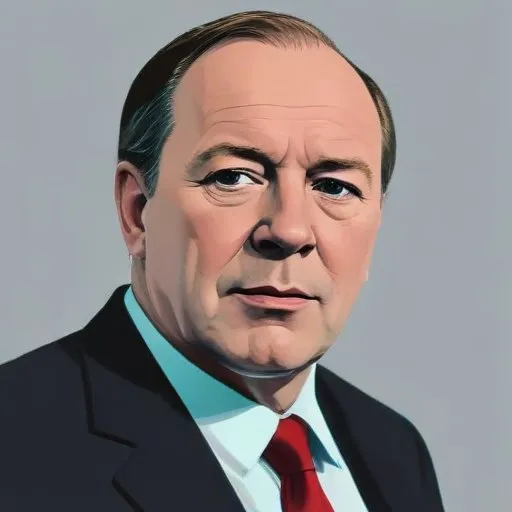
Hugh Gaitskell: A British Politician and Leader of the Labour Party
A Leader of the Labour Party and Advocate for Social Welfare
Hugh Todd Naylor Gaitskell, a renowned British politician, is best known for his role as the Leader of the Labour Party and Leader of the Opposition from 1955 until his untimely death in 1963. During his tenure, he implemented significant policies, including the introduction of National Health Service charges, which sparked controversy and debate within the party.
Early Life and Career
Born on April 9, 1906, Gaitskell began his career as an economics lecturer and wartime civil servant. In 1945, he was elected to Parliament, where he held various offices in
Clement Attlee's government. Notably, he served as Minister of Fuel and Power, navigating the country through the bitter winter of 1946-1947.
Leadership and Controversies
Gaitskell's leadership was marked by controversy, particularly when he imposed National Health Service charges on dentures and spectacles in 1951. This move prompted
Aneurin Bevan, a prominent left-winger, to resign from the Cabinet. The perceived similarity in Gaitskell's outlook to that of his Conservative Party counterpart, Rab Butler, was dubbed "Butskellism," a term initially used satirically to describe their shared views on domestic and foreign policy.
Leadership Battles and Revisionist Views
In 1955, Gaitskell won a bitter leadership battle with Bevan and his supporters to become the Leader of the Labour Party. During his tenure, he opposed the Eden government's use of military force at Suez in 1956. In the late 1950s, he attempted to remove Clause IV of the Labour Party Constitution, which committed Labour to nationalization of all means of production. Although this effort was unsuccessful, Gaitskell's revisionist views, dubbed "Gaitskellism," emphasized the importance of liberty, social welfare, and equality within a mixed economy.
Electoral Defeats and Legacy
Despite his efforts, Gaitskell led Labour to three successive electoral defeats, including the 1959 general election. However, his legacy extends beyond his electoral record. He played a significant role in shaping the post-war consensus, which saw the major parties largely agree on domestic and foreign policy until the 1970s.
Philosophical Contributions and Beliefs
Gaitskell's philosophical contributions were rooted in his commitment to social welfare and equality. He believed that public ownership was not the only means to achieve these goals, and instead advocated for fiscal and social policies within a mixed economy.
Personal Milestones and Key Life Events
- April 9, 1906: Born in London, England
- 1945: Elected to Parliament
- 1947: Appointed Minister of Fuel and Power
- 1951: Imposed National Health Service charges, prompting Aneurin Bevan's resignation
- 1955: Became Leader of the Labour Party and Leader of the Opposition
- 1956: Opposed the Eden government's use of military force at Suez
- January 18, 1963: Passed away at the age of 56
Influence on Modern Society
Gaitskell's legacy continues to influence modern British politics, with his emphasis on social welfare and equality remaining a cornerstone of Labour Party ideology. His leadership style and policy initiatives continue to be studied and debated by scholars and politicians alike.
FAQ
What was Hugh Gaitskells role in British politics?
Hugh Gaitskell was a prominent British politician who served as the Leader of the Opposition and Leader of the Labour Party from 1955 until his death in 1963.
What were Hugh Gaitskells views on socialism?
Hugh Gaitskell was a moderate socialist who believed in gradual, democratic change, and he opposed the more radical social and economic reforms advocated by some in the Labour Party.
What was Hugh Gaitskells stance on European integration?
Hugh Gaitskell was a strong opponent of British membership in the European Economic Community (EEC), which he saw as a threat to British sovereignty and national identity.
What was Hugh Gaitskells relationship with Harold Wilson?
Hugh Gaitskell was a mentor and friend to Harold Wilson, who succeeded him as Labour Party leader and later became Prime Minister of the United Kingdom.
What was Hugh Gaitskells legacy in British politics?
Hugh Gaitskells legacy in British politics is as a champion of moderate, pragmatic socialism, and his leadership of the Labour Party helped to lay the groundwork for the partys eventual electoral success in the 1960s.