


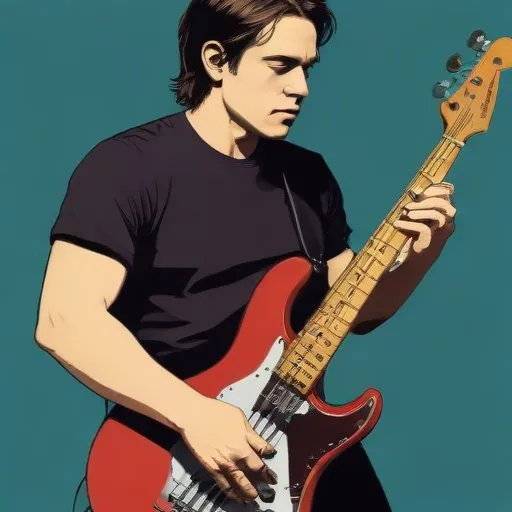
A pioneering bassist of the Canterbury scene, known for his innovative and influential work with Soft Machine and solo projects, pushing the boundaries of jazz and rock fusion.
Hugh Hopper, a British bass guitarist, is renowned for his pivotal role in shaping the progressive rock and jazz fusion sounds of the Canterbury scene. As a member of Soft Machine, one of the most influential bands of the genre, Hopper's innovative bass playing and compositions left an indelible mark on the music world.
Hopper's musical journey began in 1963 as the bassist for The Daevid Allen Trio, alongside drummer Robert Wyatt. This collaboration laid the foundation for the freewheeling, jazz-infused rock sound that would become synonymous with the Canterbury scene. In 1964, Hopper, along with his brother Brian, Robert Wyatt, Kevin Ayers, and Richard Sinclair, formed The Wilde Flowers, a pioneering pop music group that, although short-lived, spawned two of the genre's most iconic bands: Soft Machine and Caravan.
In 1968, Hopper joined Soft Machine as their road manager but soon took on the role of bassist for their second album, Volume Two. Alongside Mike Ratledge and Robert Wyatt, he contributed to the band's transformation from a psychedelic rock outfit to an instrumental jazz-rock fusion ensemble. During his tenure with Soft Machine, Hopper composed numerous pieces, including some of the band's most critically acclaimed works.
In 1972, Hopper recorded his debut solo album, 1984, named after George Orwell's dystopian novel Nineteen Eighty-Four. This avant-garde album featured extended solo pieces utilizing tape loops and shorter ensemble tracks, showcasing Hopper's willingness to push the boundaries of conventional music. Although he later reflected on the record's limitations, it remains a testament to his innovative spirit.
Hopper's impact on the Canterbury scene and progressive rock as a whole cannot be overstated. His work with Soft Machine and The Wilde Flowers has inspired generations of musicians, from jazz fusion luminaries like Weather Report to contemporary experimental rock outfits. As a bassist, composer, and innovator, Hugh Hopper's legacy continues to resonate through the music world.
Hugh Hopper's remarkable career serves as a testament to the power of innovation and creativity in music. As a pioneer of the Canterbury scene, his legacy continues to inspire and influence musicians across genres.
88 Years Old
A founding member of the UK psychedelic rock band Gong, known for his eclectic and experimental style, blending poetry and music.
82 Years Old
A pioneering figure in the UK's psychedelic and progressive rock scenes, known for his eclectic and poetic songwriting style, which blended elements of folk, rock, and jazz.
Born in 1755
The 4th Chief Justice of the United States Supreme Court, a leading figure in shaping the country's judiciary system and interpreting its Constitution, is renowned for establishing the principle of judicial review. This legacy has had a lasting impact on American law and politics.
