


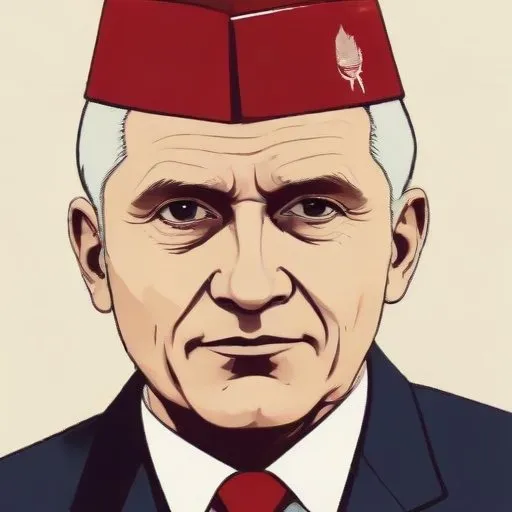
The first head of government of Latvia after its declaration of independence from Russia in 1918, leading the country through its early years of statehood. He played a crucial role in shaping Latvia's political and economic landscape.
Hugo Celmi is known for his instrumental role in shaping the fate of Latvia, serving twice as the Prime Minister of Latvia, and leaving an indelible mark on the country's agrarian reform. As a politician, public employee, and agronomist, Celmi's contributions to Latvian society extended far beyond the realm of politics, impacting the very fabric of the nation.
Born on October 30, 1877, in Lubna parish, now Madona Municipality, Celmi was the youngest son in his family. He studied from 1887 to 1891 at Lubna's Ministry School and then at the Gorku School of Agriculture. In 1899, he entered the Polytechnic Institute of Riga, graduating in 1903 with a first-class agronome degree.
Celmi's dedication to public service was evident early on. In 1900, he co-founded the Talavija student corporation, a testament to his commitment to community building. He went on to work as an agronomist and teacher in Russia, honing his skills and preparing himself for the leadership roles that lay ahead.
Celmi's first term as Prime Minister began on December 19, 1924, when he formed the eighth Latvian government. His government declaration prioritized national protection, reflected in the significant increase in the army's numerical composition and military spending. His leadership was marked by a strong focus on agrarian reform, laying the groundwork for Latvia's future prosperity.
Tragically, Celmi's life was cut short during the Soviet occupation of Latvia in 1940. He was arrested, deported to the USSR, and imprisoned in Moscow's Lefortovo Prison. On July 30, 1941, he was shot and buried in the mass graves of Kommunarka shooting ground, a martyr to his country's cause.
Hugo Celmi's contributions to Latvian society are multifaceted and far-reaching. His agrarian reform initiatives continue to benefit the nation to this day. As a statesman, he demonstrated unwavering commitment to public service, even in the face of adversity. His ultimate sacrifice serves as a poignant reminder of the importance of standing up for one's principles, no matter the cost.
Born in 1877
Led Latvia to independence from Russia in 1918 and served as both prime minister and president, implementing significant land reforms and modernizing the country's infrastructure. He's also known for his authoritarian rule and eventual coup in 1934.
Born in 1871
The 2nd President of Latvia, a leader who played a crucial role in shaping the country's early years, known for his efforts to establish a stable government and economy.
