


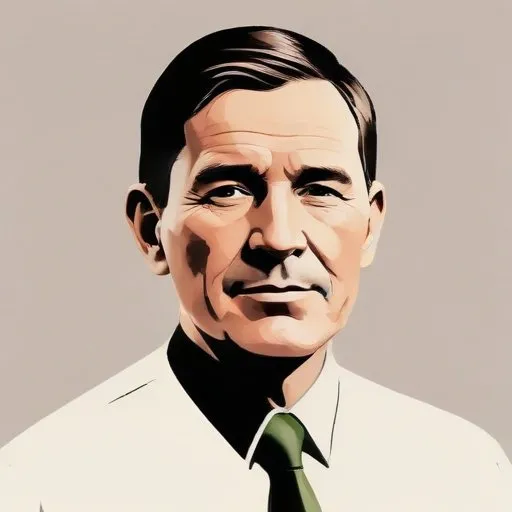
Australian farmer and politician who served as the Minister for Defence, playing a crucial role in shaping the country's military policies and strategies. He's most known for his efforts in modernizing the Australian Defence Force.
Ian Sinclair, a stalwart of Australian politics, is renowned for his remarkable 35-year tenure as a Member of Parliament, including his leadership of the National Party from 1984 to 1989. Throughout his illustrious career, he has served as a minister, opposition frontbencher, and Speaker of the House of Representatives, earning him a reputation as one of Australia's most dedicated public servants.
Born on June 10, 1929, in Sydney, Ian Sinclair was the son of Gertrude Hazel (née Smith) and George McCahon Sinclair. He pursued his passion for law at the University of Sydney, where he earned a solid foundation for his future in politics.
Sinclair's connection to the land was solidified when he purchased a farming property near Tamworth. This grounding in rural Australia later influenced his political stance and commitment to the agricultural sector. His entry into politics came in 1963, when he was elected to parliament, and subsequently added to the ministry in 1965 as part of the Menzies Government.
Sinclair's political trajectory is dotted with significant milestones. He became the deputy leader of the National Party in 1971 and held various portfolios under successive prime ministers, including Minister for Primary Industry, Minister for Communications, and Minister for Defence. In 1984, he succeeded Anthony as leader of the National Party, leading the party to two federal elections in 1984 and 1987. Although replaced by Charles Blunt in 1989, Sinclair continued to serve as a senior member of parliament.
In 1998, following the sudden resignation of Bob Halverson, Sinclair became the Speaker of the House of Representatives, a position he held until his retirement later that year. During this period, he also co-chaired the 1998 constitutional convention alongside Barry Jones. Sinclair's later life has been marked by his continued involvement in public service, earning him the Right Honourable prefix as a member of the Privy Council of the UK.
Ian Sinclair's remarkable journey serves as a testament to his unwavering dedication to public service, his country, and its people. His legacy continues to inspire future generations of Australian politicians and citizens alike.
95 Years Old
The 22nd Prime Minister of Australia, serving from 1975 to 1983, known for leading the country through a period of significant social and economic change, and for his strong stance on human rights and multiculturalism.
96 Years Old
Leader of the Australian Labor Party who served as Prime Minister from 1983 to 1991, known for his charismatic leadership and economic reforms.
82 Years Old
The 24th Prime Minister of Australia, a Labor Party leader who implemented significant economic reforms, including deregulation and privatization, and is known for his bold and charismatic leadership style.
73 Years Old
A British singer-songwriter and pianist known for his emotive, poetic lyrics and soaring melodies, crafting introspective and atmospheric indie-pop soundscapes.
77 Years Old
The 9th Deputy Prime Minister of Australia, serving from 1995 to 1996, is a prominent figure in Australian politics, known for his leadership roles and diplomatic efforts. He later became the Australian Ambassador to the United States from 2010 to 2016.
77 Years Old
A prominent Australian trade union leader and politician who served as the Minister for the Arts, known for his contributions to the country's cultural development and labor movement.
71 Years Old
The 14th Deputy Prime Minister of Australia, a Labor Party member, and economist who served during the Rudd and Gillard governments, known for his role in navigating Australia through the 2008 global financial crisis. He's also an academic and author, having written several books on economics and politics.
64 Years Old
The first female Prime Minister of Australia, serving from 2010 to 2013, known for her progressive policies and leadership during a period of significant economic reform.
