


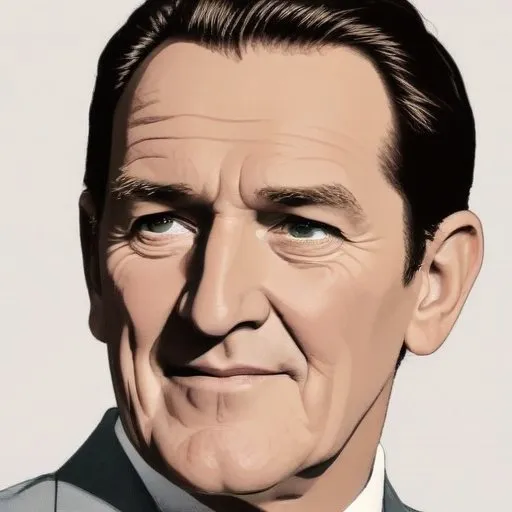
The 22nd Prime Minister of Australia, serving from 1975 to 1983, known for leading the country through a period of significant social and economic change, and for his strong stance on human rights and multiculturalism.
Malcolm Fraser, born on May 21, 1930, was an Australian politician who served as the 22nd Prime Minister of Australia from 1975 to 1983. He is best known for leading the Liberal Party of Australia and playing a significant role in the 1975 Australian constitutional crisis, which led to the dismissal of Prime Minister Gough Whitlam.
Fraser was raised on his family's sheep stations in Victoria, where he developed a strong foundation in agriculture and business. He studied at Magdalen College, Oxford, before returning to Australia to take over the family property in the Western District of Victoria.
In 1971, Fraser resigned from cabinet, criticizing then-Prime Minister John Gorton as unfit to hold office. He subsequently returned to his old education and science portfolio.
After the Liberal-National Coalition was defeated in the 1972 election, Fraser contested the Liberal leadership but lost to Billy Snedden. However, in March 1975, he successfully challenged Snedden for the leadership.
As Leader of the Opposition, Fraser used the Coalition's control of the Australian Senate to block supply to the Whitlam government, precipitating the 1975 Australian constitutional crisis. This ultimately led to the dismissal of Prime Minister Gough Whitlam by the Governor-General, Sir John Kerr, a unique event in Australian history.
Fraser's tenure as Prime Minister saw significant policy reforms, including the introduction of the Medicare system, the establishment of the Australian Federal Police, and the passage of the Aboriginal Land Rights Act.
After losing office in 1983, Fraser continued to be active in public life, serving as the President of CARE Australia and advocating for refugee rights.
Fraser passed away on March 20, 2015, leaving behind a legacy as a significant figure in Australian politics and a champion of human rights.
"The obligations of government are multifarious, but the primary obligation of government is to the people of Australia."
"We must never forget that we are Australian, that we are part of the Australian community, and that we have a responsibility to that community."
96 Years Old
Leader of the Australian Labor Party who served as Prime Minister from 1983 to 1991, known for his charismatic leadership and economic reforms.
82 Years Old
The 24th Prime Minister of Australia, a Labor Party leader who implemented significant economic reforms, including deregulation and privatization, and is known for his bold and charismatic leadership style.
73 Years Old
A British singer-songwriter and pianist known for his emotive, poetic lyrics and soaring melodies, crafting introspective and atmospheric indie-pop soundscapes.
Born in 1916
The 21st Prime Minister of Australia, a lawyer, and lieutenant who introduced sweeping social and economic reforms, including universal healthcare and free education, and played a significant role in shaping the country's modern identity.
65 Years Old
The first female Prime Minister of Australia, serving from 2010 to 2013, known for her progressive policies and leadership during a period of significant economic reform.
69 Years Old
The 26th Prime Minister of Australia, a diplomat, and leader who apologized to the Indigenous Australians for past injustices and played a key role in shaping the country's climate change policies.
68 Years Old
The 28th Prime Minister of Australia, a conservative leader who served from 2013 to 2015, known for his tough stance on immigration and climate change skepticism. He's also a Rhodes Scholar and athlete.
93 Years Old
The 21st Governor-General of Australia, serving from 1989 to 1996, known for his significant reforms and contributions to the country's politics and economy. He played a crucial role in shaping Australia's modern identity.
