


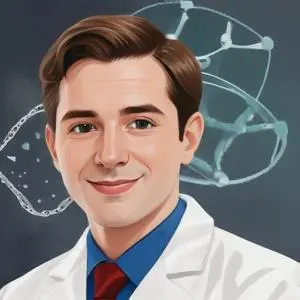
Pioneering embryologist who cloned Dolly the sheep, a groundbreaking achievement in genetic engineering. This breakthrough sparked controversy and debate on the ethics of cloning and genetic manipulation.
Ian Wilmut is renowned for leading the research group that achieved a historic milestone in 1996: cloning the first mammal from an adult somatic cell, a feat that shook the scientific community and opened doors to new possibilities in genetics and biotechnology. This remarkable breakthrough came in the form of Dolly, a Finnish Dorset lamb, whose birth marked a significant turning point in the field of embryology.
Born on July 7, 1944, in Hampton Lucy, Warwickshire, England, Wilmut's fascination with the natural world was sparked by his early experiences working on a farm during weekends. This exposure led him to pursue a degree in Agriculture at the University of Nottingham. His academic journey eventually took him to the University of Cambridge, where he completed his Doctor of Philosophy degree in 1971, with a thesis on semen cryopreservation.
Wilmut's research career spanned several decades, during which he made significant contributions to the fields of gametes and embryogenesis. His work at the Roslin Institute laid the foundation for his groundbreaking cloning achievement. In 1996, his research group successfully cloned Dolly, a breakthrough that earned him international recognition and acclaim.
In recognition of his outstanding contributions to embryo development, Wilmut was appointed Officer of the Order of the British Empire (OBE) in 1999. He was knighted in the 2008 New Year Honours for his services to science. The same year, he, along with Keith Campbell and Shinya Yamanaka, received the prestigious Shaw Prize for Medicine and Life Sciences for their work on cell differentiation in mammals.
Wilmut's pioneering work in cloning has had far-reaching implications for modern society. His discovery has opened up new avenues for genetic research, potentially leading to breakthroughs in disease treatment and regenerative medicine. Moreover, his work has sparked intense debate on the ethical implications of genetics and biotechnology, prompting a re-evaluation of the boundaries between science and morality.
Throughout his career, Wilmut has been committed to the responsible application of scientific knowledge. He has consistently emphasized the need for ethical considerations in scientific research, advocating for a balanced approach that acknowledges both the potential benefits and risks of emerging technologies.
Sir Ian Wilmut's groundbreaking work has left an indelible mark on the scientific community. His pioneering spirit, passion for discovery, and commitment to responsible innovation have inspired generations of scientists and researchers. As a testament to his enduring legacy, Wilmut's work continues to shape the contours of modern science, guiding us towards a future where the boundaries between science and humanity are increasingly blurred.
In addition to his many scientific achievements, Wilmut's personal life has been marked by significant milestones. His father, Leonard Wilmut, a mathematics teacher, struggled with diabetes, which eventually led to blindness. This experience had a profound impact on Wilmut, shaping his perspective on the importance of medical research and its potential to transform human lives.
Sir Ian Wilmut's remarkable career serves as a testament to the power of human ingenuity, perseverance, and innovation. As we reflect on his life's work, we are reminded of the boundless potential that lies at the intersection of science, ethics, and humanity. Wilmut's legacy not only inspires us to push the frontiers of knowledge but also encourages us to engage in a deeper conversation about the responsibilities that come with scientific discovery.
82 Years Old
Pioneering embryologist who cloned Dolly the sheep, a groundbreaking achievement in genetic engineering. This breakthrough sparked controversy and debate on the ethics of cloning and genetic manipulation.
Born in 1920
A British scientist who contributed significantly to the discovery of the structure of DNA, providing high-quality X-ray crystallography images that helped James Watson and Francis Crick develop their famous model.
Born in 1916
Pioneering scientist who discovered the structure of DNA, revolutionizing our understanding of genetics and life itself.
98 Years Old
Discovered the structure of DNA, revolutionizing our understanding of genetics and earning a Nobel Prize. Pioneering work in molecular biology has far-reaching implications for medicine and beyond.
