


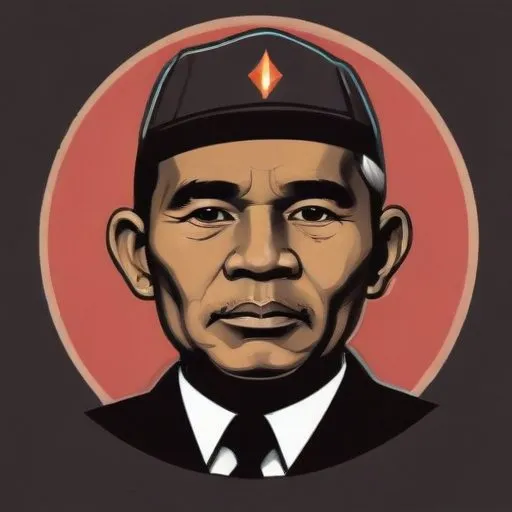
Co-founder of the Khmer Rouge, a brutal regime responsible for the deaths of an estimated 1.5 to 3 million people in Cambodia during the 1970s. Known for implementing radical social and economic policies that led to widespread atrocities.
Ieng Sary, also known as Brother Number Three, was one of the main architects of the Cambodian Genocide, a brutal and devastating period in Cambodian history that claimed the lives of an estimated 1.5 to 3 million people. As a senior member of the Khmer Rouge and the third-highest-ranking leader of the regime, Sary played a pivotal role in shaping the party's ideology and policies.
Ieng Sary was born Kim Trang on October 24, 1925, in Nhan Hoa village, southern Vietnam, to a Khmer Krom father and a Chinese-Vietnamese mother. He later changed his name to Ieng Sary when he joined the Khmer Rouge. Sary's early education took place in Phnom Penh's Lyce Sisowath, where he met his future friend and ally, Saloth Sar, also known as Pol Pot.
Sary and Saloth Sar studied together in Paris, where they became deeply influenced by French communist intellectuals and formed their own cell of Cambodian communists. Sary married Khieu Thirith, a sister of Khieu Ponnary, Saloth Sar's wife, in Paris in 1951. The couple returned to Cambodia in 1957 and began to build a communist movement that would eventually become the Khmer Rouge.
In 1975, the Khmer Rouge seized power in Cambodia, and Sary became the foreign minister and deputy prime minister of the new government, known as Democratic Kampuchea. During his tenure, Sary oversaw the implementation of radical social and economic policies that led to mass executions, forced labor, and the displacement of millions of people.
Sary's role in the Khmer Rouge regime has been widely condemned, and he is considered one of the main architects of the Cambodian Genocide. He was arrested in 2007 and charged with crimes against humanity, but died of heart failure in 2013 before the case against him could be brought to a verdict.
Ieng Sary's legacy is one of brutality and devastation. His role in shaping the Khmer Rouge's ideology and policies has had a lasting impact on Cambodian society, and his actions have been widely condemned as crimes against humanity. Despite his death before trial, Sary's legacy serves as a reminder of the horrors of the Cambodian Genocide and the importance of holding those responsible accountable for their actions.
Born in 1925
The brutal leader of the Khmer Rouge regime, responsible for the deaths of an estimated 1.5 to 3 million people, through forced labor, mass executions, and torture, during his rule from 1975 to 1979.
95 Years Old
The 28th Prime Minister of Cambodia, a key figure in the Khmer Rouge regime, known for his role in the brutal regime that led to the deaths of millions of people. He was later convicted of crimes against humanity.
Born in 1926
A chief ideologist and second-in-command of the Khmer Rouge regime, responsible for implementing radical social and economic policies that led to the deaths of millions of people.
