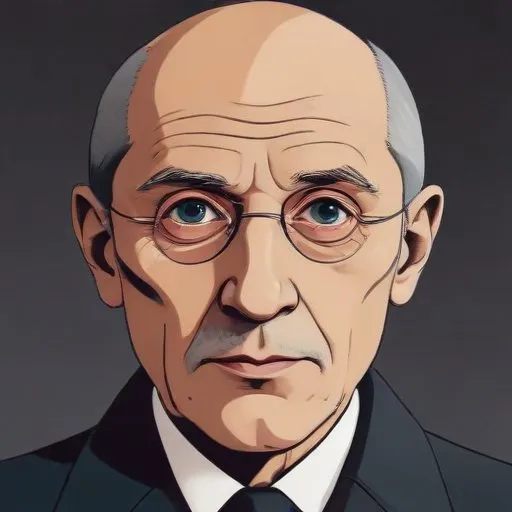
Igor Shafarevich: A Math Titan and Controversial Figure
A Leading Light in Number Theory and Algebraic Geometry
Igor Rostislavovich Shafarevich was a Soviet and Russian mathematician who made fundamental contributions to algebraic number theory, algebraic geometry, and arithmetic algebraic geometry, leaving an indelible mark on the world of mathematics. His work, particularly in number theory, earned him recognition as one of the most influential mathematicians of the 20th century.
Early Life and Education
Shafarevich was born on June 3, 1923, in Moscow, Russia. His early fascination with mathematics led him to pursue higher education at Moscow State University, where he earned his Ph.D. in 1946. Under the guidance of renowned mathematicians, such as Boris Delone and Ivan Vinogradov, Shafarevich's prodigious talent blossomed, paving the way for his future achievements.
Career Highlights and Major Works
Shafarevich's mathematical contributions are manifold and far-reaching. Some of his most notable works include:
- The Shafarevich-Weil theorem, which extends the commutative reciprocity map to Galois groups, central extensions of abelian groups by finite groups.
- A self-contained formula for the Hilbert pairing, initiating the study of explicit formulas in number theory.
- Shafarevich's theorem on solvable Galois groups, realizing every finite solvable group as a Galois group over the rationals.
- The Golod-Shafarevich theorem on towers of unramified extensions of number fields.
- The introduction of the Tate-Shafarevich group (Sha) in the arithmetic of elliptic curves.
- The Grothendieck-Ogg-Shafarevich formula.
Philosophical Contributions and Beliefs
Shafarevich's influence extends beyond mathematics to philosophical and social realms. His writings critique socialism and communism, reflecting his anti-Soviet views. Some of his books have been criticized for perceived anti-Semitic undertones. These controversies have led to a nuanced evaluation of his legacy, acknowledging both his mathematical genius and his provocative extramathematical writings.
Awards and Honors
Shafarevich received numerous accolades for his contributions to mathematics, including:
- The Stalin Prize (1951)
- The Lenin Prize (1966)
- The Wolf Prize in Mathematics (1989)
- The Crafoord Prize (1994)
Legacy and Impact on Modern Society
Shafarevich's work has had a lasting impact on number theory, algebraic geometry, and arithmetic algebraic geometry. His influence on modern mathematics is undeniable, and his contributions continue to inspire new generations of mathematicians. Beyond mathematics, his writings have sparked debates about the role of intellectuals in society and the responsibility that comes with knowledge.
Igor Shafarevich passed away on February 19, 2017, leaving behind a legacy that is both awe-inspiring and complex, a testament to the power of human ingenuity and the importance of critically evaluating the intersection of mathematics and society.
FAQ
What are Igor Shafarevichs contributions to mathematics?
Igor Shafarevich is known for his contributions to algebraic geometry, number theory, and algebraic K-theory. He is also recognized for his work on the mathematics of elliptic curves and modular forms.
What is Igor Shafarevichs work on the arithmetic of elliptic curves?
Igor Shafarevichs work on the arithmetic of elliptic curves is significant, as he developed new methods for studying the arithmetic of these curves and their applications to number theory.
What awards and recognition has Igor Shafarevich received?
Igor Shafarevich has received numerous awards and recognition for his work, including the Lenin Prize and the State Prize of the Russian Federation.
What is Igor Shafarevichs impact on the field of mathematics?
Igor Shafarevichs impact on the field of mathematics is significant, as he has made important contributions to number theory, algebraic geometry, and algebraic K-theory.
What is Igor Shafarevichs role in Russian mathematics?
Igor Shafarevich is a prominent figure in Russian mathematics, and has made significant contributions to the development of mathematics in Russia.