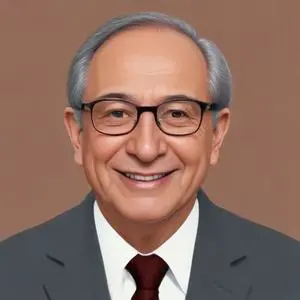
Israel Gelfand: The Mathematical Genius
A Legacy of Contributions to Mathematics
Israel Gelfand is renowned for his significant contributions to various branches of mathematics, including group theory, representation theory, and functional analysis. His work has left an indelible mark on the mathematical community, earning him numerous awards and recognition from around the world.
Early Life and Education
Born on September 2, 1913, in the small Ukrainian town of Okny, Gelfand was expelled from high school due to his father's social status as a mill owner. However, this setback did not deter him from pursuing his passion for mathematics. At the age of 19, he began postgraduate studies at Moscow State University, where he was mentored by the esteemed mathematician Andrei Kolmogorov. Gelfand received his Ph.D. in 1935.
Mathematical Contributions
Gelfand's work has been instrumental in shaping various areas of mathematics. Some of his most notable contributions include:
- Gelfand's formula, which expresses the spectral radius as a limit of matrix norms.
- The Gelfand representation in Banach algebra theory.
- The Gelfand-Mazur theorem in Banach algebra theory.
- The Gelfand-Naimark theorem.
- The Gelfand-Naimark-Segal construction.
Awards and Honors
Gelfand's work has been recognized with numerous awards and honors, including:
- Order of Lenin.
- Wolf Prize (the first ever awarded).
- Foreign Fellow of the Royal Society.
- 1994 MacArthur Fellow.
Teaching and Legacy
Gelfand taught at Moscow State University and, after immigrating to the United States in 1989, at Rutgers University. He has left a lasting legacy through his students, including Endre Szemerdi, Alexandre Kirillov, Edward Frenkel, Joseph Bernstein,
David Kazhdan, and his own son, Sergei Gelfand.
Inspirational Story
Gelfand's journey is a testament to perseverance and passion. Despite facing obstacles in his early life, he remained dedicated to his craft, and his contributions have inspired generations of mathematicians. His story serves as a reminder that with hard work and determination, one can overcome adversity and achieve greatness.
Impact on Modern Society
Gelfand's work has far-reaching implications for various fields, including physics, engineering, and computer science. His contributions have paved the way for advancements in these areas, ultimately benefiting society as a whole.
Personal Milestones and Key Life Events
- 1913: Born in Okny, Ukraine.
- 1935: Received Ph.D. from Moscow State University.
- 1989: Immigrated to the United States.
- 2009: Passed away on October 5.
Gelfand's legacy continues to inspire and influence mathematicians around the world. His contributions have left an indelible mark on the mathematical community, and his story serves as a testament to the power of passion, perseverance, and dedication.
FAQ
What contributions did Israel Gelfand make to mathematics?
Israel Gelfand made significant contributions to various fields of mathematics, including representation theory, differential geometry, and functional analysis. He introduced the concept of Gelfand pairs, which has been widely used in harmonic analysis and number theory.
What is Israel Gelfands work in biology?
Israel Gelfands work in biology focused on the mathematical modeling of biological systems, particularly in the area of neuroscience. He applied mathematical techniques to study the behavior of neurons and develop models of neural networks.
What awards did Israel Gelfand receive?
Israel Gelfand received numerous awards for his contributions to mathematics and biology, including the Wolf Prize in Mathematics, the Kyoto Prize in Basic Sciences, and the National Medal of Science.
Who were Israel Gelfands notable students?
Israel Gelfand had many notable students, including mathematicians and biologists who went on to make significant contributions in their respective fields. Some of his notable students include Alexandre Kirillov, George Mostow, and Mark Goresky.
What is Israel Gelfands legacy in mathematics and biology?
Israel Gelfands legacy in mathematics and biology is profound, with his work continuing to influence research in both fields. He is remembered for his passion for mathematics and biology, and his ability to bring together researchers from different disciplines to work on complex problems.