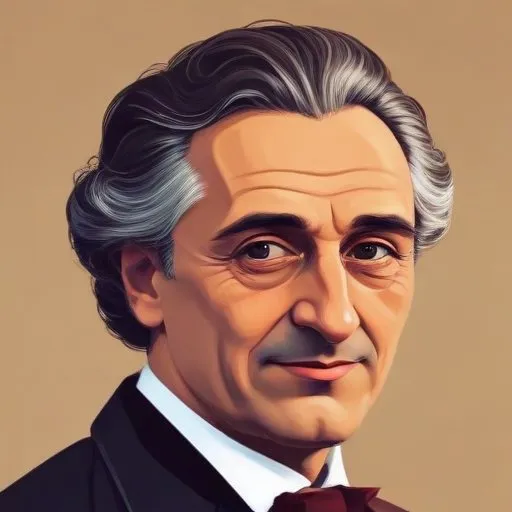
Ilya Prigogine: The Nobel Laureate Who Shaped Our Understanding of Complex Systems
Irreversibility and the Dawn of a New Era in Chemistry
Ilya Prigogine, a renowned Belgian physical chemist of Russian-Jewish origin, is revered for his groundbreaking work on dissipative structures, complex systems, and irreversibility, which earned him the prestigious 1977 Nobel Prize in Chemistry. His pioneering research revolutionized the field of chemistry, providing a deeper understanding of the intricate dance between order and disorder in complex systems.
A Life of Cultural Fusion and Scientific Inquiry
Born on January 25, 1917, in Moscow, Russia, Prigogine's early life was marked by cultural fusion and intellectual curiosity. His father, Ruvim
Roman Abramovich Prigogine, was a chemical engineer, and his mother, Yulia Vikhman, was a pianist. The family's migration to Berlin and later to Brussels, Belgium, exposed Prigogine to diverse cultural influences, which would later shape his interdisciplinary approach to science.
From Music to Chemistry: An Unconventional Path
Prigogine's initial interests lay in music, history, and archeology. However, his fascination with psychology and behavior led him to explore chemistry, which in turn sparked a deeper interest in physics. This unconventional trajectory ultimately led him to pursue a degree in chemistry and physics at the Free University of Brussels, where he would go on to make his mark.
Breakthroughs and Honors
Prigogine's work on dissipative structures, which challenged the traditional concept of thermodynamic equilibrium, earned him numerous accolades, including the:
- 1977 Nobel Prize in Chemistry
- 1955 Francqui Prize
- 1976 Rumford Medal
A Legacy of Interdisciplinary Research
Prigogine's contributions extend beyond the realm of chemistry, influencing fields such as biology, physics, and philosophy. His work on complex systems and irreversibility has far-reaching implications for our understanding of natural phenomena, from the behavior of living organisms to the dynamics of ecosystems.
Influence on Modern Society
Prigogine's ideas have permeated modern society, inspiring new approaches to fields like environmental science, economics, and social dynamics. His work has also influenced the development of chaos theory and the concept of self-organization.
Philosophical Contributions and Beliefs
Prigogine's work is deeply rooted in philosophical inquiry, probing the fundamental nature of reality and the human experience. His ideas on irreversibility and the arrow of time have sparked debates on free will, determinism, and the role of chance in shaping our lives.
Personal Milestones and Key Life Events
- Received Belgian nationality in 1949
- Brother, Alexandre Prigogine, became an ornithologist
Legacy and Impact on the Scientific Community
Ilya Prigogine's groundbreaking research has inspired generations of scientists, philosophers, and thinkers. His Nobel Prize-winning work has opened up new avenues of inquiry, fostering a deeper understanding of the intricate complexity of the natural world. As we continue to grapple with the challenges of the 21st century, Prigogine's ideas will remain a beacon of inspiration, illuminating the path to a deeper understanding of our complex, dynamic world.
FAQ
What was Ilya Prigogines profession?
Ilya Prigogine was a Russian-Belgian chemist and physicist, known for his work on nonequilibrium thermodynamics and dissipative structures.
What was Ilya Prigogines most notable contribution?
Prigogines most notable contribution was his development of the theory of dissipative structures, which challenged traditional views on thermodynamics and earned him the Nobel Prize in Chemistry in 1977.
What was Ilya Prigogines approach to science?
Prigogines scientific approach was characterized by his emphasis on interdisciplinary research, his ability to synthesize concepts from chemistry, physics, and biology, and his commitment to understanding complex systems.
What awards did Ilya Prigogine receive for his contributions?
Prigogine received the Nobel Prize in Chemistry in 1977, as well as numerous other awards, including the Rumford Prize, the Marriott Award, and the Francqui Prize, recognizing his groundbreaking contributions to science.
What is Ilya Prigogines legacy in science?
Prigogines legacy lies in his development of the theory of dissipative structures, which has far-reaching implications for fields such as chemistry, physics, and biology, and continues to inspire new generations of scientists.