


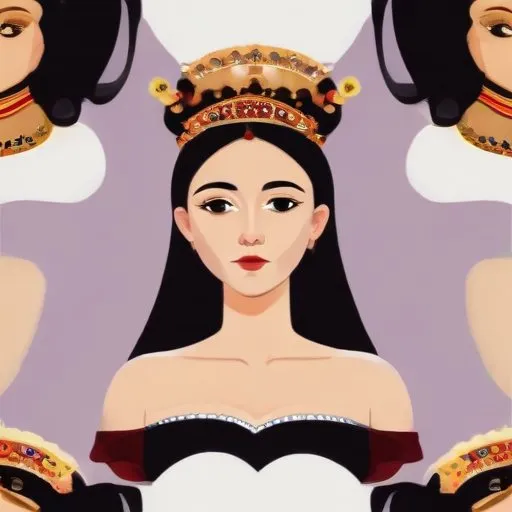
A 16th-century Italian courtesan who used her beauty, intelligence, and charm to gain influence and power in the royal courts of Europe, becoming a patron of the arts and a trendsetter in fashion.
Imperia Cognati, affectionately known as Imperia La Divina or The Queen of Courtesans, was a 15th-century Roman courtesan who pioneered a new class of prostitutes in Christian Europe. Born on August 3, 1486, Imperia rose to fame as the premier courtesan of her time, captivating the hearts of powerful men and leaving an indelible mark on the social landscape of Renaissance Rome.
In the late 15th century, the Papal courtiers developed the custom of hiring female escorts to accompany them in court life. These women, known as courtesans, were expected to be educated, knowledgeable in etiquette, and skilled in the art of conversation. Imperia, born to a Roman prostitute Diana di Pietro Cognati, fit the bill perfectly. With her striking beauty, sharp wit, and charming demeanor, she quickly rose through the ranks to become the most sought-after courtesan in Rome.
Imperia's life was a whirlwind of luxury and intrigue. She kept a main client as a steady supporter, while openly entertaining others as temporary clients. Her clients were among the cream of Roman society, including high-ranking clergy and nobles. Her beauty and charm earned her lavish gifts, and she lived a life of opulence, surrounded by fine silks, precious jewels, and extravagant parties.
Imperia's reign as the Queen of Courtesans was marked by her unwavering loyalty to her clients and her unshakeable confidence in her profession. She was known for her discretion, her ability to keep secrets, and her talent for navigating the complex web of alliances and rivalries that characterized Roman politics. Her influence extended far beyond the bedchamber, and she played a significant role in shaping the social and cultural landscape of Renaissance Rome.
Imperia's personal life was shrouded in mystery, but it is known that she had a daughter named Lucrezia, who may have been named after Imperia herself. Her will, written in 1512, reveals a woman who was both practical and sentimental, bequeathing her property and possessions to her loved ones and charitable institutions. Imperia's legacy extends far beyond her own lifetime, influencing generations of courtesans and shaping the course of European history.
Imperia's impact on modern society is multifaceted. She pioneered a new class of prostitutes, creating a new economic and social category that would shape the course of European history. Her influence can be seen in the development of prostitution laws, the evolution of women's rights, and the changing nature of relationships between men and women. Imperia's story serves as a testament to the power and agency of women in a patriarchal society, reminding us that even in the shadows of history, women have always played a significant role in shaping their own destinies.
Imperia Cognati's life was a testament to the power of women in a patriarchal society. Her story serves as a reminder that even in the shadows of history, women have always played a significant role in shaping their own destinies. As the original celebrity courtesan, Imperia left an indelible mark on the social landscape of Renaissance Rome, influencing generations to come.
Born in 1475
A ruthless and cunning politician who rose to power in the Renaissance era through intrigue and military conquest, leaving a lasting legacy in politics and governance.
Born in 1480
The illegitimate child of a powerful pope, known for her ruthless politics, alleged poisonings, and scandalous marriages that shaped the Italian Renaissance.
Born in 1431
Ruthless and cunning, this Pope was infamous for his corrupt and immoral ways, using his power to further his family's interests.
Born in 1452
Renaissance mastermind behind iconic works like the Mona Lisa and The Last Supper, who revolutionized art, science, and engineering with his inventive and curious nature.
Born in 1469
Italian historian and philosopher who wrote "The Prince", a seminal work on politics and power that still influences modern leadership and governance today.
Born in 1449
Renaissance leader who ruled Florence and sponsored artists like Michelangelo and Botticelli, shaping the city's cultural and artistic heritage.
