


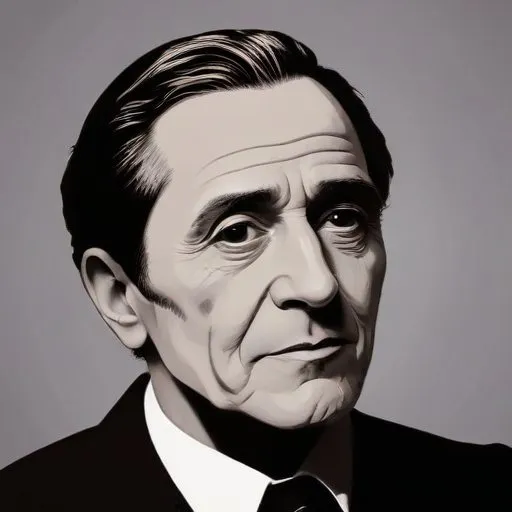
Wrote iconic songs like "Swanee" and "Tea for Two" that became synonymous with the Jazz Age, earning a place in the Grammy Hall of Fame.
Irving Caesar, born Isidor Keiser, is renowned for penning the lyrics to some of the most iconic song standards in American music, including "Swanee", "Sometimes I'm Happy", "Crazy Rhythm", and "Tea for Two", one of the most frequently recorded tunes in history.
Caesar was born on July 4, 1895, in New York City to Morris Keiser, a Romanian Jew. His older brother, Arthur Caesar, was a successful Hollywood screenwriter. The Caesar brothers grew up in Yorkville, the same Manhattan neighborhood where the Marx Brothers spent their childhood. Caesar's education took place at Chappaqua Mountain Institute in Chappaqua, New York.
Caesar's professional partnerships were diverse and prolific, collaborating with esteemed composers and songwriters such as Rudolf Friml, George Gershwin, Sigmund Romberg, Victor Herbert, Ted Koehler, and Ray Henderson. Two of his most notable works, "I Want to Be Happy" and "Tea for Two", were written with Vincent Youmans for the 1925 musical "No, No, Nanette".
"Animal Crackers in My Soup", popularized by Shirley Temple in her 1935 film "Curly Top", is another of Caesar's enduring hits. His 1929 adaptation of an Austrian song, "Just a Gigolo", became a staple for Louis Prima in the 1950s and again for David Lee Roth in the 1980s.
In the late 1930s, Caesar, alongside composer Gerald Marks, created a series of children's songs focusing on safety, racial tolerance, and world peace. These collections, including "Sing a Song of Safety", "Sing a Song of Friendship", and "Songs of Health", were performed by Caesar himself in schools across the country.
Caesar served on the ASCAP board of directors from 1930 to 1946 and again from 1949 to 1966, championing the rights of songwriters and composers. He was also a founding member of the Songwriters Guild of America.
In 1972, Caesar was inducted into the Songwriters Hall of Fame, a testament to his indelible mark on American music. His remarkable life and career spanned 101 years, leaving behind a treasure trove of timeless classics that continue to inspire generations of music lovers.
Irving Caesar's remarkable career serves as a testament to the power of music to unite and inspire, leaving behind a legacy that will continue to delight audiences for generations to come.
Born in 1898
A renowned pianist and composer who blended jazz and classical music to create iconic works like "Rhapsody in Blue" and "An American in Paris", leaving a lasting impact on American music.
Born in 1888
A legendary composer and pianist who wrote over 1,500 songs, including iconic American standards like "God Bless America" and "White Christmas", shaping the Great American Songbook.
Born in 1891
A legendary composer and songwriter behind timeless Broadway shows and Hollywood musicals, crafting witty, sophisticated, and romantic songs that have become jazz standards.
Born in 1902
Pioneering creator of iconic American musicals, blending music, dance, and drama to craft timeless classics like Oklahoma! and The Sound of Music.
Born in 1895
Wrote witty, romantic, and poignant lyrics for Broadway musicals, collaborating with Richard Rodgers to create iconic shows like Oklahoma! and South Pacific. 42
Born in 1846
A successful cigar manufacturer and opera composer, he founded the Manhattan Opera Company, which rivaled the Metropolitan Opera, and wrote operas like "Nora" and "Dream City".
Born in 1885
Pioneering composer of musical theater, crafting iconic songs and scores that blended jazz, opera, and popular music, shaping the American musical landscape.
Born in 1896
A legendary publicist and songwriter who crafted iconic MGM movie musicals and penned timeless standards like "Dancing in the Dark" and "Moonglow".
