


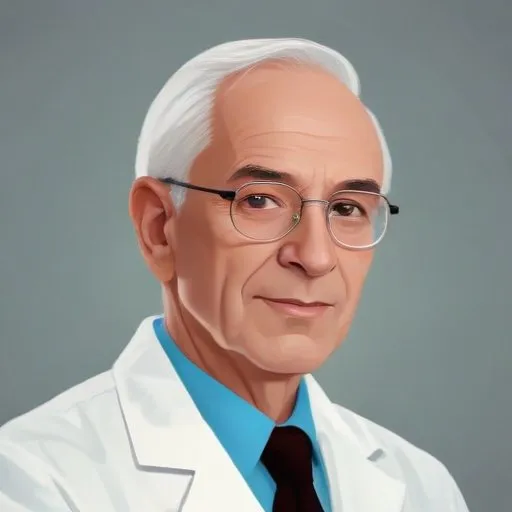
Developed vaccines and diagnostic tests for infectious diseases, including hepatitis B, and made significant contributions to the understanding of viral replication and gene expression.
Irving Millman, a trailblazing virologist and microbiologist, left an indelible mark on the scientific community with his groundbreaking work on hepatitis B. Alongside his collaborator Baruch Blumberg, Millman developed a test to detect the virus, paving the way for a vaccine that has saved countless lives worldwide.
Millman's journey began on May 23, 1923, and was punctuated by his service in the U.S. Army's Eighth Armored Division during World War II, where he earned a Bronze Star. After the war, he pursued his academic interests, earning a bachelor's degree from the City College of New York in 1948.
Millman's graduate work at the University of Kentucky and Northwestern University's School of Medicine laid the foundation for his future breakthroughs. His research with Blumberg focused on the hepatitis B virus, a complex and elusive foe. The duo discovered that the blood of individuals carrying the virus contained particles of the outside coating, hepatitis B surface antigen (HBsAg), which provoked an immune response but was not infectious itself.
To develop a vaccine, Millman and Blumberg developed a method to detach the coatings from the virus. This innovative approach enabled the creation of a vaccine that could be administered to newborns, providing vital protection against the disease.
Millman's work has had a profound impact on public health, saving countless lives and preventing the spread of hepatitis B. His contributions to virology and microbiology have inspired generations of scientists, cementing his place as a pioneer in his field.
Millman's achievements were recognized with numerous awards and honors, including the prestigious Institute of Medicine award.
As a Jewish-American, Millman's heritage played a significant role in shaping his worldview and values. His experiences during World War II had a profound impact on his perspective, solidifying his commitment to improving human life through science.
Irving Millman's remarkable journey serves as a testament to the power of human ingenuity and the impact of dedicated scientists. His groundbreaking work on hepatitis B has saved countless lives, leaving an indelible mark on the scientific community and beyond.
Born in 1914
Developed the first inactivated poliovirus vaccine, leading to the near eradication of polio, and founded the Salk Institute for Biological Studies.
Born in 1906
A Polish-American physician and virologist who developed the oral polio vaccine, saving millions of lives and nearly eradicating the disease. His work has had a lasting impact on global public health.
Born in 1916
A Polish-American scientist who developed the world's first effective live polio vaccine, revolutionizing the fight against this debilitating disease.
Born in 1915
A Nobel Prize-winning biologist and immunologist who made groundbreaking discoveries in tissue transplantation and immunology, leading to significant advancements in organ transplants and our understanding of the immune system.
Born in 1901
A pioneer in microbiology and environmentalism, he explored the interconnectedness of humans and their ecosystem, advocating for a holistic approach to health and conservation.
