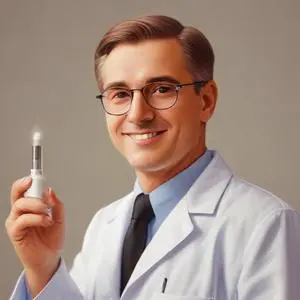
Albert Sabin: The Visionary Behind the Oral Polio Vaccine
The Breakthrough Discovery
Albert Sabin is renowned for developing the oral polio vaccine, a groundbreaking achievement that has played a pivotal role in nearly eradicating the dreaded polio disease. His pioneering work has saved millions of lives and has left an indelible mark on the world of medicine.
Early Life and Education
Born on August 26, 1906, in Bialystok, Poland (then part of the Russian Empire), Abram Saperstejn, later known as Albert Sabin, was the son of Polish-Jewish parents, Jacob Saperstejn and Tillie Krugman. In 1921, he immigrated to the United States with his family, settling in Paterson, New Jersey. Sabin became a naturalized citizen in 1930, adopting the surname Sabin and the middle name Bruce.
Academic Pursuits
Sabin's educational journey began with a degree in dentistry, but his fascination with virology soon led him to switch majors. He received a Bachelor of Science degree in 1928 and a medical degree in 1931 from New York University.
Medical Career
Sabin's medical career was marked by diverse experiences, including training in internal medicine, pathology, and surgery at Bellevue Hospital in New York City (1931-1933) and research stints at The Lister Institute for Preventive Medicine in England (1934) and the Rockefeller Institute for Medical Research (now Rockefeller University). His interest in infectious diseases grew during this period.
The Cincinnati Years
In 1939, Sabin joined Cincinnati Children's Hospital in Ohio, where he conducted extensive research on polio. His work focused on understanding the virus and developing a vaccine that could be administered orally, making it easier to distribute and administer, especially in developing countries.
The Oral Polio Vaccine
Sabin's tireless efforts culminated in the development of the oral polio vaccine (OPV) in the 1950s. This groundbreaking achievement revolutionized the fight against polio, as the vaccine could be easily administered to millions of people, providing widespread immunity.
Personal Milestones and Key Life Events
- 1969-1972: Sabin served as the president of the Weizmann Institute of Science in Israel.
- 1983: He developed calcification of the cervical spine, which led to paralysis and intense pain. This experience motivated him to dedicate the rest of his life to alleviating pain.
- 1992: Sabin underwent successful surgery at Johns Hopkins Hospital to treat his condition.
- March 3, 1993: Albert Sabin passed away in Washington, D.C., due to heart failure.
Legacy and Impact
Albert Sabin's contributions to medical science have been immense. His oral polio vaccine has saved millions of lives and has brought the world closer to eradicating polio. His work has inspired generations of scientists and has paved the way for further research in infectious diseases.
Inspirational Quotes
"The time is always right to do what is right." - Albert Sabin
Throughout his life, Albert Sabin remained committed to his mission of alleviating human suffering. His remarkable journey serves as a testament to the power of dedication, perseverance, and innovation in the pursuit of making the world a better place.
FAQ
What is the significance of Albert Sabins work in the field of virology?
Albert Sabins work in virology led to the development of the oral poliovirus vaccine, which has saved millions of lives worldwide. His research on the poliovirus and its transmission was instrumental in controlling and eventually eradicating the disease.
How did Albert Sabins experiences in World War II shape his research?
Sabins experiences as a physician during World War II exposed him to the devastating effects of polio on soldiers and civilians. This firsthand experience motivated him to focus his research on developing a vaccine to combat the disease.
What were the key factors that contributed to Albert Sabins success?
Sabins success was due to his dedication, perseverance, and innovative approach to vaccine development. He was also fortunate to have access to advanced research facilities and collaborating with other prominent scientists of the time.
How did Albert Sabins vaccine impact the global fight against polio?
Sabins oral poliovirus vaccine was instrumental in reducing the incidence of polio worldwide. Its widespread adoption led to a significant decline in polio cases, paving the way for global polio eradication efforts.
What is Albert Sabins legacy in the scientific community?
Albert Sabin is remembered as a pioneer in the field of virology, whose groundbreaking work on the poliovirus vaccine has saved countless lives. His contributions have inspired generations of scientists and continue to drive progress in vaccine development and global health initiatives.