


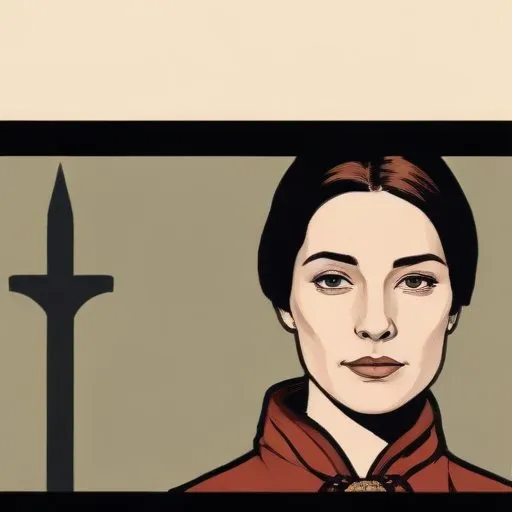
A 14th-century noblewoman who held significant power and influence through her marriages and family connections, playing a crucial role in shaping medieval English politics.
Isabel le Despenser, Countess of Worcester, is notorious for her tumultuous life, marked by controversy, scandal, and a web of intricate relationships that continue to fascinate historians. As the daughter of Philip le Despenser, 1st Baron le Despenser, and niece of Hugh le Despenser the Younger, a favorite of King Edward II, Isabel's life was inextricably linked with the royal court and the powerful nobility of medieval England.
Isabel's claim to infamy stems from her multiple marriages, all of which were shrouded in controversy. Her first marriage to Richard de Beauchamp, 1st Earl of Worcester, was annulled due to consanguinity, only to be followed by a clandestine marriage to Sir Richard de Verdun. This union was short-lived, as Verdun died under mysterious circumstances, sparking whispers of murder and adultery.
Isabel's life serves as a testament to the treacherous landscape of medieval English politics, where allegiances were forged and broken with alarming frequency. Her story raises important questions about the agency and autonomy of women in a patriarchal society, where their bodies and marriages were often used as pawns in the game of power.
Isabel's life may have been marked by scandal and controversy, but it also serves as a powerful reminder of the complexities of female agency in a patriarchal society. Her story continues to captivate historians and scholars, offering a unique window into the intricate web of relationships and power struggles that defined medieval England.
Isabel le Despenser's life was set against the backdrop of a tumultuous period in English history, marked by the deposition of King Edward II and the rise of Edward III. Her story is a testament to the enduring power of women in the medieval era, even in the face of overwhelming odds and patriarchal constraints.
Born in 1367
The last king of the House of Plantagenet, deposed in a coup, known for his extravagance and tyranny, leading to his downfall and the rise of the Lancastrian dynasty.
Born in 1340
A powerful and wealthy medieval English nobleman, known for his immense influence on English politics and his role in the Hundred Years' War. He was also a patron of the arts and a founder of Trinity College, Cambridge.
Born in 1284
The king whose disastrous reign led to his eventual deposition and mysterious death, remembered for his alleged homosexual relationships and power struggles with nobles.
Born in 1133
King of England from 1154 to 1189, known for establishing a strong centralized government, reforming the English church, and his tumultuous relationships with Thomas Becket and his sons.
Born in 1367
The last king of the House of Plantagenet, deposed in a coup, known for his extravagance and tyranny, leading to his downfall and the rise of the Lancastrian dynasty.
39 Years Old
Australian left-arm orthodox spinner who took 96 wickets in 59 first-class matches, including 15 wickets in a Sheffield Shield season.
