


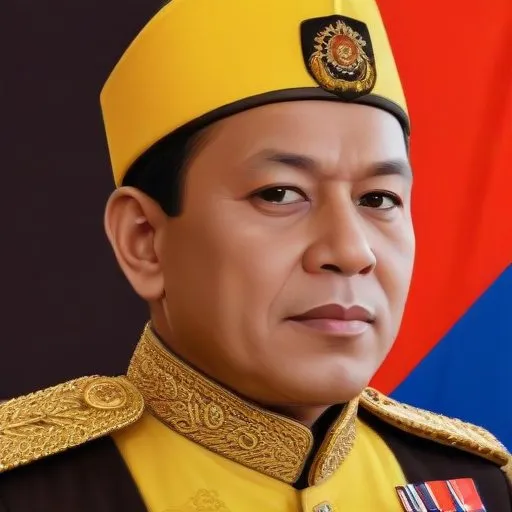
The fourth Yang di-Pertuan Agong of Malaysia, serving from 1965 to 1970, and known for his role in modernizing and stabilizing the country during a tumultuous period.
Sultan Sir Ismail Nasiruddin Shah, the 15th Sultan of Terengganu, is remembered for his remarkable reign from 1945 to 1979, as well as his tenure as the fourth Yang di-Pertuan Agong, the constitutional monarch of Malaysia, from 1965 to 1970.
Born on January 27, 1907, in Kuala Terengganu, Sultan Ismail was the fifth son of Sultan Zainal Abidin III ibni Sultan Ahmad II. His mother, Cik Maimuna binti Abdullah, was a Thai Muslim convert who sadly passed away in 1918. The Sultan received his education at the Kuala Terengganu Malay School and later attended the prestigious Malay College.
In 1929, Sultan Ismail entered the Terengganu administrative service, where he quickly made a name for himself as a capable and dedicated public servant. He held various positions, including Assistant Collector of Land Revenue, Aide-de-Camp to his elder half-brother Sultan Sulaiman, and Registrar of the High Court and the Court of Appeal.
Following the death of Sultan Sulaiman Badrul Alam Shah in 1942, a succession dispute arose. The Japanese Military Administration, which occupied Malaya at the time, recognized Sultan Ali Shah as the new Sultan of Terengganu. However, the Thai government later took over the administration of Terengganu and recognized Sultan Ismail as the rightful Sultan in 1943.
Sultan Ismail's reign was marked by wisdom, progress, and modernization. He worked tirelessly to develop Terengganu, introducing reforms in education, agriculture, and infrastructure. His commitment to the welfare of his people earned him great respect and admiration.
As the fourth Yang di-Pertuan Agong of Malaysia, Sultan Ismail played a crucial role in shaping the country's early years. He worked closely with the government to promote national unity, economic growth, and social development.
Sultan Ismail received numerous awards and honors for his service to his state and country. He was knighted by Queen Elizabeth II in 1958 and awarded the Seri Maharaja Mangku Negara, one of Malaysia's highest honors, in 1965.
Sultan Ismail was known for his humility and simplicity. Despite his royal status, he remained grounded and connected to his people. He was a devoted husband and father, and his family life was marked by love, respect, and tradition.
Sultan Sir Ismail Nasiruddin Shah's legacy extends far beyond his reign as Sultan of Terengganu and Yang di-Pertuan Agong of Malaysia. He remains an iconic figure in Malaysian history, synonymous with wisdom, leadership, and vision. His commitment to the development of his state and country continues to inspire generations of Malaysians.
Born in 1903
Led the country to independence from British colonial rule and played a key role in shaping Malaysia's early years. He's revered as a national hero and a symbol of Malaysian unity.
98 Years Old
The fifth Yang di-Pertuan Agong of Malaysia, serving from 1970 to 1975, known for his role as the head of state and symbolic unifier of the Malaysian people. He also played a key role in maintaining national stability during a tumultuous period in Malaysian history.
Born in 1903
Led the country to independence from British colonial rule and played a key role in shaping Malaysia's early years. He's revered as a national hero and a symbol of Malaysian unity.
Born in 1925
A Malaysian physician-turned-politician who served as Prime Minister twice, implementing economic reforms and promoting national unity. He's known for his strong leadership and nation-building efforts.
