


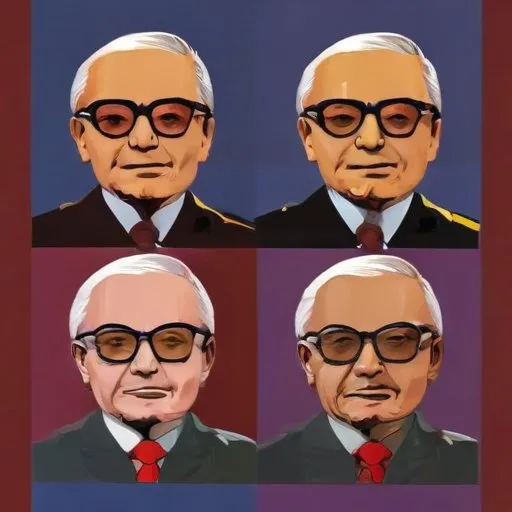
Led the country to independence from British colonial rule and played a key role in shaping Malaysia's early years. He's revered as a national hero and a symbol of Malaysian unity.
Tunku Abdul Rahman, widely regarded as Malaysia's founding father, is best known for leading the country to independence from British colonial rule in 1957 and later forming the state of Malaysia in 1963. As the first prime minister of Malaysia, he dominated the country's politics for 13 years, leaving a lasting legacy in the nation's history.
Tunku Abdul Rahman was born on 8 February 1903, in Alor Setar, Kedah, as the seventh son of Sultan Abdul Hamid Halim Shah, the 26th ruler of the Kedah Sultanate. His mother, Cik Menyelara Nueang Nandanagara, was a Thai and the sixth wife of Sultan Abdul Hamid Halim Shah.
Tunku received his early education at the Malay College in Kuala Kangsar, Perak, and later pursued higher education at St. Catherine's College, Cambridge, where he earned a degree in law in 1930.
Tunku returned to Malaya in 1931 and began his political career as a government clerk. He later joined the Malayan Civil Service and served as a district officer in several districts, including Kuala Lumpur and Pahang.
In 1945, Tunku co-founded the United Malays National Organisation (UMNO), which would become the leading force in the country's fight for independence. He became the party's president in 1951 and led the negotiations with the British government for independence.
On 31 August 1957, Malaya gained independence from British colonial rule, with Tunku Abdul Rahman as the country's first prime minister. He successfully incorporated the Federation of Malaya, British North Borneo (renamed Sabah), Sarawak, and Singapore into the state of Malaysia in 1963.
Tunku Abdul Rahman's vision for a united and independent Malaysia has had a lasting impact on the country's politics, economy, and society. He is widely regarded as the country's founding father, and his legacy continues to inspire national pride and unity.
Tunku Abdul Rahman married twice, first to Meriam Chong in 1933, with whom he had two sons, and later to Violet Seong in 1972.
He resigned as prime minister in 1970, following the 1969 racial riots in Kuala Lumpur. Tunku passed away on 6 December 1990, at the age of 87, leaving behind a legacy that continues to inspire and influence Malaysian politics and society.
Today, Tunku Abdul Rahman's vision for a united and independent Malaysia remains an integral part of the country's national identity, and his contributions to the nation's development and growth are still celebrated and recognized.
Born in 1925
A Malaysian physician-turned-politician who served as Prime Minister twice, implementing economic reforms and promoting national unity. He's known for his strong leadership and nation-building efforts.
Born in 1923
The founder of modern Singapore, who transformed the country from a poor post-colonial state to a thriving economic powerhouse through visionary leadership and pragmatic policies. He is revered for his role in shaping Singapore's identity and prosperity.
Born in 1901
Led Indonesia to independence from the Netherlands, serving as the country's first president and implementing a policy of nationalization and industrialization. He's known for his charismatic leadership and vision for a unified Indonesia.
Born in 1922
A Malaysian lawyer and politician who served as the country's third Prime Minister, known for his efforts to reduce racial tensions and promote national unity. He's also credited with establishing the New Economic Policy to eradicate poverty and redistribute wealth.
Born in 1922
Malaysia's second Prime Minister, serving from 1970 to 1976, known for implementing policies to reduce poverty and inequality, and promoting national unity.
Born in 1915
A Malaysian politician who served as Deputy Prime Minister from 1957 to1969, playing a key role in the country's early years of independence. He was a strong advocate for Malay rights and unity.
