


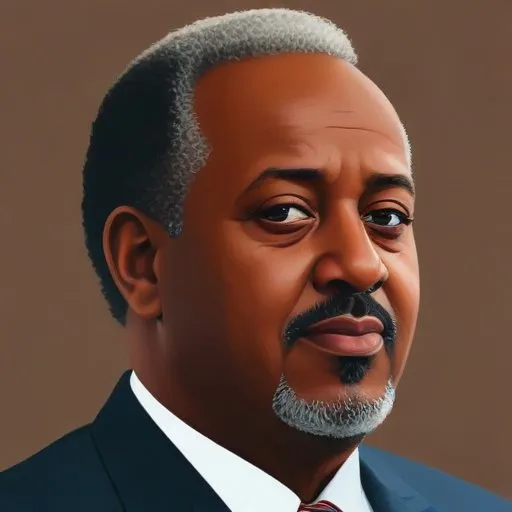
The President of Djibouti, a strategic Horn of Africa nation, who has held power since 1999, maintaining stability and fostering economic growth. He's known for his diplomatic efforts and regional influence.
Ismal Omar Guelleh, commonly referred to by his initials IOG, is a Djiboutian politician who has been serving as the President of Djibouti since 1999, making him one of the longest-serving rulers in Africa. With a tenure spanning over two decades, Guelleh's leadership has been marked by controversies, criticisms, and accolades, cementing his position as a dominant figure in African politics.
Born on November 27, 1946, in Dire Dawa, Ethiopia, Guelleh hails from the politically influential Mamassan subclan of the Ciise Dir clan of the Somali ethnic group. His father, Omar Guelleh, was one of the first native teachers in the 1930s and later worked for the Franco-Ethiopian Railway Company. Guelleh's early education was at a traditional Islamic school, followed by high school in Djibouti. In 1964, at the age of 18, he began working in the General Information of the French Territory of the Afars and the Issas, leveraging his proficiency in Amharic, Somali, Arabic, French, Italian, and English.
In 1975, Guelleh was suspended from his duties due to suspicions of transmitting information to the independence movement. This marked a turning point in his political career, as he became involved in the African nationalist movement. His uncle, Hassan Gouled Aptidon, who had been ruling Djibouti since independence in 1977, handpicked Guelleh as his successor in 1999. Guelleh's subsequent election victories in 2005, 2011, 2016, and 2021 solidified his grip on power, despite opposition boycotts and allegations of irregularities.
Guelleh's rule has been marred by criticisms from human rights groups and governments, including the United States, who have characterized him as a dictator. His government has been accused of suppressing political freedoms, restricting the media, and perpetuating human rights abuses. However, Guelleh's supporters argue that he has maintained stability and security in a volatile region.
At the international level, Guelleh has fostered a close alliance with France, Djibouti's former colonial power. In 2019, he was awarded the Padma Vibhushan, India's second-highest civilian award, for his role in the safe evacuation of Indian citizens from Yemen. This recognition underscores his ability to navigate complex regional politics and maintain strategic relationships.
Ismal Omar Guelleh's enduring presence in African politics has been marked by both praise and criticism. While his rule has been characterized by controversy, he has also maintained a degree of stability in a region prone to upheaval. As one of the longest-serving leaders in Africa, Guelleh's legacy will continue to shape the course of Djibouti's history.
As Guelleh continues to lead Djibouti into an uncertain future, his legacy will be shaped by his ability to balance competing interests, navigate regional politics, and address the needs of his people. Love him or criticize him, Ismal Omar Guelleh remains an indomitable figure in African politics.
90 Years Old
The President of Gabon from 1967 to 2009, who ruled with an iron fist, suppressing opposition and amassing vast wealth, while maintaining close ties with French leaders. He's infamous for his corrupt and authoritarian regime.
71 Years Old
The authoritarian leader who ruled Ethiopia for over two decades, implementing policies that brought rapid economic growth but also suppressed human rights and dissent. He played a key role in regional politics, particularly in Somalia.
89 Years Old
The 5th President of Algeria, a key figure in the country's struggle for independence and a dominant force in its politics for over two decades, known for his role in ending the country's civil war.
Born in 1924
The 2nd President of Zimbabwe, a controversial figure who ruled with an iron fist, known for his country's economic downfall and human rights abuses.
