


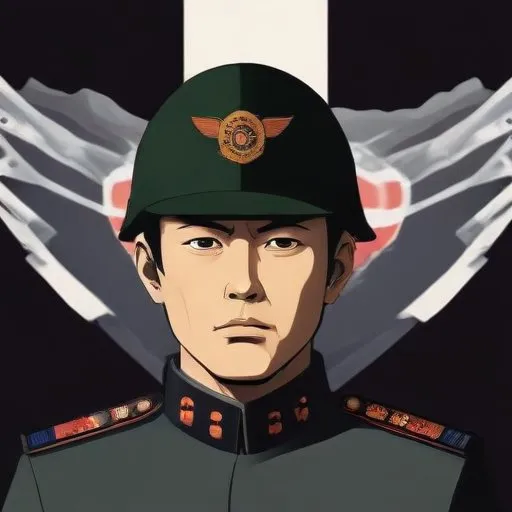
A leading figure in Japan's modernization, he played a key role in the Meiji Restoration and later became a prominent advocate for democratic rights and parliamentary government.
Born on May 21, 1837, in Tosa Domain, present-day Kōchi Prefecture, Japan, Itagaki hailed from a middle-ranking samurai family. He pursued his studies in Kōchi and Edo, later being appointed as a sobayonin (councillor) to Tosa daimyō Yamauchi Toyoshige in 1861. During his tenure, he oversaw accounts and military matters at the domain's Edo residence.
Itagaki's disagreement with the domain's official policy of kōbu gattai (reconciliation between the Imperial Court and the Tokugawa shogunate) led him to meet with Saigō Takamori of the Satsuma Domain in 1867-1868. Together, they pledged Tosa's forces to overthrow the shogun in the upcoming Meiji Restoration. During the Boshin War, Itagaki emerged as a principal political figure from Tosa Domain, leading the Jinshotai assault force. Following the Tokugawa defeat, he secured a position in the new Meiji government.
In 1869, Itagaki was appointed a Councilor of State and played a pivotal role in several key reforms, including the abolition of the han system in 1871. As a sangi (councillor), he temporarily led the government during the absence of the Iwakura Mission. However, Itagaki resigned from the Meiji government in 1873, citing disagreements with the government's policy of restraint toward Korea (Seikanron) and the Chōshū-Satsuma domination of the new government.
In 1874, Itagaki, along with Gotō Shōjirō of Tosa, Etō Shinpei and Soejima Taneomi of Hizen, founded the Aikoku Kōtō (Public Party of Patriots). This marked the inception of Japan's first political party, predicated on the principles of democracy, human rights, and popular sovereignty. The party's declaration proclaimed, "We, the thirty million people in Japan, are all equally endowed with certain definite rights, among which are those of enjoying and defending life and liberty, acquiring and possessing property, and obtaining a fair and equal education."
Itagaki's commitment to liberal democracy, human rights, and the empowerment of the people was unwavering. He believed that the state's primary function was to protect individual rights and promote social welfare. His vision for a democratic Japan was rooted in the principles of liberty, equality, and justice, which continues to inspire generations of Japanese politicians and civilians alike.
Itagaki's contributions to Japan's modern political landscape are immeasurable. He played a crucial role in shaping the country's transition from a feudal society to a modern, democratic state. His advocacy for human rights, popular sovereignty, and democracy continues to influence Japanese politics, ensuring his legacy as a champion of freedom and democracy.
Itagaki's passing on July 16, 1919, marked the end of an era. His tireless efforts to promote democracy, human rights, and the empowerment of the people had left an indelible mark on Japan's modern history. As a pioneer of Japanese liberalism, Itagaki's legacy serves as a beacon of inspiration, guiding future generations toward a more just and equitable society.
Born in 1833
A prominent leader in Japan's Meiji Restoration, he played a crucial role in modernizing the country's government and military, abolishing feudalism and introducing Western-style reforms.
Born in 1828
Leader of the Satsuma Rebellion, a samurai who fought against the modernization of Japan, seeking to preserve traditional ways. He's known for his bravery and tragic demise.
Born in 1838
A prominent Japanese leader who served as Prime Minister twice, playing a key role in modernizing Japan's military and politics. He's known for his efforts to transform Japan into a major world power.
