


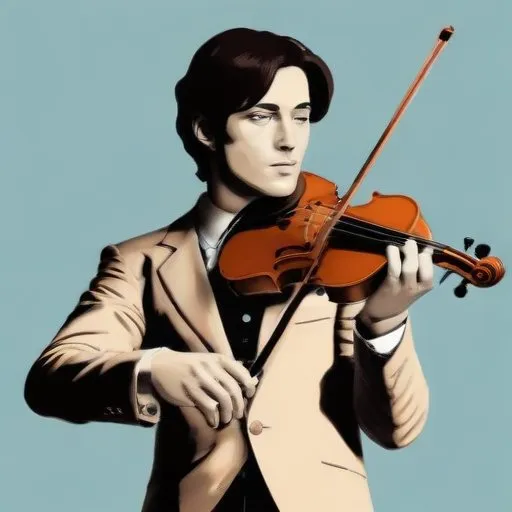
A renowned 18th-century virtuoso, he was a master of the violin, leaving an indelible mark on the classical music scene with his compositions and performances.
Ivan Mane Jarnovi, a virtuosic violinist and composer, left an indelible mark on the 18th century European music scene. With a career spanning the continent, he mesmerized audiences with his exceptional talent, performing and composing in almost every major musical center of the time.
The exact details of Jarnovi's birth and early life remain shrouded in mystery. Reputedly born at sea, en route from Dubrovnik to Palermo, Sicily, or possibly in Palermo itself, Jarnovi's baptismal record in the church San Antonio Abate on 29 October 1747 is one of the few concrete facts about his early years.
Jarnovi's remarkable talent earned him the tutelage of Antonio Lolli, and he went on to share concert programs with the esteemed Joseph Haydn in London. His compositions, showcasing his mastery of the violin, traversed the continent, with performances in Paris, Berlin, Warsaw, St. Petersburg, Vienna, Stockholm, Basel, and London, among others.
Jarnovi's impact on the development of classical music is multifaceted. His compositions, with their emphasis on technical mastery and expressive nuance, influenced generations of composers and violinists. His performances, which traversed the European continent, helped spread musical ideals and fostered a sense of cultural unity.
Little is known about Jarnovi's personal beliefs and philosophical leanings. However, his music, often characterized by its lyricism and emotional depth, hints at a deep understanding of human experience and the power of art to evoke and express the human condition.
Jarnovi's later years remain somewhat of an enigma, with significant gaps in the biographical record. He died on 23 November 1804 in St. Petersburg, Russia, leaving behind a legacy of beauty, elegance, and technical mastery.
Today, Jarnovi's music continues to inspire and delight audiences, offering a glimpse into the rich cultural tapestry of 18th century Europe. His enigmatic persona, paired with his remarkable talent, has cemented his place as one of the most fascinating figures in classical music history.
Born in 1782
A virtuosic violinist and composer who revolutionized the instrument's technical possibilities, leaving an indelible mark on classical music.
Born in 1678
A virtuosic violinist and prolific composer, he crafted over 400 concertos, including "The Four Seasons," which remains a beloved and iconic masterpiece of classical music.
Born in 1756
A child prodigy and master of classical music, he composed over 600 works, including symphonies, operas, and chamber music, that continue to inspire and influence musicians today.
Born in 1770
A musical genius who expanded the possibilities of classical music, creating iconic symphonies and piano sonatas that continue to inspire and influence generations of artists.
Born in 1811
A virtuosic pianist and composer who revolutionized classical music with his technically demanding and emotionally expressive works, blending Hungarian folk influences with Romantic-era drama.
Born in 1833
A renowned pianist and composer, he crafted complex, expressive works that blended traditional and innovative techniques, leaving an indelible mark on classical music.
Born in 1840
A renowned Russian composer and educator, he is best known for his iconic and beloved ballets, such as Swan Lake and The Nutcracker, which continue to enchant audiences worldwide.
Born in 1813
A renowned composer of iconic operas like La Traviata and Aida, known for his masterful blending of drama and music. His works continue to captivate audiences worldwide.
