


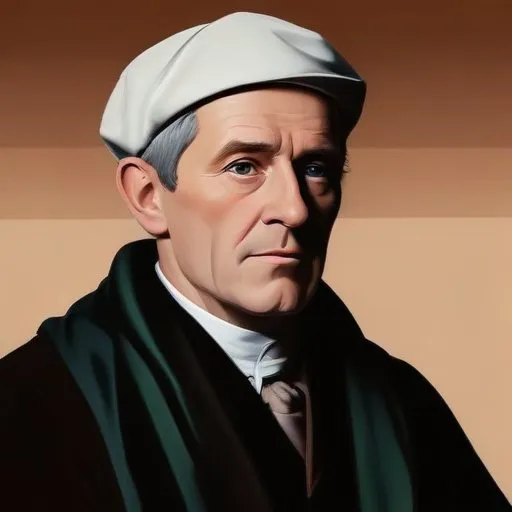
Renowned for their groundbreaking work in revising traditional views of ancient Greece and Rome, this scholar's research and writings continue to shape the field of classical history.
J. B. Bury, a luminary in the realm of history and classical scholarship, left an indelible mark on the academic world through his groundbreaking works and insightful contributions. Best known for his authoritative biographies and comprehensive histories, Bury's scholarly prowess spanned multiple disciplines, including medieval Roman history, philology, and Byzantine studies.
Born on October 16, 1861, in Clontibret, County Monaghan, Ireland, John Bagnell Bury was the son of Edward John Bury, a rector of the Anglican Church of Ireland. His early education began at home, under the tutelage of his parents, before he attended Foyle College in Derry. Bury's academic excellence led him to Trinity College Dublin, where he excelled in classics, earning a scholarship in 1879 and graduating in 1882.
Bury's academic trajectory was marked by numerous prestigious appointments and honors. He became a fellow of Trinity College Dublin at the age of 24 and later held the Erasmus Smith's Chair of Modern History from 1893 to 1902. During this period, he also served as Regius Professor of Greek. In 1902, Bury assumed the role of Regius Professor of Modern History at the University of Cambridge, a position he held until his passing in 1927.
Bury's magnum opus, A History of the Later Roman Empire, published in 1889, cemented his reputation as a leading authority on Byzantine history. He also authored the first truly authoritative biography of Saint Patrick in 1905, showcasing his expertise in medieval Roman history. Bury's scholarly acumen extended to philology, as evidenced by his mastery of Greek, Latin, and Russian.
At Cambridge, Bury guided the esteemed medievalist Steven Runciman, who later recalled being Bury's first and only student. This mentorship had a lasting impact on Runciman's own academic pursuits. Bury's legacy continues to influence the fields of history, classical scholarship, and philology, with his works remaining seminal references in these disciplines.
In 1885, Bury married his second cousin, Jane Bury, who actively supported his scholarly endeavors, contributing a chapter on Byzantine art to his History of the Later Roman Empire. The couple had one son together.
J. B. Bury passed away on June 1, 1927, at the age of 65, leaving behind a rich legacy of academic achievements and contributions. His remarkable body of work continues to inspire and inform scholars, ensuring his place as one of the most distinguished historians and classical scholars of his time.
Remember, delve into the fascinating world of J. B. Bury's scholarly endeavors and uncover the captivating narratives hidden within the realms of history and classical scholarship.
Born in 1737
Wrote "The History of the Decline and Fall of the Roman Empire", a monumental work that shaped the field of historiography and remains a classic in the study of ancient civilizations.
Born in 1817
A renowned historian and scholar who wrote extensively on ancient Rome, earning a Nobel Prize in Literature for his monumental work "The History of Rome".
Born in 1818
A renowned historian and art critic who pioneered the field of cultural history, shedding light on the Renaissance and its significance in shaping modern Western culture.
Born in 1795
A pioneering historian who revolutionized the field by emphasizing empirical research and primary sources, known for his meticulous and objective approach to historical writing.
Born in 1825
A 19th-century bishop and historian who wrote influential works on medieval England, shaping the field of historical study. His writings remain essential reading for scholars today.
Born in 1814
A pioneering archaeologist and historian who uncovered the rich history of ancient Greece, shedding light on its art, architecture, and culture. His works remain a cornerstone of classical studies.
Born in 1866
A German lawyer and politician who served as the Mayor of Marburg, known for his contributions to the city's development and governance. He played a significant role in shaping the city's infrastructure and policies.
