


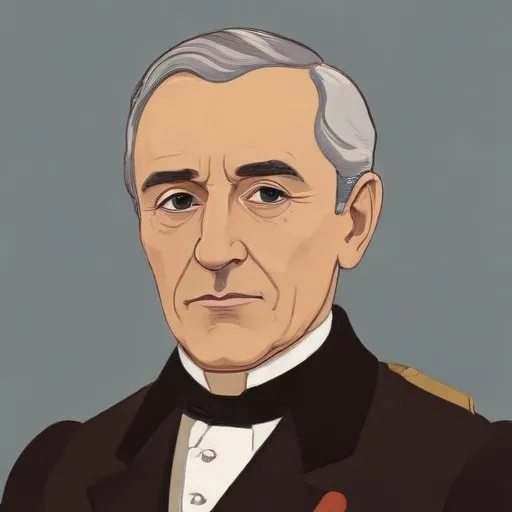
A British Army officer and military historian who developed the concept of modern armored warfare, influencing tank design and strategy. He also wrote extensively on military history and theory.
J. F. C. Fuller, a distinguished British Army officer, military historian, and strategist, is renowned for his pioneering work on modern armored warfare. With a prolific writing career spanning 45 books and numerous articles, Fuller's ideas influenced army officers and the general public alike, shedding light on the intricate relationship between warfare and societal, political, and economic factors.
Born on September 1, 1878, in Chichester, West Sussex, Fuller was the son of an Anglican clergyman. He spent his early years in Lausanne with his parents, before returning to England at the age of 11. Fuller attended Malvern College and later trained for an army career at the Royal Military College, Sandhurst, from 1897 to 1898.
Commissioned into the 1st Battalion of the Oxfordshire Light Infantry, Fuller served in South Africa from 1899 to 1902. He later served in India, where he contracted typhoid fever, and eventually returned to England on sick leave. During his recovery, he met his future wife, whom he married in December 1906.
Fuller's military career was marked by his fascination with the potential of new weapons, particularly tanks and aircraft, to psychologically stun a surprised enemy. He categorised principles of warfare, emphasizing the importance of speed, surprise, and decisive action. His work had a profound impact on the development of modern warfare, earning him recognition as an early theorist of armored warfare.
Fuller's ideas extended beyond the realm of military strategy, exploring the intricate relationships between warfare, society, politics, and economics. He believed that the business of fighting was inextricably linked to the civilian sector, and that understanding these connections was crucial for success on the battlefield.
Fuller's work had a profound impact on military strategy, influencing key figures such as Heinz Guderian, a leading proponent of blitzkrieg warfare. His ideas also reached beyond the military sphere, shaping the development of modern society and informing discussions on the relationship between war and society.
J. F. C. Fuller's work remains a testament to his vision and foresight, offering a rich understanding of the complexities of modern warfare. As a pioneer in the field, his ideas continue to influence military strategists and historians, ensuring his legacy as a leading figure in the development of modern warfare.
Through his work, Fuller bridged the gap between military strategy and societal understanding, leaving behind a lasting impact on our comprehension of the intricate relationships between war, society, and politics.
Born in 1871
Prolific writer of historical novels and adventure stories, also a talented landscape painter.
Born in 1890
Led the Allied forces to victory in World War II and later served as President, maintaining peace and prosperity during the Cold War era. He's known for his strategic leadership and diplomatic skills.
Born in 1885
A renowned military leader who played a crucial role in World War II, particularly in the Allied victory in Europe, known for his bold tactics and unapologetic style.
Born in 1891
A renowned World War II military strategist, known for leading the Afrika Korps and earning the respect of both allies and enemies with his tactical genius.
Born in 1888
A pioneering tank commander who revolutionized modern warfare with his innovative blitzkrieg tactics, earning him the nickname "Father of the Panzerwaffe".
Born in 1884
Led the Imperial Japanese Navy during World War II, masterminding the surprise attack on Pearl Harbor, and later became a symbol of Japanese military power and strategy.
Born in 1896
A Soviet military leader who played a crucial role in defeating Nazi Germany in World War II, and later became a key figure in Soviet politics.
Born in 1893
A high-ranking Nazi official, he was a decorated World War I fighter pilot and later became a prominent politician, serving as Minister President of Prussia. He's infamous for his role in the Nazi regime and war crimes trials.
