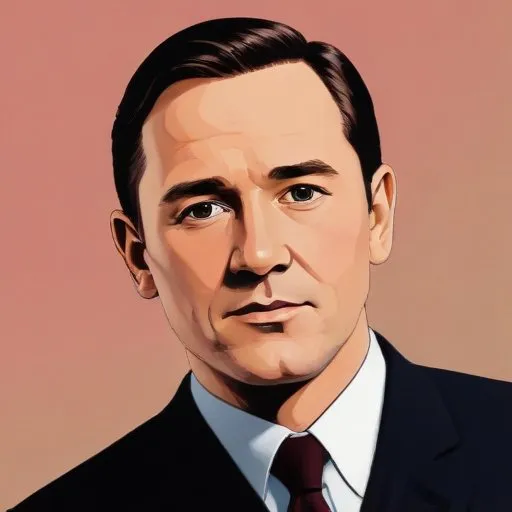
J. Lee Thompson: The Prolific Director of Thrillers and Classics
A Versatile Film Director and Screenwriter
J.
Lee Thompson was a renowned English film director, screenwriter, and producer, best known for his work in a wide range of genres, including thrillers, action, adventure, and kitchen sink realism. With a career spanning over five decades, Thompson directed over 40 films, earning him an Academy Award nomination and multiple BAFTA nominations.
Early Life and Career
Born on August 1, 1914, in Bristol, England, Thompson came from a family with strong ties to the theatre. He studied at Dover College and later joined the Nottingham Repertory Company as an actor and stagehand. During his spare time, Thompson wrote plays, with his first staged play, "Murder Happens," performed at Croydon in 1934. This early start in playwriting laid the foundation for his future success as a screenwriter and director.
Mainstream Successes
Thompson's breakthrough in filmmaking came with "Woman in a Dressing Gown" (1957), a critically acclaimed drama that showcased his ability to craft nuanced characters and stories. This was followed by the successful thriller "Ice Cold in Alex" (1958), which starred
John Mills and earned Thompson his first BAFTA nomination. The director's versatility was further demonstrated with "Tiger Bay" (1959), a tense thriller starring John Mills and
Hayley Mills, and "North West Frontier" (1959), an epic adventure film starring
Gregory Peck.
The Guns of Navarone and Hollywood Recognition
Thompson's most notable achievement came with "The Guns of Navarone" (1961), a World War II epic starring Gregory Peck,
David Niven, and
Anthony Quinn. The film earned Thompson an Academy Award nomination for Best Director and cemented his reputation as a master of the action-adventure genre.
Cult Classics and Later Career
In the 1960s and 1970s, Thompson directed a string of cult classics, including "Cape Fear" (1962), "The White Buffalo" (1977), and "Happy Birthday to Me" (1981). He also worked with
Charles Bronson on several films, including "King Solomon's Mines" (1985). Thompson continued to direct and produce films until his death on August 30, 2002.
Awards and Accolades
Throughout his career, Thompson received numerous awards and nominations, including:
- Academy Award nomination for Best Director for "The Guns of Navarone" (1961)
- Four BAFTA nominations for Best Film and Outstanding British Film
- Nominations from the Berlin International Film Festival and the Cannes Film Festival
- Golden Globe and Directors Guild of America Award nominations
Legacy and Impact
J. Lee Thompson's contributions to the film industry are undeniable. His versatility and ability to adapt to different genres have inspired generations of filmmakers. His influence can be seen in the work of directors such as
Steven Spielberg and
Martin Scorsese, who have cited Thompson as an inspiration. Today, Thompson's films continue to entertain and thrill audiences, solidifying his place as a true master of the cinematic arts.
FAQ
What was J. Lee Thompsons most successful film?
J. Lee Thompsons most successful film was The Guns of Navarone, a World War II adventure that won several Academy Awards and became a classic of the genre.
What inspired J. Lee Thompsons directorial style?
J. Lee Thompsons directorial style was inspired by his background in theater and his experience working with actors, which influenced his use of characterization and dialogue in his films.
What is J. Lee Thompsons most famous collaboration?
J. Lee Thompsons most famous collaboration was with actor Gregory Peck, with whom he worked on several films, including The Guns of Navarone and Cape Fear.
How did J. Lee Thompson transition from theater to film?
J. Lee Thompson transitioned from theater to film through his work as a screenwriter and director in the British film industry, where he developed his skills and eventually moved to Hollywood to work on bigger productions.
What is J. Lee Thompsons legacy in film?
J. Lee Thompsons legacy in film is that of a versatile and accomplished director who made significant contributions to a range of genres, including adventure, thriller, and drama.