


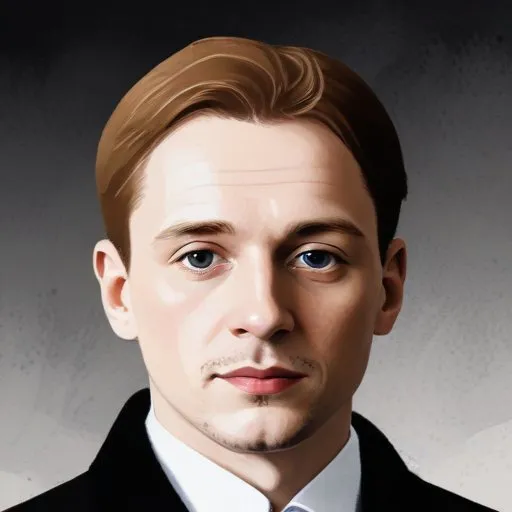
Esteemed Estonian literary figure, celebrated for his novels and poetry that explored the country's complex history and cultural identity. His works often blended historical fiction with philosophical introspection.
Jaan Kross is renowned as one of Estonia's most celebrated writers, known for his poignant and evocative works that captured the essence of his nation's tumultuous history. His remarkable life, marred by war, occupation, and imprisonment, served as the inspiration for his literary masterpieces, which have been translated into numerous languages and garnered international acclaim.
Born on February 19, 1920, in Tallinn, Estonia, Kross was the son of a skilled metal worker. He studied at Jakob Westholm Gymnasium and later attended the University of Tartu, where he graduated from the School of Law in 1945. During his academic tenure, Kross taught as a lecturer until 1946, and later became a Professor of Artes Liberales in 1998.
At the onset of World War II, the Soviet Union invaded and occupied Estonia, leading to Kross's arrest and imprisonment in 1944 by the German occupation authorities, who suspected him of promoting Estonian nationalism. Following the Soviet Union's reconquest of Estonia, Kross was arrested again in 1946 and deported to a Gulag camp in Vorkuta, Russia, where he spent eight years, six of which were spent working in the mines.
Upon his return to Estonia in 1954, Kross began his literary career, primarily writing poetry that alluded to contemporary phenomena through historical figures. He soon transitioned to prose, which became his dominant genre. Kross's writing was a reflection of his experiences, weaving together themes of identity, nationhood, and the human condition.
Kross is Estonia's most translated and internationally recognized writer. He received the honorary title of "People's Writer of Estonia" and was awarded the 1995 International Nonino Prize in Italy. His works have been translated into numerous languages, including English, French, German, and Swedish, cementing his reputation as a literary icon.
Kross's contributions to Estonian literature have been profound, inspiring generations of writers and readers alike. His legacy extends beyond his literary works, as he has become a symbol of resilience and creative expression in the face of turmoil and occupation.
59 Years Old
A Canadian-Estonian historian and academic specializing in Baltic and Eastern European history, particularly Estonia's modern history and politics. They've written extensively on these topics, providing valuable insights to scholars and enthusiasts alike.
91 Years Old
A minimalist composer renowned for his sacred, hauntingly beautiful music that often features slow, contemplative harmonies and sparse textures, evoking a sense of spirituality and calm.
97 Years Old
Estonian filmmaker and statesman who served as the country's president from 1992 to 2001, known for his efforts to integrate Estonia into the European Union and NATO. He was also a prolific writer and director, producing several documentaries and feature films.
