


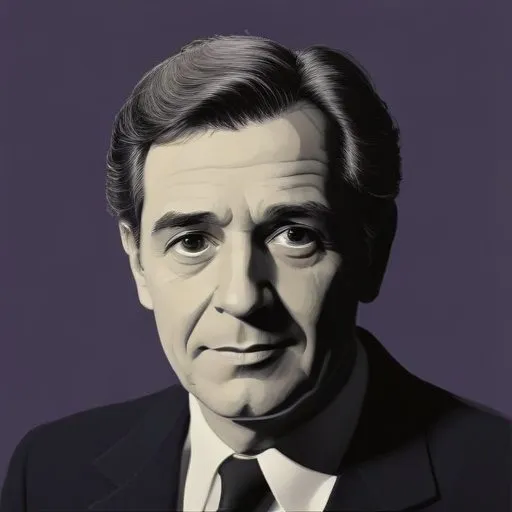
Pioneering science fiction writer and educator, known for his influential works that shaped the genre and inspired generations of authors, including George Lucas and Ursula K. Le Guin.
Jack Williamson, one of the most revered science fiction writers of all time, left an indelible mark on the genre with his groundbreaking works that spanned over seven decades. Known for his pioneering ideas, innovative storytelling, and prolific writing, Williamson is widely regarded as the "Dean of Science Fiction."
Born on April 29, 1908, in Bisbee, Arizona Territory, Williamson's early life was marked by adventure and exploration. His family's ranching ventures took them to the Sierra Madre Mountains in Sonora, Mexico, and later to rural New Mexico, where he developed a strong affinity for the American Southwest.
Williamson's fascination with science fiction began when he stumbled upon Hugo Gernsback's Amazing Stories magazine in 1926. This discovery sparked a creativity that would last a lifetime, and he soon began writing his own fiction. At just 20 years old, his first story, "The Metal Man," was published in Amazing Stories, marking the beginning of an illustrious career.
Williamson's work was instrumental in shaping the science fiction genre. His novel "The Legion of Time" (1938) is considered a classic of the genre, and his pioneering concept of "genetic engineering" in his 1944 novel "Dragon's Island" predates the real-world discovery of DNA's double helix structure.
Throughout his career, Williamson was influenced by and collaborated with other notable science fiction writers, including A. Merritt, Miles J. Breuer, and Hugo Gernsback. His stories often explored themes of space travel, time travel, and the consequences of technological advancements.
Williamson's contributions to science fiction were recognized with numerous awards and honors, including:
Jack Williamson's legacy extends far beyond his impressive bibliography. He inspired generations of science fiction writers, including Isaac Asimov, Arthur C. Clarke, and Ray Bradbury, among many others. His influence can be seen in popular culture, from films like "Star Wars" to television shows like "Doctor Who."
Throughout his life, Williamson remained an integral part of the science fiction community, mentoring young writers and participating in conventions and events. His dedication to the genre earned him the affectionate title of "Dean of Science Fiction."
Williamson served in the U.S. Army Air Corps during World War II as a weather forecaster. He later went on to earn a Ph.D. in English from the University of New Mexico in 1964, becoming one of the first science fiction writers to hold a doctoral degree.
Williamson passed away on November 10, 2006, leaving behind a rich legacy that continues to inspire and captivate readers around the world.
"Science fiction is a way of thinking, a mindset that says the universe is a pretty big place, and we're not the center of it." - Jack Williamson
"The best science fiction is not about the future; it's about the present, seen from a new angle." - Jack Williamson
A visual representation of Williamson's life and career:
| Year | Event |
|---|---|
| 1908 | Born in Bisbee, Arizona Territory |
| 1926 | Discovers Amazing Stories magazine |
| 1928 | First story, "The Metal Man," published in Amazing Stories |
| 1938 | Publishes "The Legion of Time" |
| 1944 | Publishes "Dragon's Island" |
| 1964 | Earns Ph.D. in English from the University of New Mexico |
| 1976 | Awarded Nebula Award for Grand Master |
| 2004 | Inducted into the Science Fiction and Fantasy Hall of Fame |
| 2006 | Passes away on November 10 |
Did you know that Jack Williamson:
Jack Williamson's remarkable life and career continue to inspire new generations of science fiction enthusiasts, cementing his place as one of the most important figures in the genre.
Born in 1920
A renowned science fiction author and biochemistry professor who wrote or edited more than 500 books and an estimated 90,000 letters and postcards throughout his lifetime.
Born in 1917
Pioneering science fiction author who wrote prophetic and imaginative novels, such as "2001: A Space Odyssey", that explored the intersection of technology and humanity.
Born in 1907
Pioneering science fiction author and screenwriter who penned influential classics like "Stranger in a Strange Land" and "Starship Troopers", exploring complex social and philosophical themes.
Born in 1920
Prolific author of poetic and imaginative science fiction, exploring the human condition through fantastical worlds and characters, with works adapted into films and TV shows.
Born in 1919
Pioneering science fiction author and journalist, known for exploring complex social and philosophical themes in his works, including the award-winning novel "Gateway".
95 Years Old
A Lithuanian-American author and critic, known for blending science fiction and social commentary in his works, exploring the human condition through futuristic and philosophical themes.
Born in 1913
A renowned sinologist and science fiction author, best known for blending Eastern and Western cultural elements in his imaginative and philosophical stories. His works explore the intersection of technology, humanity, and morality.
Born in 1910
Prolific author of fantasy, horror, and science fiction, crafting iconic characters like Fafhrd and Gray Mouser, and exploring the intersection of mythology and modern life.
