


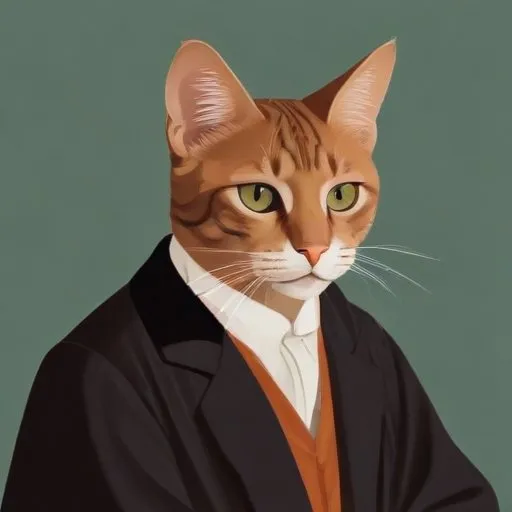
A 17th-century Dutch poet, jurist, and politician who wrote influential works on morality and marriage, and served as a Grand Pensionary of Holland. His poetry and wisdom are still studied and admired today.
Renowned for his ingenious emblem books, Jacob Cats was a multifaceted Dutch poet, humorist, jurist, and politician who left an indelible mark on the cultural and literary landscape of his time. His unique blend of wit, satire, and artistic expression captivated audiences, earning him a revered place in the annals of Dutch history.
Born on November 10, 1577, in Brouwershaven, Cats was orphaned at a young age and adopted by his aunt, Anna Breyde. He received his education in Breda and later studied law in Rotterdam and Paris. This solid foundation in law and literature laid the groundwork for his future endeavors.
Cats' defense of a person accused of witchcraft brought him widespread recognition and cemented his reputation as a skilled lawyer. His fame grew further when he was cured of a tertian fever, a form of malaria, by a mysterious doctor's powder. This brush with mortality may have influenced his later focus on poetry and the human condition.
In 1621, Cats was appointed pensionary of Middelburg and later of Dordrecht. His diplomatic career took him to England, where he was knighted by Charles I in 1627. He became the Grand Pensionary of Holland in 1636, a position he held for 15 years, and eventually resigned in 1651.
Cats' most enduring contribution is his iconic emblem books, which showcased his mastery of poetry, satire, and visual art. These books, filled with clever allegories and intricate illustrations, offered commentary on the human experience, morality, and the natural world. His most famous work, Silenus Alcibiadis, is considered a masterpiece of Dutch literature.
Jacob Cats' influence extends beyond his literary and poetic achievements. His diplomatic career, though not marked by grand accomplishments, denotes his adaptability and ability to navigate complex political landscapes. As a cultural icon, he continues to inspire artists, writers, and thinkers to this day.
Cats' wit and wisdom are reflected in his writings, which often contain insightful quotes and memorable sayings. One of his most famous quotes is: "The world is a book, and those who do not travel read only one page."
| 1577 | Born in Brouwershaven, Netherlands |
| 1605 | Marries Elisabeth van Valckenburg |
| 1621 | Becomes pensionary of Middelburg |
| 1627 | Knighted by Charles I of England |
| 1636 | Becomes Grand Pensionary of Holland |
| 1651 | Resigns as Grand Pensionary of Holland |
| 1660 | Passes away on September 12 |
Jacob Cats' remarkable life, marked by literary triumphs, diplomatic accomplishments, and personal milestones, continues to inspire and captivate audiences. His enduring legacy is a testament to the power of creativity, wit, and intellectual curiosity.
Born in 1587
A 17th-century master of Dutch literature, penning influential plays and poems that shaped the country's cultural identity. His works remain a testament to his innovative storytelling and poetic flair.
Born in 1585
A 17th-century Dutch literary figure, known for his poetic and theatrical works that often explored themes of love, morality, and everyday life in Amsterdam. His writings offer a unique glimpse into the culture and society of the Dutch Golden Age.
Born in 1596
A 17th-century Dutch master of words and music, known for his lyrical poetry and innovative compositions that blended French and Italian styles. He was a true Renaissance man, excelling in multiple artistic fields.
