


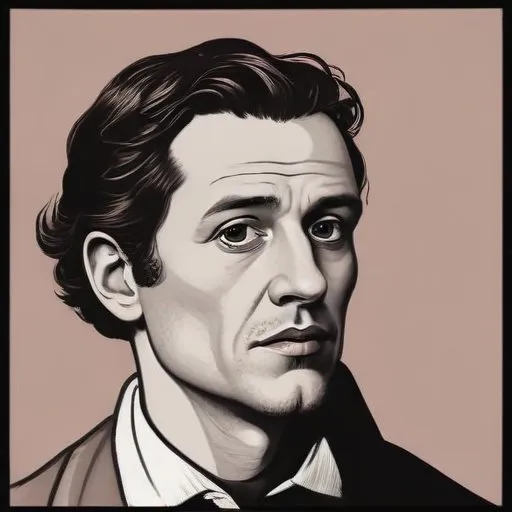
A 17th-century master of Dutch literature, penning influential plays and poems that shaped the country's cultural identity. His works remain a testament to his innovative storytelling and poetic flair.
Regarded as the greatest writer in the Dutch language, Joost van den Vondel is a towering figure in the history of Western literature. With a prolific career spanning over six decades, Vondel left an indelible mark on the literary landscape, earning him the title of the "Prince of Poets" in his native Netherlands.
Born in Cologne, Germany on November 17, 1587, Vondel's family, who were Mennonites, fled to Amsterdam in the Dutch Republic after the fall of Antwerp in 1585. This tumultuous start to life would later influence his writing, which often explored themes of faith, morality, and the human condition. In 1610, Vondel married Mayken de Wolff, with whom he had five children, and joined the Chamber of Rhetoric, a literary society that nurtured his passion for writing.
A pivotal moment in Vondel's life was his conversion to Catholicism, a decision that sparked controversy in the predominantly Protestant society of the Dutch Republic. This conversion not only shaped his worldview but also influenced his writing, which became increasingly focused on religious poetry and dramatic works.
Vondel's oeuvre consists of 33 plays, numerous poems in various genres, an epic poem, and translations of classical literature. His earliest known poem dates back to 1605, while his first play, Het Pascha, was written in 1612. However, it was his later works, such as Palamedes (1625) and Gijsbrecht van Aemstel (1637), that cemented his reputation as a master playwright.
Between 1654 and 1667, Vondel wrote some of his most acclaimed tragedies, including Lucifer, Salomon, and Noach. These works showcased his mastery of language, his exploration of complex themes, and his ability to craft compelling narratives that continue to captivate audiences to this day.
Vondel's impact on Dutch literature cannot be overstated. He is often credited with elevating the Dutch language to an unprecedented level of sophistication, earning it the nickname "the language of Vondel." His writing not only reflected the tumultuous era in which he lived but also helped shape the literary landscape of the Dutch Golden Age.
Throughout his long and distinguished career, Vondel continued to push the boundaries of literature, experimenting with form, language, and theme. His influence can be seen in the works of later writers, such as Vondel's contemporaries Pieter Cornelisz Hooft and Gerbrand Adriaensz Bredero, and continues to inspire generations of writers and scholars.
Vondel lived a long and fulfilling life, passing away in Amsterdam on February 5, 1679, at the age of 91. Despite his advanced age, he continued to write until the end, leaving behind a legacy that would shape the course of Dutch literature for centuries to come.
In his later life, Vondel dedicated himself almost exclusively to his dramatic work and religious poetry, producing some of his most revered works. His remarkable productivity and creativity, even in old age, are a testament to his enduring passion for writing and his commitment to his craft.
These quotes, taken from Vondel's writings, offer a glimpse into his philosophical mindset and his views on the role of the poet in society.
Vondel lived during a time of great turmoil, with the Dutch Republic embroiled in the Eighty Years' War. Despite these challenges, Vondel's writing remained a beacon of hope and inspiration, offering solace to his contemporaries and leaving a lasting legacy for future generations.
Today, Vondel is remembered as a towering figure in Dutch literature, a true prince of poets whose works continue to captivate readers and inspire writers around the world. His influence extends far beyond the boundaries of his native Netherlands, making him a significant figure in the broader landscape of Western literature.
Born in 1596
A 17th-century Dutch master of words and music, known for his lyrical poetry and innovative compositions that blended French and Italian styles. He was a true Renaissance man, excelling in multiple artistic fields.
Born in 1610
A 17th-century master of peasant scenes, capturing rustic life with humor and empathy. His genre paintings offer a glimpse into the daily lives of ordinary people.
Born in 1606
A master of light and shadow, this 17th-century artist is renowned for his emotionally charged and deeply human portraits, landscapes, and biblical scenes that continue to captivate art lovers worldwide.
