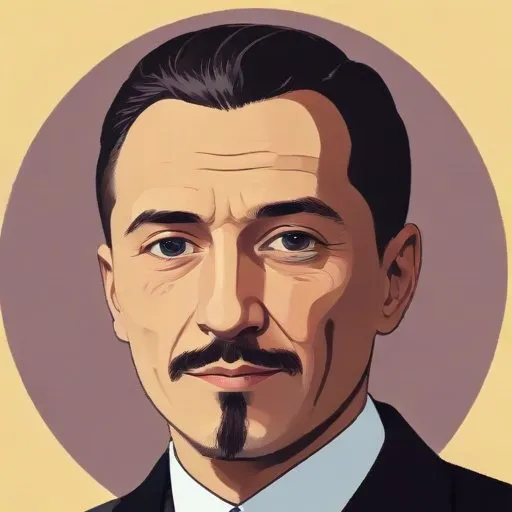
Jacob Mikhailovich Gordin: The Father of Yiddish Realism
A Pioneer in Yiddish Literature
Jacob Mikhailovich Gordin, a Ukrainian-born Russian Jewish playwright and journalist, is best known for revolutionizing Yiddish literature with his pioneering works that introduced realism to the genre. Through his plays and writings, Gordin challenged societal norms, shedding light on the struggles of the Jewish community and paving the way for future generations of Yiddish writers.
Early Life and Inspiration
Born on May 1, 1853, in Mirgorod, Ukraine, Gordin grew up in a poor family and received a traditional Jewish education. His early exposure to Jewish folklore and literature inspired him to explore the world of writing. In 1871, Gordin moved to Odessa, where he became immersed in the city's vibrant cultural scene, influencing his development as a writer.
The Rise of Yiddish Realism
Gordin's literary career took off in the 1880s, when he began writing plays that deviated from the traditional Yiddish folk tales and melodramas. His groundbreaking works, such as
The Jewish King Lear (1892) and
The Benefit Performance (1893), introduced realism to Yiddish literature, tackling themes like poverty, social inequality, and the struggles of Jewish immigrants.
Philosophical Contributions and Beliefs
Gordin's writings were deeply rooted in his philosophical beliefs, which emphasized the importance of social justice, humanism, and the preservation of Jewish cultural heritage. He believed that literature should serve as a mirror to society, reflecting the harsh realities of the time and inspiring change.
Personal Milestones and Key Life Events
- In 1888, Gordin emigrated to the United States, where he continued to write and became an influential figure in New York City's Yiddish theater scene.
- In 1899, he co-founded the Vereinigte Yiddish Gesellschaft, a society dedicated to promoting Yiddish culture and literature.
Influence on Modern Society
Gordin's contributions to Yiddish literature have had a lasting impact on modern society. His works inspired a new generation of Yiddish writers, such as
Sholem Asch and
Isaac Bashevis Singer, and paved the way for the development of Jewish American literature.
Career Highlights and Major Works
- The Jewish King Lear (1892) - a pioneering play that introduced realism to Yiddish theater
- The Benefit Performance (1893) - a play that tackled social inequality and poverty
- The People (1895) - a novel that explored the struggles of Jewish immigrants in the United States
Legacy and Historical Context
Gordin's legacy extends beyond his literary contributions. He was a champion of social justice, women's rights, and the preservation of Jewish cultural heritage. His works reflect the historical context of the late 19th and early 20th centuries, providing a unique glimpse into the lives of Jewish immigrants and the development of Yiddish literature.
Comparative Analysis with Contemporaries
Gordin's innovative approach to Yiddish literature can be compared to the works of contemporaries like I.L. Peretz and S.Y. Abramovitsh, who also sought to modernize and revitalize Yiddish literature. However, Gordin's emphasis on realism and social justice set him apart from his peers.
Personal Relationships and Anecdotes
Gordin's close relationships with fellow writers and intellectuals, such as Abraham Cahan and Sholem Asch, played a significant role in shaping his literary career. According to Cahan, Gordin's plays were often inspired by real-life events and people he encountered in his daily life.
Impact on Pop Culture
Gordin's influence can be seen in the works of subsequent Yiddish writers, as well as in the development of Jewish American literature. His pioneering spirit and commitment to social justice have inspired generations of writers, artists, and intellectuals.
Awards and Honors
Gordin's contributions to Yiddish literature have been recognized with numerous awards and honors, including the inaugural Yiddish PEN Club Award in 1917.
Trivia and Fun Facts
- Gordin was known for his intense focus on his writing, often working for 12 hours a day.
- He was an avid collector of Jewish folklore and literature, amassing a vast library that he used as inspiration for his works.
Conclusion
Jacob Mikhailovich Gordin's pioneering spirit, philosophical beliefs, and literary contributions have left an indelible mark on Yiddish literature and modern society. As a champion of social justice and humanism, Gordin's works continue to inspire and educate readers to this day, solidifying his place as one of the most important figures in Yiddish literary history.
FAQ
What was Jacob Mikhailovich Gordins role in Yiddish theater?
Jacob Mikhailovich Gordin was a Ukrainian-American journalist, actor, and playwright, known for his contributions to the development of Yiddish theater in the United States.
What was Jacob Mikhailovich Gordins relationship like with Abraham Cahan?
Jacob Mikhailovich Gordin had a close relationship with Abraham Cahan, the editor of the Yiddish newspaper Forward, and the two collaborated on several projects.
Did Jacob Mikhailovich Gordin write in multiple languages?
Yes, Jacob Mikhailovich Gordin wrote in both Yiddish and English, reflecting his linguistic versatility and cultural adaptability.
What was Jacob Mikhailovich Gordins most famous play?
Jacob Mikhailovich Gordins most famous play is The Jewish King Lear, a Yiddish drama that explored themes of family, identity, and social justice.
What is Jacob Mikhailovich Gordins legacy in American Yiddish culture?
Jacob Mikhailovich Gordins legacy lies in his contributions to the development of Yiddish theater and literature in the United States, preserving and promoting Jewish cultural heritage.