


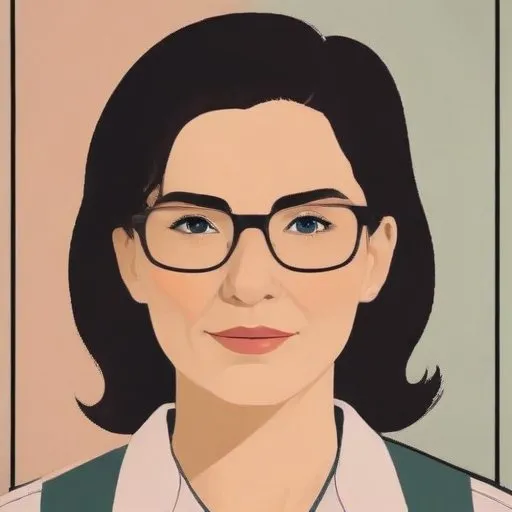
A renowned expert in environmental science, she's known for her groundbreaking research on ecosystem health and her leadership roles in prominent scientific organizations.
Jacqueline McGlade is a renowned British-born Canadian marine biologist and environmental informatics professor, globally recognized for her groundbreaking research on the spatial and nonlinear dynamics of ecosystems, climate change, and scenario development. As an expert in her field, McGlade has made significant contributions to our understanding of the intricate relationships between ecosystems and the impact of human activities on the environment.
McGlade's illustrious career has been marked by numerous achievements, including her tenure as the executive director of the European Environment Agency (EEA) from 2003 to 2013. During her time at the EEA, she played a crucial role in shaping the agency's environmental policies and was instrumental in developing the European Union's environmental agenda.
In 2014, McGlade became the chief scientist and director of the Science Division of the United Nations Environment Programme (UNEP) in Nairobi, Kenya. In this role, she oversaw the development of scientific assessments and policy recommendations to support the implementation of the UN's Sustainable Development Goals (SDGs).
McGlade has also held various academic positions throughout her career, including professorships at University College London, Strathmore University in Kenya, and the University of Warwick in the UK. Her research has been published in numerous peer-reviewed journals, and she has co-authored several books on environmental science and policy.
McGlade's work is underpinned by a deep understanding of the interconnectedness of human and natural systems. She believes that sustainable development can only be achieved by adopting a holistic approach that takes into account the complex relationships between ecosystems, climate change, and human well-being.
Throughout her career, McGlade has been a vocal advocate for the importance of evidence-based decision-making in environmental policy. She has emphasized the need for scientists, policymakers, and civil society to work together to address the world's most pressing environmental challenges.
Born on May 30, 1955, McGlade was raised in a family that valued education and encouraged her to pursue her passion for science. She completed her BSc in Marine Biology, Biochemistry, and Soil Science at Bangor University in the UK in 1977, followed by a PhD in Aquatic Sciences and Zoology from the University of Guelph in Canada in 1980.
McGlade has received numerous honorary titles and awards for her contributions to environmental science and policy, including honorary fellowships from the Institution of Environmental Sciences, the University of Kent, and the University of Wales.
McGlade's work has had a significant impact on modern society, informing policy decisions at the local, national, and international levels. Her research has contributed to a greater understanding of the importance of ecosystem services, climate change mitigation, and adaptation strategies.
Through her work, McGlade has inspired a new generation of scientists, policymakers, and environmentalists to work towards a more sustainable future. Her commitment to evidence-based decision-making and her advocacy for the importance of science in informing policy have made her a respected voice in the global environmental community.
"The greatest challenge we face is not the complexity of the problems we are trying to solve, but our own capacity to work together to find solutions."
This quote, attributed to McGlade, encapsulates her philosophy of collaboration and collective action in addressing the world's most pressing environmental challenges.
These honors are a testament to McGlade's outstanding contributions to environmental science and policy.
Born in 1919
A pioneer in environmental science, he proposed the Gaia hypothesis, suggesting the Earth's physical and biological systems are interconnected and behave like a single living organism.
Born in 1887
Pioneering ecologist and author who advocated for land ethics and conservation, inspiring a new generation of environmentalists.
Born in 1907
Pioneering biologist and environmentalist who exposed the dangers of pesticides and inspired the modern environmental movement through her groundbreaking book "Silent Spring".
97 Years Old
Co-founder of Intel Corporation, revolutionized the tech industry with his prediction that the number of transistors on a microchip would double about every two years, leading to exponential growth in computing power and reductions in cost.
Born in 1854
A German physician and biologist who discovered the first effective treatment for syphilis and developed the concept of chemotherapy, earning a Nobel Prize in Physiology or Medicine in 1908.
Born in 1914
A pioneer in agriculture, credited with saving millions of lives by developing high-yielding, disease-resistant wheat varieties, and promoting sustainable farming practices globally.
