


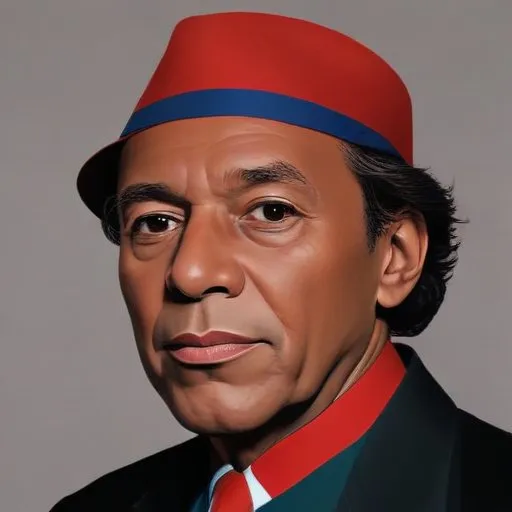
A Haitian writer and politician who co-founded the Haitian Communist Party and wrote influential novels about Haitian identity and social justice. His work explored the struggles of the Haitian people and the impact of colonialism.
Jacques Roumain is renowned for his profound literary contributions to Haitian literature and his unwavering commitment to Marxism and social justice. As a poet, novelist, and politician, Roumain's works continue to inspire generations with their powerful exploration of Haitian identity, colonialism, and the struggle for human liberation.
Born on June 4, 1907, in Port-au-Prince, Haiti, Roumain was born into a wealthy family with a rich cultural heritage. His grandfather, Tancrède Auguste, served as the President of Haiti from 1912 to 1913. Roumain's education took him to Catholic schools in Port-au-Prince, and later to Belgium, Switzerland, France, Germany, and Spain, where he was exposed to diverse intellectual and cultural traditions.
Roumain's literary career began in the 1920s, when he founded La Revue Indigène: Les Arts et La Vie, a literary magazine that promoted Haitian culture and identity. He was heavily influenced by Marxist thought, which shaped his views on social justice, colonialism, and the role of the intellectual in society. His poetry collection, Bois d'Ébène (Ebony Wood), and his novel, Gouverneurs de la Rosée (Masters of the Dew), are considered some of his most influential works.
Roumain's political activism led to his involvement in the struggle against the US occupation of Haiti. In 1934, he founded the Haitian Communist Party, which resulted in his arrest and exile by the government. During his years in exile, Roumain befriended prominent pan-African writers and poets, including Langston Hughes, and conducted ethnographical research at Columbia University in New York City.
With a change in government in Haiti, Roumain was allowed to return to his native country. He founded the Office of Ethnology and continued to write and publish works that critiqued colonialism and promoted social justice. His literary legacy has inspired generations of Haitian writers, and his commitment to Marxism and social justice continues to influence intellectual and political thought around the world.
Roumain's literary contributions have had a profound impact on modern Haitian literature. His exploration of Haitian identity, colonialism, and social justice has inspired generations of writers, including Émile Ollivier and Yanick Lahens. His commitment to Marxism and social justice continues to shape intellectual and political thought in Haiti and beyond.
Roumain's political activism and Marxist ideology have been subject to controversy and criticism. His involvement with the Haitian Communist Party and his exile have been seen as a challenge to the Haitian government and its relationships with foreign powers. Despite this, Roumain's literary legacy remains a powerful testament to his commitment to social justice and human liberation.
Born in 1925
A psychiatrist and philosopher who wrote about the psychological effects of colonialism and racism, advocating for violent revolution to overthrow oppressive systems.
99 Years Old
A Haitian poet, novelist, and essayist who explored themes of identity, culture, and politics, blending African and European influences in his work.
Born in 1896
French poet and author who founded Surrealism, a cultural movement that explored the subconscious and the world of dreams. He wrote novels, poems, and essays that continue to influence art and literature today.
Born in 1913
A key figure in the Negritude movement, he wrote powerful poetry and plays that explored the experiences of black people, and later became a prominent politician in Martinique.
Born in 1906
First president of Senegal and a renowned poet, known for promoting African culture and unity through his writings and political leadership.
