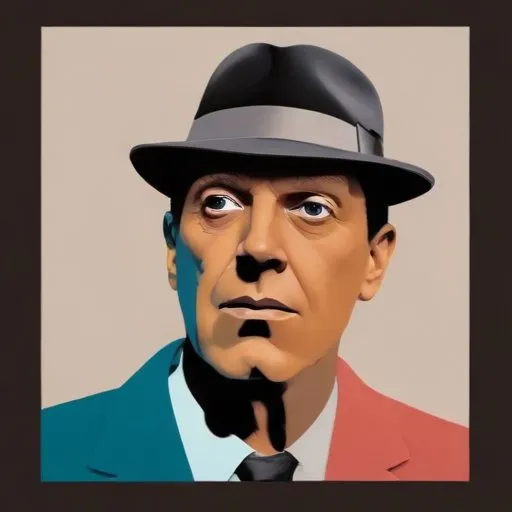
Jacques Tati: The Maestro of Silent Comedic Genius
The Monsieur Hulot Legacy
Jacques Tati is renowned for creating the beloved character of Monsieur Hulot, a quirky and lovable Frenchman who has captivated audiences worldwide with his hilarious misadventures. Through a string of iconic films, including
Les Vacances de Monsieur Hulot,
Mon Oncle,
Playtime, and
Trafic, Tati's signature character has become an integral part of French cinematic heritage.
Early Life and Influences
Born Jacques Tatischeff on October 9, 1907, Tati was of Russian, Dutch, and Italian ancestry. His father, Georges-Emmanuel Tatischeff, was a Russian noble of patrilineal Rurikid descent, and his mother, Marcelle Claire van Hoof, was of Dutch-Italian origin. Tati's upbringing was marked by turbulence, with his father's mysterious death and his mother's struggles to raise him in France.
The Evolution of a Visionary
Tati's early career as a mime and performer laid the foundation for his later work as a filmmaker. He drew inspiration from the likes of
Charlie Chaplin and
Buster Keaton, and his unique blend of physical comedy and visual storytelling soon set him apart. With his debut feature,
Jour de Fête (1949), Tati's vision began to take shape, showcasing his flair for satire and social commentary.
Auteur and Innovator
Tati's most iconic creation, Monsieur Hulot, first appeared in
Les Vacances de Monsieur Hulot (1953), a film that cemented his reputation as a master of comedy. He went on to create a string of critically acclaimed films, each pushing the boundaries of visual storytelling and comedy.
Playtime (1967), in particular, is widely regarded as a landmark of cinematic innovation, featuring intricate set design and a daring, nearly silent narrative.
Awards and Accolades
Tati's contributions to cinema have been widely recognized. He was voted the 46th greatest film director of all time by
Entertainment Weekly, and
Playtime ranked 23rd in the 2022
Sight and Sound critics' poll of the greatest films ever made.
Philosophical Contributions and Legacy
Tati's work is characterized by a deep understanding of human nature and a commitment to visual storytelling. His films often explore themes of modernity, technology, and the human condition, making him a true auteur in the world of cinema. As David Bellos notes, "Tati, from
L'Ecole des facteurs to
Playtime, is the epitome of what an auteur is in film theory supposed to be – the controlling mind behind a vision of the world on film."
Personal Milestones and Key Life Events
- 1907: Born Jacques Tatischeff on October 9th
- 1949: Released debut feature, Jour de Fête
- 1953: Introduced Monsieur Hulot in Les Vacances de Monsieur Hulot
- 1967: Released Playtime, widely regarded as a cinematic masterpiece
- 1982: Passed away on November 5th
Trivia and Fun Facts
- Tati was known for his perfectionism, often spending years perfecting his scripts and sets.
- He was a prolific writer and contributed to many of his films' screenplays.
- Tati's love for visual gags and physical comedy was heavily influenced by his early years as a mime.
Impact on Pop Culture
Tati's influence can be seen in many modern comedians and filmmakers, including
Rowan Atkinson,
Steve Martin, and
Wes Anderson. His unique blend of physical comedy and visual storytelling has become a hallmark of French cinematic style, inspiring generations of artists and entertainers.
FAQ
What was Jacques Tatis contribution to French cinema?
Jacques Tati was a renowned French actor, director, and screenwriter who made a significant contribution to French cinema. He is best known for his comedic films that satirized modern French society and the impact of technology on everyday life.
What was Jacques Tatis most famous character?
Jacques Tatis most famous character is Monsieur Hulot, a bumbling, well-meaning Everyman who appears in several of his films. Monsieur Hulot has become an iconic figure in French cinema and a symbol of Tatis unique comedic style.
How did Jacques Tatis films critique modernity?
Jacques Tatis films often critiqued the impact of modernity on French society, poking fun at the conformity and uniformity of modern life. His films often featured modernist architecture, gadgets, and technology as symbols of the dehumanizing effects of modernization.
What was Jacques Tatis approach to comedy?
Jacques Tatis approach to comedy was characterized by his use of visual gags, pantomime, and satire. He often used long takes and minimal dialogue to create a sense of realism and to emphasize the absurdity of modern life.
How did Jacques Tatis legacy influence French comedy?
Jacques Tatis legacy has had a significant impact on French comedy, influencing generations of comedians, actors, and directors. His unique style and satirical approach to comedy continue to inspire French filmmakers and comedians.