


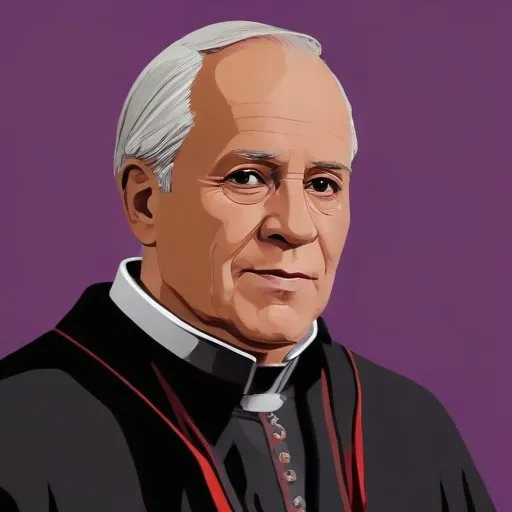
A prominent leader in the Methodist Episcopal Church, South, who played a key role in shaping the denomination's policies and practices during the late 19th and early 20th centuries. He was a strong advocate for social justice and education.
Known for his unwavering stance against the evils of liquor, James Cannon Jr. was a prominent leader in the temperance movement in the United States during the 1920s. As the Superintendent of the Virginia State Anti-Saloon League and Legislative Superintendent of the Anti-Saloon League of America, Cannon's influence reached the highest echelons of power, earning him the reputation as the "undisputed boss of the United States."
Born on November 13, 1864, in Salisbury, Maryland, Cannon was the son of James and Lydia R. Pimrose Cannon. He married Lura Virginia Bennett, daughter of the President of Randolph-Macon College, on August 1, 1888. Cannon's educational background includes a degree from Randolph-Macon College in 1884, and an A.M. from Princeton University in 1889. He was later awarded honorary degrees of Doctor of Divinity from Randolph-Macon College and a D.D. from Princeton University.
Cannon's ministerial career began in 1888 when he was admitted on trial by the Virginia Annual Conference of the M.E. Church, South. He served in various capacities, including as the Principal of the Blackstone Female Institute and Blackstone College for Girls. His editorial skills were also utilized as the editor of the Baltimore-Richmond Christian Advocate, a periodical of his denomination, starting in 1904.
As the Superintendent of the Virginia State Anti-Saloon League and Legislative Superintendent of the Anti-Saloon League of America, Cannon played a pivotal role in the temperance movement. His tireless efforts led to the passage of the 18th Amendment to the US Constitution, prohibiting the manufacture, sale, and transportation of intoxicating liquors.
At the peak of his influence, Cannon's name was synonymous with power and authority. However, his reputation was later marred by scandal, and his empire began to crumble. As H.L. Mencken noted in 1934, "Six years ago he was the undisputed boss of the United States... But since that time there has been a violent revolution, and his whole world is in collapse."
Despite the controversy surrounding his later years, James Cannon Jr.'s contributions to the temperance movement cannot be overstated. His unwavering commitment to abolishing the evils of liquor continues to inspire generations. Though his legacy may be complex, it serves as a testament to the power of conviction and the importance of fighting for what one believes in.
Born in 1703
A prominent figure in the 18th-century Methodist movement, he founded the Methodist Church and emphasized personal faith, social justice, and education. His teachings and legacy continue to shape Protestantism today.
Born in 1891
A pioneering historian and author who shed light on African American history and culture through his extensive research and writings. His works helped to preserve and promote the contributions of African Americans to the country's development.
Born in 1865
The 22nd Premier of Tasmania, serving from 1906 to 1908, known for his brief but significant tenure that shaped the state's early 20th-century development.
