


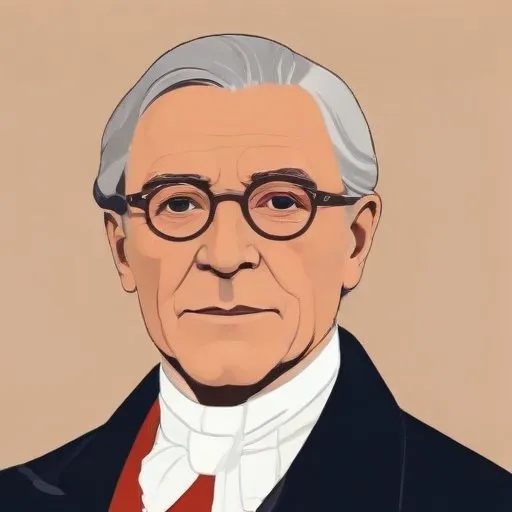
A pioneering historian and author who shed light on African American history and culture through his extensive research and writings. His works helped to preserve and promote the contributions of African Americans to the country's development.
Charles H. Wesley, a renowned American historian, educator, minister, and author, left an indelible mark on the realm of African American history, publishing over 15 books on the subject and shaping the academic landscape of prominent institutions. His trailblazing work as a professor, administrator, and writer has inspired generations of scholars and individuals committed to understanding and celebrating African American heritage.
Born on December 2, 1891, in Louisville, Kentucky, Charles Wesley was the only child of Matilda and Charles Snowden Wesley. He attended local schools, graduating in 1911 from Fisk University, a historically black college in Nashville, Tennessee. Wesley's academic pursuits continued at Yale University, where he earned a master's degree in 1913. He went on to become the third African American to receive a Ph.D. from Harvard University in 1925.
Wesley's passion for education and scholarship led him to become an ordained minister of the African Methodist Episcopal Church (AME). As a professor of history, he authored numerous books on African American history and political science, cementing his reputation as a leading authority in the field. At Howard University, he served as the Dean of the Liberal Arts and the Graduate School, further solidifying his commitment to academic excellence.
Wesley's achievements were recognized with a Guggenheim Fellowship, which enabled him to travel to London, England, in 1931. During this period, he played a pivotal role in the founding of the League of Coloured Peoples, an organization inspired by the NAACP. His contributions to the field of African American history and education were acknowledged with numerous honors and awards.
Wesley's administrative acumen was showcased during his tenure as President of Wilberforce University, an AME-affiliated institution in Ohio, from 1942 to 1947. He subsequently founded Central State University, serving as its president until 1965. This remarkable achievement underscores his dedication to expanding educational opportunities for African Americans.
In 1965, Wesley became the Director of Research and Publications for the Association for the Study of Negro Life and History, later serving as its executive director until 1972. He concluded his remarkable career as Director of the Afro-American Historical and Cultural Museum in Philadelphia in 1976. Through his life's work, Charles H. Wesley has inspired countless individuals to pursue careers in education, history, and cultural preservation.
Wesley's work was guided by a deep commitment to preserving African American history and promoting educational opportunities for marginalized communities. His writings and teachings emphasized the importance of understanding the African American experience, highlighting the significance of social justice and equality.
Charles H. Wesley's legacy extends far beyond the academic realm, shaping the broader cultural landscape of modern society. His work has inspired a new generation of historians, educators, and social activists, fostering a deeper understanding of African American history and its relevance to contemporary issues.
Born in 1875
Founded Black History Month to promote awareness and education about African American history and culture, highlighting the contributions and achievements of Black people.
Born in 1868
A pioneering figure in the struggle for racial equality, advocating for civil rights and social justice through groundbreaking research and powerful writings.
Born in 1902
A renowned poet, novelist, and playwright who powerfully voiced the experiences and struggles of African Americans during the Harlem Renaissance, using jazz and blues rhythms to convey the spirit of his people.
31 Years Old
Professional basketball player who has played for the Milwaukee Bucks and Houston Rockets, known for his athleticism and three-point shooting ability.
Born in 1902
A pioneering figure in the Harlem Renaissance, this American librarian, author, and poet was a prolific writer of children's literature and poetry, exploring themes of African American identity and culture.
Born in 1891
A celebrated author and anthropologist who explored African-American culture through novels, stories, and folklore, particularly in the rural South during the early 20th century.
