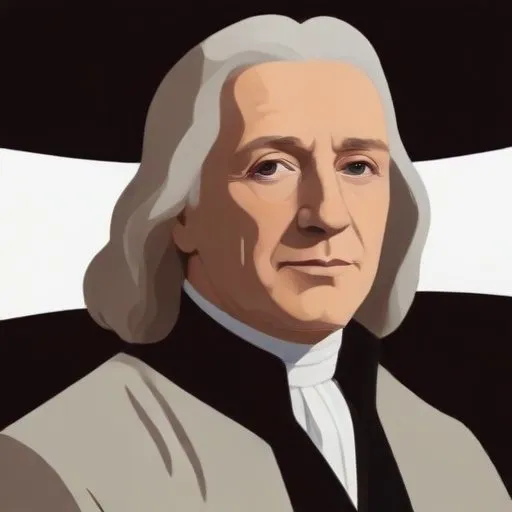
Charles Wesley: The Prolific Hymnwriter and Leader of the Methodist Movement
A Life of Devotion and Music
Charles Wesley, born on December 18, 1707, was an English Anglican cleric and a principal leader of the Methodist movement. He is best known for his remarkable contribution to Christian hymnody, penning over 6,500 hymns during his lifetime, including classics such as "And Can It Be," "O for a Thousand Tongues to Sing," and "Hark! The Herald Angels Sing."
Early Life and Education
Born in Epworth, Lincolnshire, England, Charles was the eighteenth child of Susanna and Samuel Wesley, an Anglican cleric and poet. He received his education at Oxford University, where he formed the Holy Club, a group of students dedicated to spiritual growth and service. It was here that he was joined by his brother John, who would later become a prominent figure in the Methodist movement, as well as
George Whitefield, a fellow Anglican cleric.
The Ministry Years
Charles followed in his father's footsteps, entering the ministry in 1735. He travelled with his brother John to Georgia, America, and later returned to England, where they embarked on a journey of evangelism, spreading the message of Methodism through preaching and hymnsinging. In 1749, Charles married Sarah Gwynne, a Welsh convert to Methodism, with whom he had a daughter, Sarah.
A Life of Controversy and Debate
Despite his close relationship with his brother John, Charles did not always agree with his brother's views, particularly on the question of separating from the Church of England. Charles remained loyal to the Anglican Church, while John eventually broke away to form the Methodist Church. This disagreement led to tensions between the brothers, but they continued to work together in their ministry.
Major Works and Contributions
Charles Wesley's hymns are a testament to his incredible talent and dedication to his faith. Some of his most famous works include:
- "Christ the Lord Is Risen Today"
- "Love Divine, All Loves Excelling"
- "Lo, He Comes with Clouds Descending"
- "And Can It Be"
- "O for a Thousand Tongues to Sing"
These hymns, among many others, have become an integral part of Christian worship, and continue to inspire and uplift believers around the world.
Legacy and Impact
Charles Wesley's life and work have had a profound impact on the Christian faith. His hymns have transcended denominational boundaries, and his legacy continues to inspire and shape the Christian church. Through his ministry and music, Charles Wesley has left an indelible mark on the Christian faith, and his contributions will be remembered for generations to come.
Personal Milestones and Key Life Events
- 1716: Charles enters Westminster School
- 1729: Forms the Holy Club at Oxford University
- 1735: Enters the ministry
- 1738: Experiences evangelical conversion with his brother John
- 1749: Marries Sarah Gwynne
- 1756: Begins a more static ministry in Bristol and later London
Influence on Modern Society
Charles Wesley's life and work have had a lasting impact on modern society. His hymns continue to be sung in churches around the world, and his legacy has inspired countless Christians to deepen their faith and commitment to God. Through his music and ministry, Charles Wesley has left an enduring legacy that continues to shape the Christian faith today.
FAQ
What was Charles Wesleys role in the Methodist movement?
Charles Wesley was a co-founder of the Methodist movement, along with his brother John Wesley, and played a crucial role in spreading the movement throughout England and America.
What were Charles Wesleys contributions to hymnody?
Charles Wesley was a prolific hymn writer, composing over 6,000 hymns, many of which are still sung today, and is considered one of the most important figures in the development of English hymnody.
What was Charles Wesleys relationship with his brother John?
Charles Wesley had a close and collaborative relationship with his brother John, working together to spread the Methodist movement and supporting each other throughout their lives.
When did Charles Wesley die?
Charles Wesley died on March 29, 1788.
What is Charles Wesleys legacy?
Charles Wesleys legacy is that of a dedicated Christian leader, hymn writer, and missionary who helped shape the Methodist movement and leave a lasting impact on Christian worship and culture.