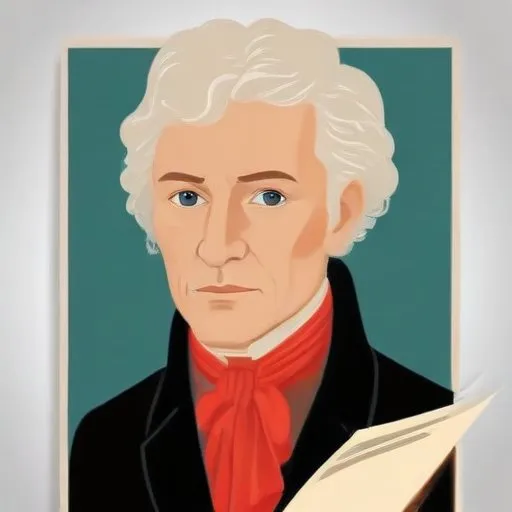
William Cowper: The Melancholic Genius Who Shaped 18th-Century Poetry
A Pioneer of Nature Poetry and Evangelical Hymns
William Cowper, a prominent English poet, and Anglican hymnwriter, is renowned for revolutionizing 18th-century nature poetry by focusing on everyday life and the English countryside. His poetic innovations and evangelical fervor earned him widespread recognition, with
Samuel Taylor Coleridge hailing him as the best modern poet of his time.
Life and Early Experiences
Born on November 26, 1731, in Berkhamsted, Hertfordshire, Cowper was the son of John Cowper, the rector of the Church of St. Peter. His mother, Ann Donne Cowper, died when he was just six years old, an event that would later influence his writing. His aunt, Judith Madan, was a poet, and her influence may have nurtured Cowper's early interest in literature.
Insanity, Salvation, and Evangelicalism
In 1763, Cowper was institutionalized for insanity, an experience that profoundly affected his life and work. He later found solace in evangelical Christianity, which became a dominant theme in his poetry. A vivid dream in 1773 led him to believe he was doomed to eternal damnation, but he eventually recovered and continued to write hymns that expressed his faith.
Olney Hymns and Antislavery Poetry
Cowper's collaborations with
John Newton, the author of "Amazing Grace," resulted in the Olney Hymns, a series of poems that showcased his religious sentiment. His antislavery poems, such as "The Negroe's Complaint" (1788), powerfully condemned the slave trade and advocated for its abolition. This poem, in particular, became a rallying cry for the abolitionist movement and was often quoted by
Martin Luther King Jr. during the 20th-century civil rights movement.
Major Works and Influence
Some of Cowper's notable works include:
- Yardley Oak (1791)
- Light Shining out of Darkness (1774)
- The Task (1785)
- Olney Hymns (1779)
Cowper's poetry not only reflected his personal struggles but also influenced the development of Romantic poetry. His focus on nature, everyday life, and evangelicalism paved the way for poets like
William Wordsworth and Samuel Taylor Coleridge.
Legacy and Impact
William Cowper's legacy extends beyond his poetry to the abolitionist movement and the world of hymnology. His antislavery poems raised awareness about the injustices of the slave trade, while his hymns continue to inspire devotion and faith. His poetry remains a testament to the power of art to comfort, inspire, and challenge societal norms.
Quotes and Memorable Sayings
* "God moves in a mysterious way His wonders to perform." (from "Light Shining out of Darkness")
This phrase has become a staple of Christian devotion and a reflection of Cowper's unwavering faith.
Personal Milestones and Key Life Events
* 1731: Born in Berkhamsted, Hertfordshire
* 1763: Institutionalized for insanity
* 1773: Experienced a vivid dream that led to his evangelical conversion
* 1779: Published Olney Hymns
* 1785: Published The Task
* 1800: Died on April 25th, leaving behind a legacy of poetry and hymns that continue to inspire and influence generations.
FAQ
What was William Cowpers contribution to English literature?
William Cowper was a renowned English poet, hymnwriter, and letter-writer. He wrote several influential works, including The Task and Olney Hymns, and is considered one of the most important poets of the 18th century.
What was William Cowpers relationship with John Newton?
Cowper had a close and significant friendship with John Newton, a fellow poet and Anglican minister. The two men collaborated on several projects, including the Olney Hymns, and provided mutual support and encouragement.
What was William Cowpers experience with mental illness?
Cowper struggled with depression and mental illness throughout his life. His experiences are reflected in his poetry, which often expresses themes of melancholy, anxiety, and spiritual struggle.
What is the significance of the Olney Hymns?
The Olney Hymns, written by Cowper and Newton, are a collection of hymns that are considered some of the greatest in the English language. They are known for their beauty, simplicity, and depth of feeling.
What is William Cowpers legacy in English literature?
Cowpers legacy in English literature is one of innovation, creativity, and spiritual depth. He is remembered as a master poet and hymnwriter, and his works continue to inspire and influence writers to this day.