


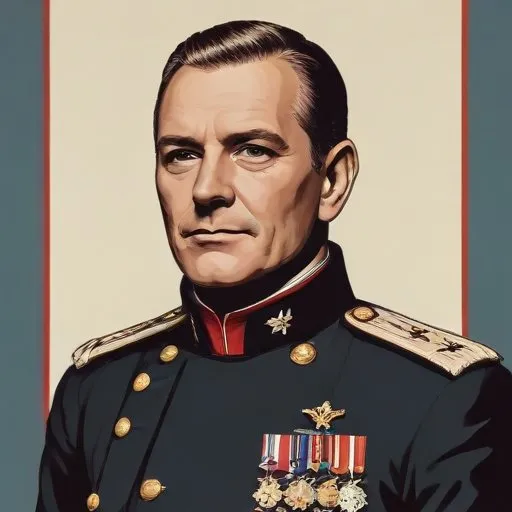
A four-star general who served as the eighth Vice Chairman of the Joint Chiefs of Staff, known for his expertise in nuclear deterrence and missile defense. He was a key advisor to President Barack Obama on national security matters.
James Cartwright, a renowned figure in the military circle, is best known for his tenure as the eighth Vice Chairman of the Joint Chiefs of Staff from 2007 to 2011, where he played a pivotal role in formulating the United States' defense strategy. During his illustrious career, he has worn many hats, including Commander of the U.S. Strategic Command and Acting Commander of the same unit, solidifying his reputation as a visionary leader.
Born on September 22, 1949, in Rockford, Illinois, Cartwright's early life was marked by a passion for academics and sports. He attended West High School before moving on to the University of Iowa, where he excelled as a scholarship swimmer for the Iowa Hawkeyes.
Commissioned as a second lieutenant in the U.S. Marine Corps in November 1971, Cartwright's military career spanned nearly four decades. He attended Naval Flight Officer training and graduated in April 1973, followed by Naval Aviator training in January 1977. His operational assignments include stints as a Naval Flight Officer in the F4 and as a pilot in the F4, OA4, and FA18.
Cartwright's military service was punctuated by numerous milestones, including his role as the Commander of the U.S. Strategic Command, where he oversaw the country's nuclear deterrence and space operations. His leadership during this period earned him recognition as a respected voice in the military community.
In 2013, Cartwright was accused of providing classified information to journalist David Sanger, which was published in the book "Confront and Conceal." Although he was never charged with leaking classified information, he pleaded guilty to lying to the FBI regarding the investigation. However, in a surprise move, President Barack Obama pardoned Cartwright and restored his security clearance in 2017.
Throughout his career, Cartwright has been recognized for his contributions to modern defense strategy, earning him numerous awards and honors. His leadership has inspired generations of military personnel, and his commitment to national security has left an indelible mark on the country.
As a testament to his enduring legacy, Cartwright's influence extends beyond the military sphere, shaping the course of international relations and global security. His story serves as a reminder of the importance of accountability, redemption, and the unwavering pursuit of excellence.
As the curtain closes on Cartwright's remarkable career, his legacy serves as a beacon of inspiration, reminding us of the power of dedication, perseverance, and service to one's country.
74 Years Old
A highly decorated four-star general who led the US military efforts in Iraq and Afghanistan, later becoming the head of the CIA, known for his strategic thinking and leadership.
91 Years Old
A prominent leader of the Church of England, serving as Archbishop of Canterbury from 1991 to 2002, known for his efforts to modernize the church and promote interfaith dialogue.
81 Years Old
The first Marine to serve as Chairman of the Joint Chiefs of Staff, he played a key role in shaping US military strategy in the War on Terror. He's also known for his outspoken views on social issues.
84 Years Old
A four-star general who served as the Chairman of the Joint Chiefs of Staff from 2001 to 2005, playing a key role in shaping US military strategy during the Iraq War.
81 Years Old
Led a coalition of forces to a swift and decisive victory in the Iraq War, and was a key figure in the War on Terror.
75 Years Old
A four-star general who led US Central Command during the Iraq War, known for his expertise in Middle Eastern affairs and counterinsurgency strategy.
73 Years Old
The 18th Director of Central Intelligence, a top leader of the US intelligence community, oversaw critical national security operations and intelligence gathering during a pivotal period in American history. He's infamous for his "slam dunk" comment about Iraq's WMDs.
