


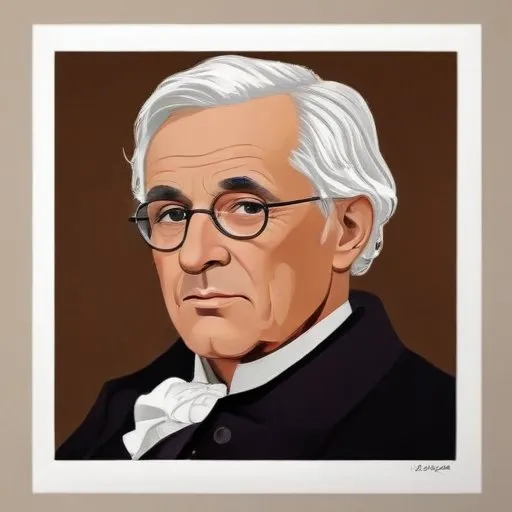
French historian and author of influential works on ancient Persian history and Zoroastrianism, shedding light on the region's rich cultural heritage.
James Darmesteter, a renowned French author, orientalist, and antiquarian, made significant contributions to the field of Oriental studies, particularly in the realm of Persian language and Zoroastrianism. His groundbreaking research and meticulous translations of ancient texts, such as the Avesta, earned him recognition and acclaim in the academic community.
Born on March 28, 1849, in Château-Salins, Lorraine, France, to Jewish parents, Darmesteter was educated in Paris under the guidance of prominent scholars Michel Bréal and Abel Bergaigne. This foundation in Oriental studies laid the groundwork for his future research and academic pursuits.
Darmesteter's academic career was marked by significant contributions to the field of Oriental studies. In 1875, he published a thesis on the mythology of the Avesta, challenging the prevailing view that Zoroastrianism influenced Judaism, instead arguing that it was the other way around. This innovative perspective sparked a new wave of research and debate in the academic community.
In 1877, he became a teacher of Persian language at the École des Hautes Études, further solidifying his expertise in the field. His subsequent research, Études iraniennes (1883), showcased his dedication to unraveling the complexities of Persian language and culture.
Darmesteter's magnum opus, the complete translation of the Avesta and associated Zend liturgical commentary, was published in three volumes between 1892 and 1893. This monumental work, Zend Avesta, featured historical and philological commentary that provided invaluable insights into the ancient Persian texts.
In addition to his independent work, Darmesteter also edited the Avesta for Max Müller's Sacred Books of the East series, volumes 4 and 23. His contributions to the field of Oriental studies were further recognized when he was appointed professor at the Collège de France in 1885.
In 1886, Darmesteter embarked on a mission to India, where he collected and translated popular Afghan songs. This experience inspired his book, Lettres sur l'Inde (1888), which offered a unique perspective on British rule in India.
Darmesteter's literary pursuits extended beyond academic research. He translated the poems of Agnes Mary Frances Robinson, a gifted English writer, into French in 1888. This collaboration reflected his deep appreciation for English literature and culture.
James Darmesteter's remarkable contributions to Oriental studies, particularly in the realm of Persian language and Zoroastrianism, continue to influence academic research and discourse today. His meticulous translations and innovative perspectives have left an indelible mark on the field, solidifying his status as a pioneering figure in Oriental studies.
Through his work, Darmesteter demonstrated a profound respect for the cultural and linguistic heritage of ancient civilizations, inspiring future generations of scholars to follow in his footsteps.
Born in 1805
A French diplomat and engineer who developed the Suez Canal, a crucial waterway connecting the Mediterranean Sea to the Red Sea, revolutionizing global trade and commerce.
Born in 1798
A 19th-century French historian and philosopher who pioneered a new approach to historical writing, focusing on the lives and experiences of ordinary people, rather than just monarchs and elites. He's also known for his vivid and poetic writing style.
Born in 1840
A pioneering figure in naturalist literature, known for his influential novels that exposed social ills and championed reform, such as "Germinal" and "Nana".
Born in 1821
A pioneering realist novelist who crafted meticulous, psychologically nuanced portrayals of 19th-century French life, particularly in his iconic novel "Madame Bovary".
Born in 1890
A French military leader who led the Free French Forces during WWII and later became President of France, known for his strong leadership and vision for a unified Europe.
