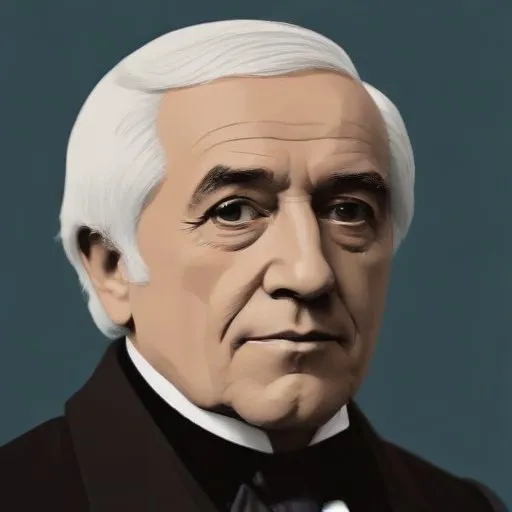
Jules Michelet: The Father of Modern Historiography
A Legacy of Unparalleled Proportions
Jules Michelet, a renowned French historian and writer, is best known for his magnum opus,
Histoire de France, a multivolume work that chronicles the history of France from its earliest times to the French Revolution. This monumental work cemented Michelet's status as one of the founders of modern historiography, earning him a place among the pantheon of greatest historians of all time.
Early Life and Education
Born on August 21, 1798, in Paris, France, Michelet was the son of a master printer. His early life was marked by his involvement in the family printing business, where he assisted his father in the work of the press. However, Michelet's academic prowess soon propelled him to the famous Collège or Lycée Charlemagne, where he distinguished himself as a brilliant student. He passed the university examination in 1821 and was soon appointed to a professorship.
Influence of Giambattista Vico
Michelet's work was heavily influenced by the Italian philosopher
Giambattista Vico, whose emphasis on the role of people and their customs in shaping history resonated deeply with him. Vico's concept of the
corsi e ricorsi, or the cyclical nature of history, also had a profound impact on Michelet's understanding of historical events.
The Renaissance and the Birth of Modern Historiography
In
Histoire de France, Michelet coined the term "Renaissance," meaning rebirth in French, to describe the period in European cultural history that represented a break from the Middle Ages. This term, which had been previously used by
Giorgio Vasari to describe the advent of a new manner of painting, was given new meaning by Michelet, who saw it as a period of cultural rebirth that marked a turning point in human history.
Career Highlights and Major Works
Michelet's
Histoire de France, which spans over 17 volumes, is his most notable work. This monumental achievement is a testament to his dedication to the field of historiography and his commitment to telling the story of France in all its complexity. Other notable works include
Histoire de la Révolution Française and
La Sorcière, a work that explores the history of witchcraft in Europe.
Philosophical Contributions and Beliefs
Michelet's work was characterized by his emphasis on the role of the common people in shaping history. He believed that history was not just the domain of kings and rulers, but rather the collective effort of ordinary people who had contributed to the evolution of society. This belief is reflected in his writing, which often focuses on the lives and experiences of ordinary people.
Influence on Modern Society
Michelet's work has had a profound impact on modern society. His concept of the Renaissance as a period of cultural rebirth has become a cornerstone of modern historiography. His emphasis on the role of the common people in shaping history has also influenced the way historians approach their subject matter.
Historical Context and Legacy
Michelet's work must be seen in the context of the tumultuous 19th century, a time of great change and upheaval in Europe. His writing reflects the intellectual and cultural currents of his time, and his legacy continues to be felt today. As the French historian François Furet noted, Michelet's
Histoire de France remains "the cornerstone of all revolutionary historiography" and "a literary monument."
Personal Milestones and Key Life Events
Michelet's life was marked by several key events, including his appointment as a professorship at the Collège or Lycée Charlemagne and his subsequent appointment as a professor of history at the Sorbonne.
Controversies and Public Perception
Michelet's work was not without controversy. His emphasis on the role of the common people in shaping history was seen as radical by some, and his criticism of the monarchies of Europe was seen as inflammatory by others.
Quotes and Memorable Sayings
"To live, to live, to live! That is the cry of humanity, and that is the cry of history."
- Michelet was a prolific writer, producing over 30 volumes of work during his lifetime.
- He was a strong advocate for the rights of women and the working class.
- His work was heavily influenced by the romantic movement, which emphasized emotion and imagination.
Conclusion
Jules Michelet's legacy is a testament to the power of historical writing. His commitment to telling the story of France in all its complexity has inspired generations of historians, and his emphasis on the role of the common people in shaping history has changed the way we approach the study of the past. As we reflect on his life and work, we are reminded of the enduring power of history to shape our understanding of ourselves and our place in the world.