


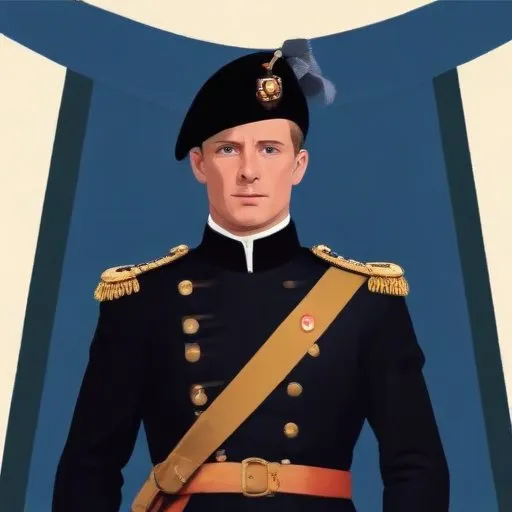
Irish soldier and politician who served as Lord Deputy of Ireland and played a key role in the country's 18th-century politics. He's also known for being the father of Charles James Fox, a prominent British politician.
James FitzGerald, 1st Duke of Leinster, is renowned for his illustrious career as an Anglo-Irish nobleman, soldier, and politician. Born on May 29, 1722, he left an indelible mark on Irish and British history, earning him the title of Premier Duke, Marquess, and Earl in the Peerage of Ireland.
FitzGerald was the son of Robert FitzGerald, 19th Earl of Kildare, and Lady Mary, daughter of William O'Brien, 3rd Earl of Inchiquin. He began his political career as a member of the Irish House of Commons for Athy in 1741. Following his father's passing, he succeeded him as the 20th Earl of Kildare in 1743.
In 1746, FitzGerald was sworn of the Irish Privy Council, and in 1747, he was created Viscount Leinster of Taplow in the County of Buckingham, in the Peerage of Great Britain. This led to his seat in the British House of Lords the same year. He continued to rise through the ranks, becoming a leader of the Popular Party in Ireland from 1749 to 1755 and serving as Master-General of the Ordnance between 1758 and 1766.
FitzGerald's military career was marked by significant achievements. He was promoted to Colonel of the Royal Irish Artillery in 1760 and to Major-General in 1761. In 1766, he was created Earl of Offaly and Marquess of Kildare in the Peerage of Ireland. Finally, in 1766, he was made Duke of Leinster, solidifying his position as the Premier Duke, Marquess, and Earl in the Peerage of Ireland.
FitzGerald married the 15-year-old Lady Emily Lennox, daughter of Charles Lennox, 2nd Duke of Richmond, in 1747. Their union produced 19 children, including George FitzGerald, Earl of Offaly, and William FitzGerald, 2nd Duke of Leinster. Lady Emily was a great-granddaughter of King Charles II and a distant fifth cousin of King George III.
Through his remarkable life, James FitzGerald, 1st Duke of Leinster, left an enduring impact on Irish and British history, cementing his place as one of the most prominent figures of his time.
Born in 1731
A pioneering scientist who discovered hydrogen and determined the density of the Earth, making significant contributions to the fields of chemistry and physics.
Born in 1738
The British monarch who ruled during the American Revolution, losing the colonies, and later suffered a mental illness that led to a regency crisis. He's also known for his cultural and artistic patronage.
Born in 1759
Prime Minister of the United Kingdom from 1783 to 1801 and 1804 to 1806, known for leading the country through the French Revolutionary and Napoleonic Wars.
Born in 1749
A prominent 18th-century politician who championed individual liberties and opposed British imperialism, known for his charismatic oratory skills and influential foreign policy decisions.
Born in 1729
An 18th-century thinker who shaped modern conservatism, advocating for gradual social change and warning against the dangers of radical revolution. He's also known for his philosophical writings on aesthetics and the sublime.
Born in 1725
A pioneering advocate for press freedom and a vocal critic of government corruption, known for his fearless journalism and radical politics.
