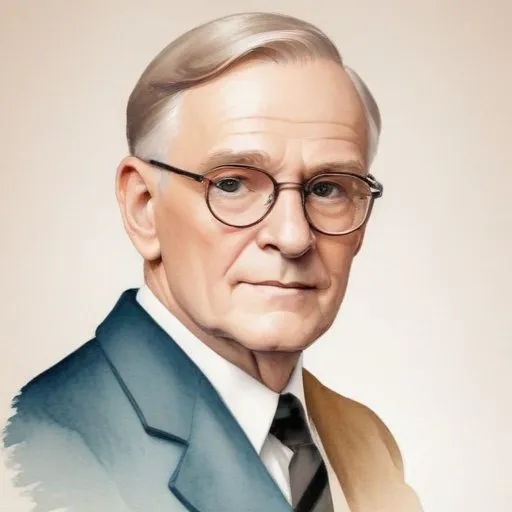
James McKeen Cattell: The Dean of American Science
A Pioneer in Psychology and Scientific Publishing
James McKeen Cattell was a trailblazer in the field of psychology, earning the distinction of being the first professor of psychology in the United States. He was a renowned editor and publisher of scientific journals, including the esteemed publication
Science, and played a crucial role in establishing psychology as a legitimate science.
Early Life and Education
Born on May 25, 1860, in Easton, Pennsylvania, Cattell was the eldest child of a wealthy and prominent family. His father, William Cassady Cattell, a Presbyterian minister, became the president of Lafayette College in Easton, where James would later earn his degree. Cattell's family was known for their strong academic background, with his uncle Alexander G. Cattell representing New Jersey in the United States Senate.
Academic Career and Contributions
Cattell entered Lafayette College in 1876 at the age of sixteen and graduated in four years with the highest honors. He then went on to earn his M.A. in 1883, again with highest honors. During his time at Lafayette, Cattell developed a strong foundation in English literature and mathematics, which would later shape his approach to psychology.
Cattell's academic career was marked by several milestones, including his appointment as the first professor of psychology at the University of Pennsylvania in Philadelphia. He was a strong advocate for the scientific method and played a crucial role in establishing psychology as a respected field of study.
Editorial Career and Publishing Ventures
In addition to his academic pursuits, Cattell was a prolific editor and publisher. He was the editor of
Science from 1895 to 1944 and served on the board of trustees for Science Service, now known as Society for Science. Cattell's editorial career spanned over four decades, during which he championed the cause of scientific publishing and advocated for the importance of peer-reviewed research.
Philosophical Contributions and Beliefs
Cattell's philosophical contributions to the field of psychology were significant. He believed in the importance of empirical research and the application of scientific methods to understand human behavior. Cattell's work laid the foundation for modern psychology, which emphasizes evidence-based practices and rigorously tested hypotheses.
Influence on Modern Society
Cattell's legacy extends far beyond the confines of academia. His advocacy for the scientific method and his contributions to the field of psychology have had a profound impact on modern society. His work paved the way for the development of applied psychology, which has had a significant impact on fields such as education, healthcare, and business.
Controversies and Public Perception
Cattell was not without controversy, however. His public opposition to American involvement in World War I led to his dismissal from Columbia University, which sparked a national debate on academic freedom. This incident led many American universities to establish academic tenure as a means of protecting unpopular beliefs.
Personal Milestones and Key Life Events
- 1860: Born on May 25th in Easton, Pennsylvania
- 1876: Entered Lafayette College at the age of sixteen
- 1883: Earned M.A. from Lafayette College with highest honors
- 1895: Became the editor of Science, a position he held until 1944
- 1921: Served on the board of trustees for Science Service, now known as Society for Science
- 1944: Passed away on January 20th
Legacy and Impact
At the time of his death, The New York Times credited Cattell as the "dean of American science." His contributions to the field of psychology, his advocacy for the scientific method, and his editorial career have left an indelible mark on modern society. Cattell's legacy continues to inspire generations of researchers, scientists, and scholars, solidifying his place as one of the most important figures in American scientific history.
FAQ
What were James McKeen Cattells contributions to psychology?
James McKeen Cattell was an American psychologist and academic who made significant contributions to the field of psychology, including the development of mental tests and the establishment of the first psychology laboratory in the United States.
What inspired James McKeen Cattell to study psychology?
James McKeen Cattell was inspired to study psychology by his fascination with the human mind and behavior. He was influenced by the works of William James and other prominent psychologists of his time.
What was James McKeen Cattells most notable research?
James McKeen Cattells most notable research was in the area of mental testing, where he developed new methods for measuring human intelligence and cognitive abilities. His work laid the foundation for modern psychological testing.
How did James McKeen Cattell influence American psychology?
James McKeen Cattell played a significant role in shaping American psychology, establishing the first psychology laboratory in the United States and training many prominent psychologists. He helped to promote psychology as a scientific discipline and contributed to the development of psychological research methods.
What was James McKeen Cattells legacy in psychology?
James McKeen Cattells legacy in psychology is that of a pioneering researcher and educator. He helped establish psychology as a respected scientific discipline and paved the way for future generations of psychologists.