


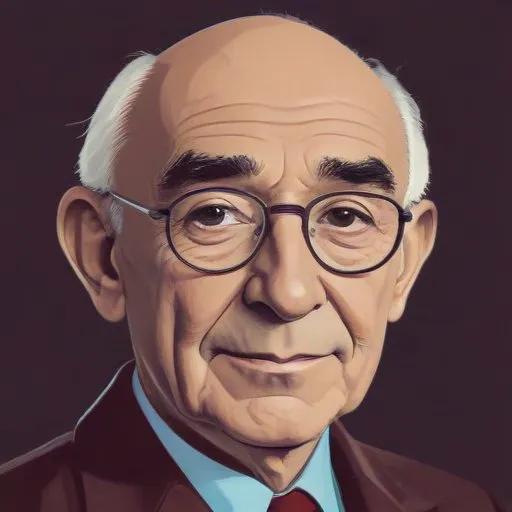
Developed groundbreaking theories on human perception, learning, and cognitive development, revolutionizing education and psychology.
Jerome Bruner is renowned for his groundbreaking contributions to human cognitive psychology and cognitive learning theory in educational psychology, revolutionizing our understanding of how we think, learn, and process information. As a prominent figure in the field, Bruner's work has had a profound impact on modern education, psychology, and society as a whole.
Born on October 1, 1915, in New York City to Polish Jewish immigrant parents, Herman and Rose Bruner, Jerome's life took a remarkable turn when an operation at age 2 restored his vision, which was impaired due to cataracts at birth. This early experience would later shape his fascination with human perception and cognition.
Bruner's academic journey began at Duke University, where he earned his Bachelor's degree in Psychology in 1937. He then pursued his Master's degree in Psychology (1939) and Ph.D. in Psychology (1941) from Harvard University. During this period, he published his first psychological article on the effect of thymus extract on the sexual behavior of the female rat, marking the beginning of his illustrious research career.
Bruner's academic career spanned several esteemed institutions, including Harvard University, the University of Oxford, and New York University (NYU). He taught and conducted research in cognitive psychology, educational psychology, and developmental psychology, producing seminal works that transformed the field.
Bruner's work has far-reaching implications for modern education, emphasizing the significance of active learning, discovery, and individualized instruction. His theories have influenced educational policies, curriculum design, and teaching practices worldwide.
Additionally, Bruner's research on cognitive development and human perception has contributed to advancements in fields such as artificial intelligence, computer science, and neuroscience.
Bruner's exceptional contributions have been recognized with numerous awards and honors, including:
During World War II, Bruner served on the Psychological Warfare Division of the Supreme Headquarters Allied Expeditionary Force committee under General Dwight D. Eisenhower, researching social psychological phenomena.
In 1972, Bruner left Harvard to teach at the University of Oxford, where he continued his research in developmental psychology. He returned to the United States in 1980, joining the faculty at NYU.
Jerome Bruner's pioneering work has left an indelible mark on the fields of psychology, education, and cognitive science. His dedication to understanding human cognition and learning has inspired generations of researchers, educators, and scholars.
As the 28th most cited psychologist of the 20th century, Bruner's influence extends beyond academia, shaping the way we think, learn, and interact with the world around us.
Born in 1904
Developed the theory of operant conditioning, which explores the relationship between behavior and environment, and invented the "Skinner box" to study learning and behavior.
Born in 1896
Developed groundbreaking theories on child cognitive development and learning, emphasizing active discovery and hands-on experience. His work has shaped modern education and parenting practices.
Born in 1896
A pioneering psychologist who developed the sociocultural theory, which emphasizes the role of culture and social interaction in shaping human development and learning. His ideas have greatly influenced education and child development.
81 Years Old
Academy Award-winning filmmaker behind the Mad Max franchise and Babe, known for his visually stunning and action-packed movies.
97 Years Old
A pioneer in cognitive psychology, he's credited with coining the term "cognitive psychology" and making significant contributions to the field, including the development of the "levels of processing" model.
92 Years Old
A Nobel Prize-winning economist and psychologist who pioneered the field of behavioral economics, revealing how cognitive biases and heuristics influence human decision-making.
89 Years Old
A pioneer in behavioral economics, he challenged traditional economic theories by showing how cognitive biases and heuristics influence human decision-making, revolutionizing our understanding of human behavior.
83 Years Old
Developed the theory of multiple intelligences, which challenges traditional notions of intelligence and proposes that there are multiple types of cognitive abilities. Known for his work in education and cognitive psychology.
