


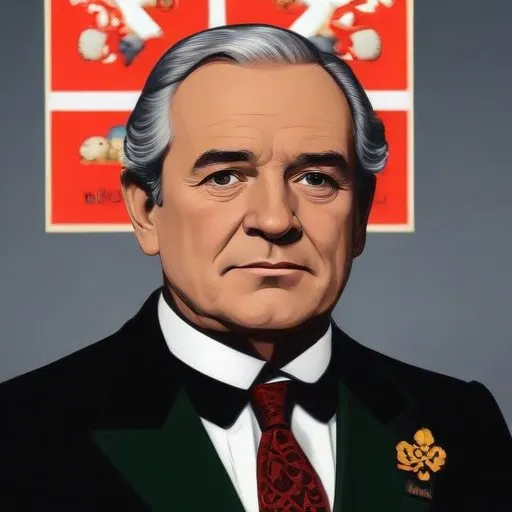
The 2nd Governor-General of the Irish Free State, a key figure in Ireland's transition to independence, played a crucial role in shaping the country's early years. He's most known for his diplomatic efforts and stabilizing influence during a tumultuous period.
James McNeill, a distinguished Irish colonial administrator, politician, and diplomat, is best known for his instrumental role as the first High Commissioner to London and second Governor-General of the Irish Free State. His remarkable career spanned across the Indian Civil Service, Dublin County Council, and the Provisional Government, shaping the trajectory of Irish politics and diplomacy in the early 20th century.
Born on March 27, 1869, in a working-class Roman Catholic family, James was the brother of nationalist leader Eoin MacNeill. His father, Archibald McNeill, was a sailor, merchant, and baker, while his mother, Rosetta née McAuley McNeill, played a significant role in shaping his early life.
McNeill's public life was marked by his high-ranking position in the Indian Civil Service in Calcutta, followed by his election to Dublin County Council, where he became the chairman. He served as a member of the committee under Michael Collins, drafting the Constitution of the Irish Free State.
In 1927, he was appointed as High Commissioner from the Irish Free State to the United Kingdom, and later, he succeeded Tim Healy as the Governor-General of the Irish Free State.
During his tenure as Governor-General, McNeill clashed with the King's Private Secretary over constitutional advice, insisting on following the guidance of his Irish ministers rather than Buckingham Palace. He also refused to attend ceremonies in Trinity College, Dublin, where the old British national anthem was played, instead of the new Irish anthem, Amhrán na bhFiann.
McNeill's unwavering commitment to Irish independence and sovereignty left an indelible mark on the country's politics and diplomacy. His steadfast refusal to compromise on constitutional matters earned him respect and admiration from his contemporaries and future generations.
McNeill's remarkable career and contributions to Irish politics and diplomacy earned him a place in the annals of Irish history. His legacy continues to inspire and influence future generations of Irish leaders and diplomats.
McNeill's unwavering commitment to Irish independence and sovereignty distinguishes him from his contemporaries, including Tim Healy and Éamon de Valera. His unique blend of diplomatic acumen and political zeal set him apart as a pioneering figure in Irish politics.
James McNeill's remarkable life and career serve as a testament to his unwavering dedication to Irish independence and sovereignty. His legacy continues to shape the trajectory of Irish politics and diplomacy, inspiring future generations to follow in his footsteps.
Born in 1860
First President of Ireland, leading the country to independence and promoting Irish language and culture. He was a scholar, linguist, and politician who played a key role in shaping Ireland's identity.
Born in 1882
Leader of Ireland's struggle for independence from Britain, serving as both Prime Minister and President, and key figure in shaping the country's modern identity.
Born in 1882
The second President of Ireland, serving from 1945 to 1959, known for his role in shaping the country's post-independence development and foreign policy. He was a key figure in Irish politics during a pivotal period in the nation's history.
Born in 1890
Leader of the Irish independence movement, instrumental in negotiating the Anglo-Irish Treaty, and a key figure in the Irish War of Independence.
Born in 1871
Leader of the Irish independence movement and key negotiator of the Anglo-Irish Treaty, shaping Ireland's path to independence.
