


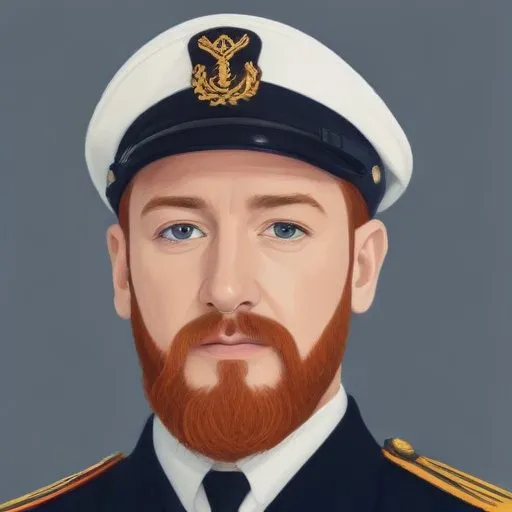
A sailor who served as the sixth officer on the RMS Titanic and was in charge of the ship's bridge when it struck the iceberg, ultimately going down with the ship. He is remembered for his bravery and sacrifice during the disaster.
When it comes to the ill-fated Titanic, most people recall the names of the captain, the ship's owner, or even the famous passengers on board. However, one name that often gets overlooked is that of James Paul Moody, the Titanic's sixth officer who played a crucial role in the ship's final hours.
Moody is known for being the officer who received the warning of icebergs from the SS Californian, just hours before the Titanic's tragic collision. His story serves as a poignant reminder of the human cost of the disaster, and the bravery of those who fought to save as many lives as possible.
Born on August 21, 1887, in Scarborough, England, Moody was the youngest of four children to solicitor John Henry Moody and his wife Evelyn Louisa Lammin. His family had a strong maritime tradition, with his grandfather having served as Town Clerk of Scarborough.
Moody received a prestigious education at the Rosebery House School before joining the Navy training vessel HMS Conway as a cadet in 1902. His two years on the ship counted as one year of sea time towards his Board of Trade Second Mates Certification.
In 1904, Moody joined the William Thomas Lines Boadicea as an apprentice, where he endured a horrific, storm-troubled voyage to New York that drove one of his fellow apprentices to suicide.
After attaining his Second Mates Certification, Moody went on to work on cargo and oil tankers, eventually attaining his First Mates Certificate. In 1910, he briefly attended the King Edward VII Nautical School, a nautical cram school that prepared officers for their Board of Trade examinations.
In August 1911, Moody successfully obtained his Ordinary Masters Certification and served as the sixth officer on the Oceanic. In March 1912, he received word that he was to be assigned to RMS Titanic as her Sixth Officer, a role that would ultimately seal his fate.
Moody was somewhat reluctant to accept the assignment, having hoped to spend the summer on the Atlantic aboard the Oceanic and take leave afterwards. However, his request for leave was denied, and he reported to the Titanic's crew.
On the night of April 14, 1912, Moody received the warning of icebergs from the SS Californian, but it was too late. The Titanic had already struck the iceberg, and the ship was doomed. Moody played a crucial role in helping passengers board lifeboats, and his bravery in the face of disaster is still remembered today.
Moody's personal life was marked by a close relationship with his family, particularly his brother, to whom he confided his romantic interests. Moody's uncle in Grimsby, England, served as his shore address, and it was there that he spent his leave.
In the end, Moody's story serves as a poignant reminder of the human cost of the Titanic's sinking. Though his name may not be as well-known as some of the other figures involved, his bravery and sacrifice that night will always be remembered.
In conclusion, James Paul Moody's story is one of tragedy, bravery, and sacrifice. His role in the Titanic's final hours will always be remembered, and his legacy serves as a testament to the bravery of those who fought to save lives on that fateful night.
Born in 1850
A British merchant navy officer who captained the RMS Titanic and went down with the ship in 1912, becoming a legendary figure in maritime history.
Born in 1887
Lookout who spotted the iceberg that sank the Titanic, saving hundreds of lives with his warning. He was a key figure in one of the most infamous maritime disasters in history.
Born in 1874
The second officer on the ill-fated RMS Titanic, in charge of loading lifeboats during the ship's tragic sinking, and later hailed as a hero for his bravery and selflessness.
Born in 1903
Charismatic radio and TV personality who entertained millions with folksy humor and storytelling, pioneering the art of conversational broadcasting.
Born in 1873
Designed the ill-fated RMS Titanic, a massive ocean liner that sank on its maiden voyage, leading to significant changes in maritime safety regulations. He's also credited with designing several other notable ships.
