


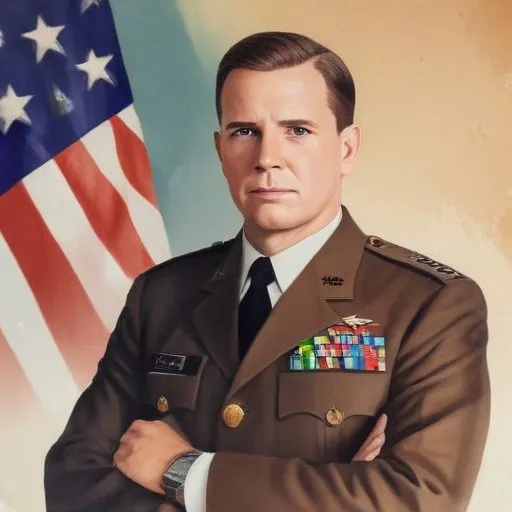
A CIA officer involved in the Watergate scandal, caught breaking into the Democratic National Committee headquarters, leading to President Nixon's resignation.
James W. McCord Jr. is notorious for his involvement in the Watergate scandal, which precipitated the downfall of President Richard Nixon's administration. As the head of security for Nixon's 1972 reelection campaign, McCord's illicit activities as an electronics expert in the burglaries of the Democratic National Committee headquarters at the Watergate complex in Washington, D.C. sparked a chain of events that shook the foundations of American politics.
McCord's career in intelligence began at the Federal Bureau of Investigation (FBI), after which he transitioned to the Central Intelligence Agency (CIA). He ascended to the directorship of the Agency's Office of Security, holding the rank of GS-15. During his tenure, he oversaw physical security at the Agency's Langley headquarters. Notably, L. Fletcher Prouty, a former colonel in the United States Air Force, referred to McCord as "my top man" after being introduced to him by Director of Central Intelligence Allen Dulles.
After resigning from the CIA, McCord was hired by Jack Caulfield in January 1972 for security work at the Republican National Committee (RNC) and the Committee to Re-elect the President (CRP). His involvement in the Watergate scandal began with the break-in at the Democratic National Committee headquarters, where he was part of the team that installed wiretaps and photographed documents. The subsequent events, including the cover-up and investigation, led to the unraveling of the Nixon administration.
John M. Newman, in his 2022 book "Uncovering Popov's Mole," alleges that McCord, along with Bruce Solie, was likely a KGB mole within the CIA's Office of Security. This accusation suggests that McCord protected Solie and another mole, Pyotr Semyonovich Popov's dead drop arranger, Edward Ellis Smith, from being uncovered by U.S. Intelligence.
McCord's actions as part of the Watergate scandal left an indelible mark on American political history. His involvement serves as a cautionary tale about the dangers of unchecked power and the importance of accountability in government. Despite his controversial legacy, McCord's story serves as a reminder of the intricacies of intelligence operations and the blurred lines between national security and political expediency.
McCord died on June 15, 2017, leaving behind a legacy that continues to fascinate and appall those interested in the intricacies of American politics. His memoir, "A Piece of Tape," offers a firsthand account of his involvement in the Watergate scandal and provides valuable insights into the events that shaped his life.
95 Years Old
A former FBI agent turned Nixon operative, convicted for his role in the Watergate scandal, later becoming a radio host and TV actor. He's infamous for his involvement in the scandal that led to a presidential resignation.
Born in 1918
A CIA officer and author involved in the Watergate scandal, known for his role in the break-in and subsequent cover-up. He also wrote several spy novels.
Born in 1913
The 37th President of the United States, a polarizing figure who led the country through significant domestic and foreign policy changes, infamous for his involvement in the Watergate scandal.
Born in 1926
A powerful and influential White House Chief of Staff who served under President Richard Nixon, known for his role in the Watergate scandal and subsequent cover-up.
Born in 1925
A key advisor to President Nixon, serving as White House Counsel and playing a central role in the Watergate scandal. He was convicted of conspiracy, obstruction of justice, and perjury.
Born in 1913
A high-ranking FBI official who secretly fed information to the press, helping to expose the Watergate scandal and bring down a presidency.
Born in 1912
A prominent lawyer and politician who served as the 31st United States Solicitor General, known for his role in the Watergate scandal and his subsequent firing by President Nixon. He's a symbol of integrity and independence in government.
Born in 1896
A decorated war hero who later chaired the Senate Watergate Committee, exposing government corruption and ensuring accountability.
