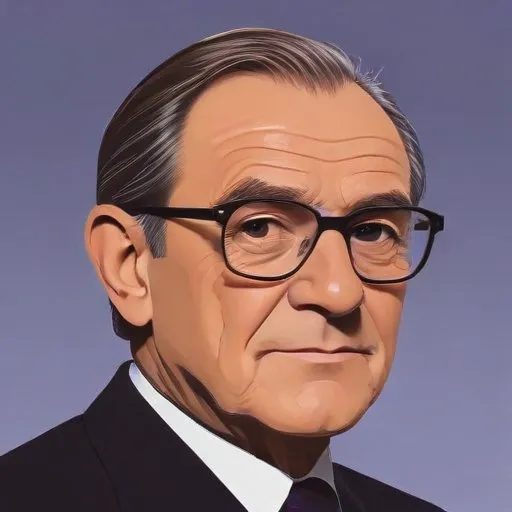
Jan Eliasson: The Swedish Diplomat Extraordinaire
Jan Eliasson is a name synonymous with diplomacy, foreign policy, and international relations. As the former Deputy Secretary-General of the United Nations, Eliasson has left an indelible mark on global politics, earning him recognition as one of the most influential figures in modern diplomacy.
Early Life and Education
Born on September 17, 1940, in Gothenburg, Sweden, Eliasson grew up in a working-class family with a strong sense of social justice. His father, John, was a taxi driver and active in the labor union for transport, while his mother, Karin, was a seamstress. This humble beginning instilled in Eliasson a deep understanding of the importance of social equality and fairness.
Eliasson's educational pursuits took him to the University of Gothenburg, where he earned a master's degree in economics in 1965. During his time at the university, he was an active member of the local AIESEC committee and even spent a year as an exchange student in Indiana, United States, from 1957 to 1958.
Diplomatic Career
Eliasson's diplomatic career spanned over five decades, with his first appointment as a diplomat in 1965 at the Swedish Ministry for Foreign Affairs. He quickly rose through the ranks, serving as Diplomatic Advisor to the Swedish Prime Minister
Olof Palme from 1982 to 1983 and later as Director General for Political Affairs in the Ministry for Foreign Affairs from 1983 to 1987.
One of Eliasson's most notable achievements was his role in mediating the Iran-Iraq War from 1980 to 1986 as part of the U.N. mission. This experience honed his skills as a negotiator and strategist, earning him recognition as a leading expert in conflict resolution.
United Nations and Beyond
In 1988, Eliasson became Sweden's Permanent Representative to the United Nations, a position he held until 1992. During this tenure, he played a crucial role in shaping Sweden's foreign policy and was a vocal advocate for UN reform.
From 2012 to 2016, Eliasson served as the Deputy Secretary-General of the United Nations, working closely with Secretary-General
Ban Ki-moon to address global challenges such as climate change, poverty, and human rights.
Awards and Honors
Eliasson's contributions to diplomacy and international relations have been recognized with numerous awards and honors, including:
- Honorary degrees from American University (1994), University of Gothenburg (2001), and Uppsala University (2005)
- The Dag Hammarskjöld Award (2002) for his contributions to international cooperation and conflict resolution
- The Olof Palme Prize (2008) for his efforts to promote peace and disarmament
Philosophical Contributions and Beliefs
Throughout his career, Eliasson has been guided by a strong sense of social justice and a commitment to promoting peaceful conflict resolution. He has been a vocal advocate for the importance of diplomacy in addressing global challenges, stating, "Diplomacy is not just about negotiating agreements; it's about building relationships and trust."
Eliasson has also emphasized the need for sustainable development and poverty reduction, arguing that these issues are inextricably linked to global security and peace.
Legacy
Jan Eliasson's legacy is one of tireless advocacy for peace, diplomacy, and social justice. As a seasoned diplomat and statesman, he has inspired generations of leaders and diplomats around the world. His contributions to international relations and global governance have left an indelible mark, ensuring that his name will be remembered for years to come as a champion of peace and diplomacy.
FAQ
What are the accomplishments of Jan Eliasson as Deputy Secretary-General of the United Nations?
Jan Eliasson served as the 4th Deputy Secretary-General of the United Nations from 2007 to 2012, during which he played a crucial role in addressing global challenges such as climate change, poverty, and human rights. He also worked closely with Secretary-General Ban Ki-moon to reform the UNs management and improve its response to humanitarian crises.
What is Jan Eliassons background in Swedish politics?
Before joining the UN, Jan Eliasson had a distinguished career in Swedish politics, serving as Minister for Foreign Affairs from 2006 to 2007 and as Ambassador to the United States from 2000 to 2005. He was also a member of the Swedish Parliament from 1998 to 2000.
What awards has Jan Eliasson received for his diplomatic work?
Jan Eliasson has received several awards for his diplomatic work, including the Order of the Seraphim, Swedens highest honor, and the United Nations Prize in the Field of Human Rights.
What is Jan Eliassons take on sustainable development?
Jan Eliasson has been a strong advocate for sustainable development, emphasizing the need for economic growth to be aligned with social justice and environmental protection. He has called for increased international cooperation to address global challenges and promote human well-being.
What is Jan Eliassons current role in global diplomacy?
After leaving the UN, Jan Eliasson has continued to play an active role in global diplomacy, serving as Chair of the Stockholm International Peace Research Institute and as a visiting professor at the University of Gothenburg. He remains a respected voice on international affairs and a champion for peace and development.