


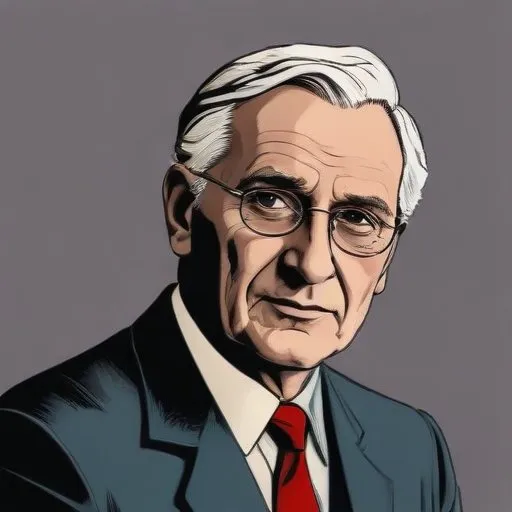
A Czech-English psychologist and author who explored the human psyche through his writings, delving into topics like existentialism and absurdity. His works often blurred the lines between fiction and non-fiction, making him a unique voice in the literary world.
Jan Kesadlo, the pseudonym of Vclav Jaroslav Karel Pinkava, was a Czech psychologist, novelist, poet, and polymath who defied the conventions of a single career path. He is best known for his prizewinning novel Gravelarks, which earned him the 1984 Egon Hostovsk prize, as well as his remarkable contributions to literary translation, music composition, and mathematical logic.
Following the 1968 invasion of Czechoslovakia, Kesadlo emigrated to Britain with his family, where he worked as a clinical psychologist until his early retirement in 1982. This marked the beginning of his full-time writing career, during which he adopted various pseudonyms, including Jake Rolands, J.K. Klement, and Juraj Hron, among others.
Kesadlo was an accomplished composer, having written a Glagolitic Mass, among other musical works. He adopted the pseudonym Ferdinand Luovick z Luovic a na Suchm dole for his musical compositions.
In the realm of mathematical logic, Kesadlo discovered the many-valued logic algebra, which now bears his name. He also dabbled in Astronautilia, using the pseudonym Kamil Troud for his illustrations in this field.
Jan Kesadlo's remarkable life and achievements are a testament to the power of human creativity and determination. His work continues to inspire and influence generations of writers, scholars, and thinkers, cementing his place as one of the most fascinating figures of the 20th century.
Born in 1856
Pioneering psychoanalyst who developed theories on the subconscious mind, childhood experiences, and the structure of personality, revolutionizing our understanding of human behavior and psychology.
Born in 1875
Developed the concept of collective unconscious and archetypes, and founded analytical psychology, which emphasizes the integration of opposites and the process of individuation.
Born in 1900
A German psychologist and sociologist who developed the concept of "social character" and explored the relationship between psychology and society, known for his humanistic and socialist approach.
99 Years Old
A Scottish psychiatrist and author who challenged traditional psychiatry, arguing that mental illness is a sane response to an insane world, and wrote influential books on the human condition.
Born in 1882
Developed groundbreaking psychoanalytic theories, particularly on child development and the role of unconscious emotions, influencing modern psychotherapy and parenting practices.
