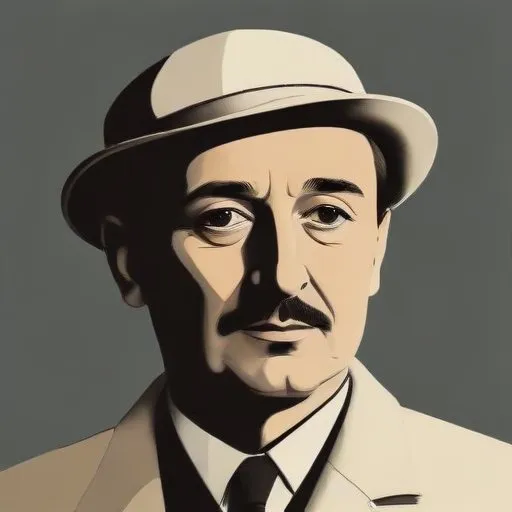
Jan Neruda: The Czech Literary Giant
A Pioneering Voice of Czech Realism
Jan Neruda, born on July 10, 1834, was a Czech journalist, writer, poet, and art critic who left an indelible mark on the literary world. As one of the most prominent representatives of Czech Realism and a member of the May School, Neruda's works continue to inspire and influence generations of writers and artists.
Early Life and Education
Born in Prague, Bohemia, Neruda was the son of a small grocer who lived in the Mal Strana district. He spent his early years in the Zsmuky region, where his father was born, before moving to Ostruhov Street (now called Nerudova Street) at the age of four. Neruda's love for literature was nurtured from a young age, with his favorite writers including Heine, Byron, Shakespeare, Karel Hynek Mácha, and Václav Bolemír Nebeský.
After graduating from the Academic Grammar School in Clementinum, Neruda attempted to study law but failed. He then worked as a clerk for a short time before pursuing philosophy and philology at Charles University. It was during this period that he discovered his true calling as a writer and began to contribute to various literary journals, including Národní listy, Obrazy života, and Květy.
A Leader of a Generation
By the 1860s, Neruda had established himself as a prominent figure in Czech literature, leading a generation of writers that included Karolina Světlá, Vítězslav Hálek, Adolf Heyduk, and Karel Sabina. Together, they sought to continue the legacy of Karel Hynek Mácha, a celebrated Czech poet and writer. Neruda's works during this period were marked by their realism, simplicity, and attention to detail, earning him both critical acclaim and public admiration.
Traveling the World, Observing Life
In 1871, after being branded a "Traitor to the Nation" by various groups, Neruda embarked on a journey to Italy, Greece, France, Germany, Hungary, and Egypt. During his travels, he kept detailed records of his experiences, providing valuable insights into his life and times. These travelogues offer a unique glimpse into the mind of a remarkable observer and writer.
Literary Legacy and Impact
Jan Neruda's contributions to Czech literature are immeasurable. His commitment to realism, his attention to detail, and his ability to capture the essence of the human experience have inspired generations of writers and artists. Through his works, Neruda continues to influence modern Czech literature, and his legacy extends far beyond the borders of his native country.
Personal Milestones and Key Life Events
- 1845: Began studies at the local Grammar school
- 1850: Continued studies at the Academic Grammar School in Clementinum
- 1855: Attempted to study law but failed
- 1860: Became a freelance journalist and writer
- 1871: Traveled to Italy, Greece, France, Germany, Hungary, and Egypt
- 1883: Moved to Vladislavova Street 138214 in New Town, Prague
- August 22, 1891: Passed away
Quotes and Memorable Sayings
- "The only way to make sense of life is to make sense of oneself."
- "Art is the only way to escape the chaos of the world."
Jan Neruda's life and works serve as a testament to the power of literature to inspire, to provoke, and to transform. Through his unwavering commitment to realism and his uncanny ability to capture the human experience, Neruda continues to influence generations of writers, artists, and thinkers.
FAQ
What was Jan Nerudas contribution to Czech literature?
Jan Neruda was a pioneering Czech journalist and poet, known for his influential work in promoting Czech national identity and culture.
What were Jan Nerudas most famous works?
Jan Neruda wrote several celebrated works, including the collection of poetry Book of Verses and the novel Tales of the Streets and Alleys.
What was Jan Nerudas role in the Czech National Revival?
Jan Neruda played a key role in the Czech National Revival, using his writing to promote Czech culture, language, and identity.
What was Jan Nerudas views on politics?
Jan Neruda was a strong advocate for Czech independence and democracy, using his writing to critique the Austrian Empires rule over Bohemia.
How is Jan Neruda remembered?
Jan Neruda is remembered as one of the most important Czech writers of the 19th century, celebrated for his literary talent, patriotism, and commitment to social justice.